On 19 January 1963, The Beatles stepped into a television studio in Birmingham and quietly changed the scale of their future. What seemed like just another mimed performance would, in hindsight, become the most important TV appearance of their career so far — not because of spectacle, but because of reach.

That afternoon, the group taped a performance for Thank Your Lucky Stars, one of ITV’s most popular pop programmes, broadcast nationwide. Hosted by respected broadcaster Brian Matthew, the show was a cornerstone of early-1960s British youth culture, watched by millions of teenagers hungry for new sounds and new faces.
Crucially, this appearance did not happen by chance. It was secured through the determined efforts of music publisher Dick James, who understood before most that television exposure — not just radio — would determine whether a band broke regionally or nationally. Until that point, The Beatles’ fame was still largely concentrated in Liverpool, London, and the touring circuit. This broadcast changed that.
The recording took place at Alpha Television Studios in Aston, Birmingham — a converted cinema that retained its original seating layout. Rather than standing on a grand stage, The Beatles performed in front of an audience seated in what had once been the cinema’s “circle” section, giving the moment an almost intimate, improvised feel. They were one of seven acts on the bill, a reminder that in early 1963 they were still sharing space, not yet dominating it.

Closing the first half of the programme, the band mimed to Please Please Me, the single that was already climbing the charts and rapidly becoming a national obsession. Though the performance itself followed standard television practice of the era — miming rather than playing live — the impact was anything but routine. For many viewers, this was the first time they had seen The Beatles at all.
This mattered deeply in a pre-satellite, pre-internet Britain. ITV coverage was not universal, but Thank Your Lucky Stars reached most of the UK, particularly the Midlands and the North. Overnight, the group’s image — their hair, their energy, their sense of something slightly unruly — became shared national property. The Beatles were no longer just a buzz; they were visible.
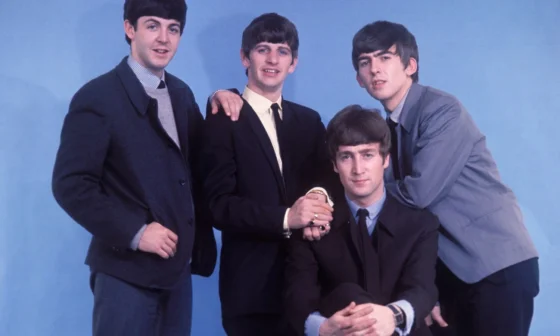
Tragically, like much early British television, the episode no longer exists. ITV routinely wiped or reused tapes, and this broadcast was lost to history. That absence has only heightened its importance. What remains are two precious television screen photographs taken during the original transmission — frozen fragments of a moment that helped ignite Beatlemania before the term even existed.

Those images carry unusual weight. They are not publicity stills or posed studio shots, but captured evidence of a cultural shift in progress. In them, The Beatles appear poised between eras: no longer unknown, not yet overwhelmed by global fame. Within weeks, they would top the charts. Within months, they would dominate them.
Looking back, 19 January 1963 stands as a hinge point. The Beatles had already conquered the stage and the record charts; this was the moment they conquered the living room. A lost television episode, preserved only in memory and a pair of grainy images, but one that helped turn four young musicians into a national phenomenon — and soon, something far bigger.