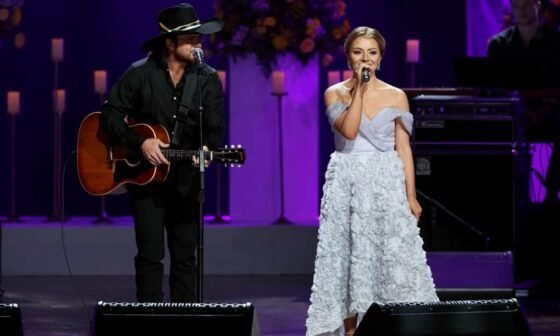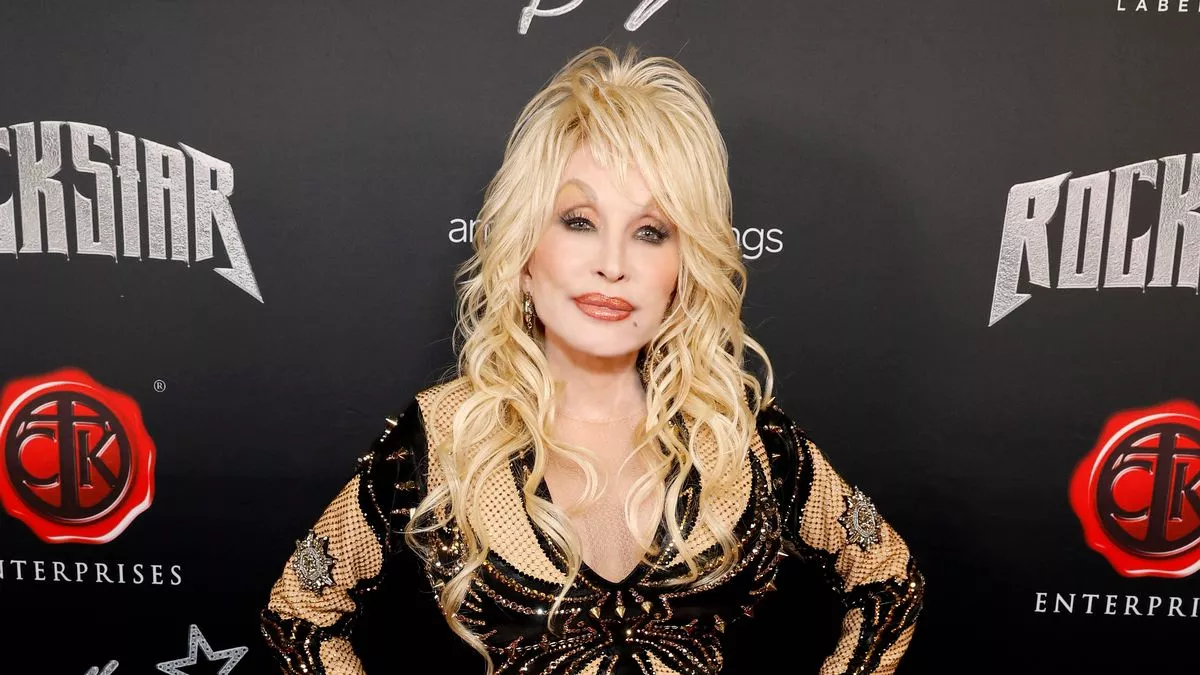
💔 This Is the Moment Even Dolly Parton Struggled to Hold Back Tears. When little Alyvia Alyn Lind stepped beside a country legend to sing “Angel Hill,” the room didn’t just grow quiet — it softened. Dolly wrote this song after losing her baby brother, a grief she carried silently for years, and hearing it sung again through a child’s voice felt like reopening a wound… gently, honestly, and without apology.

Dolly Parton

There are some songs that don’t just play — they open something inside you.

“Angel Hill” is one of those songs.

Flashback To Dolly Parton's Moving Duet With Young Actress Alyvia Lind, Her Mini-Me

Written by Dolly Parton after the loss of her baby brother, the song has always carried a quiet kind of sorrow. Not dramatic. Not loud. Just honest. The kind of grief that sits with you for life, even when the world keeps moving.

Now imagine that song shared in a tender, imagined moment — with a child’s voice beside hers.

In this deeply moving fan-imagined performance, young actress Alyvia Alyn Lind joins Dolly, and suddenly the song feels even more fragile. Alyvia’s voice doesn’t try to overpower or impress. It sounds innocent. Careful. Almost like she’s afraid of breaking something sacred. And Dolly — seasoned, steady, and gentle — meets her exactly where she is.

That contrast is what makes it so emotional.

NBC Casts Its Young Dolly Parton

Dolly sings from a place of lived loss. Alyvia sings from a place of untouched innocence. Between them is a bridge — one built by music — where grief and hope quietly sit side by side.

“Angel Hill” was never meant to be a showstopper. It was a lullaby for loss. A way for Dolly to speak to someone she never got to know. In this imagined duet, that meaning deepens. It feels like the song is being handed forward, from one generation to the next, saying: You don’t have to understand pain to help hold it.

There’s no big ending. No soaring finale. Just two voices blending softly, like a conversation meant only for the heart.

And that’s why it stays with you.

Because moments like this — real or imagined — remind us why music matters. It doesn’t fix the wound. It sits with it. And sometimes, that’s how healing begins.

0 Shares:
Leave a Reply

Your email address will not be published. Required fields are marked *

You May Also Like
paul
Read More

In a Hollywood moment no one saw coming, the Academy paused its century-old tradition to honor Paul McCartney not for music or movies, but for a lifetime of unseen kindness — and as the 83-year-old Beatle stepped onto the Dolby Theatre stage, the room rose with the stunned reverence of a city realizing it had underestimated the quietest part of his legacy, a revelation so raw and human that even the A-list audience couldn’t stop their tears.

HISTORIC BREAKING NEWS: PAUL MCCARTNEY JUST RECEIVED AN ACADEMY AWARD FOR KINDNESS — AND THE DOLBY THEATRE COULDN’T…
Loretta Lynn’s Granddaughter & Willie Nelson’s Son
Read More

THE NIGHT THE DUET DIED: Loretta Lynn’s Final Song Beside Conway Twitty Still Haunts Country Music — A Goodbye the World Never Saw Coming.Saw Coming. It happened quietly, without fanfare — a night that began like so many others for two of country music’s greatest voices, and ended as the closing chapter of one of its most beloved partnerships. When Loretta Lynn and Conway Twitty walked onstage together for the final time, no one in the crowd realized they were witnessing the end of an era — the night the duet, as the world knew it, died. The year was 1988. The place: Nashville, under the soft golden lights of a charity concert meant to celebrate country’s classic voices. Loretta and Conway had performed together hundreds of times, their chemistry effortless, their harmonies as natural as breathing. But that night, something felt different. Loretta was quiet backstage — not nervous, but reflective. Conway, too, seemed distant, pacing the hallway with a look that friends later described as “heavy, like he knew something the rest of us didn’t.” When they took the stage and the opening chords of “Louisiana Woman, Mississippi Man” filled the room, the audience erupted. For a moment, time folded back — the magic, the laughter, the playful glances that defined their duets returned as if nothing had changed. But then came their final song: a tender, stripped-down version of “Feelins’.” The crowd fell silent as they began. Loretta’s voice quivered just slightly; Conway’s baritone softened, trembling with something unsaid. Their eyes met for a moment longer than the lyrics required — two souls bound by music, by friendship, and by years of shared triumph and heartache. When the last note faded, they didn’t bow. They simply stood there — looking at each other, smiling through tears — before walking offstage hand in hand. “That was the last time,” Loretta later told a friend. “We didn’t know it, but maybe we did. It felt like goodbye.” Just months later, Conway Twitty would fall ill and pass away unexpectedly in 1993, leaving Loretta shattered and the country music world in mourning. She would go on to perform again, of course, but she never truly sang those duets again — not the way she did when Conway was beside her. In the years that followed, that final performance became legend. Fans still trade bootleg tapes and faded photographs, calling it “the night the duet died” — not because the music ended, but because something sacred was lost with it. “There’ll never be another Conway,” Loretta once said softly in an interview. “And there’ll never be another us.” Their voices — hers like sunlight through lace, his like a river’s low hum — blended in a way that no producer could recreate and no era could replace. Together, they gave the world songs of love, laughter, and longing that felt achingly real because they were real. Now, decades later, when “After the Fire Is Gone” or “Feelins’” plays on the radio, there’s a pause — a quiet ache that sweeps over anyone who remembers. Because deep down, everyone who loved them knows: that night in Nashville wasn’t just a concert. It was a farewell whispered in harmony — the sound of two legends singing their last truth. And when they walked off that stage, country music was never the same again. Video

It happened quietly, without fanfare — a night that began like so many others for two of country…
Read More

ZACH TOP SANG THE NATIONAL ANTHEM — AND LUMEN FIELD WENT COMPLETELY STILL. The noise didn’t fade slowly. It stopped. The second Zach Top opened his mouth on the NFC Championship stage, the stadium shifted from chaos to focus, as if everyone realized at the same time that something real was happening. No theatrics. No oversinging. Just control, tradition, and a voice that didn’t need to prove anything. This was a rising country star stepping into one of the hardest moments in sports, and singing like he belonged there. The kind of performance that pulls even casual viewers out of their screens, the kind that makes football fans pause mid-conversation and listen. It didn’t feel modern or trendy. It felt timeless. Grounded. Powerful in its restraint. When he finished, the reaction wasn’t just applause — it was recognition. For a few minutes, it wasn’t about the game at all.

NFL on FOX Now THAT is how you perform the “Star Spangled Banner.” Ahead of the NFC Championship…