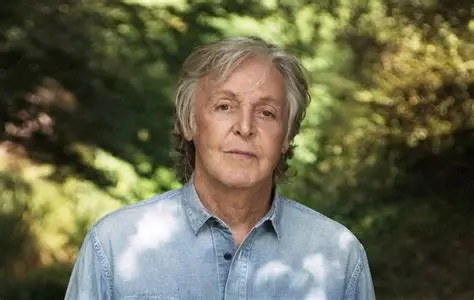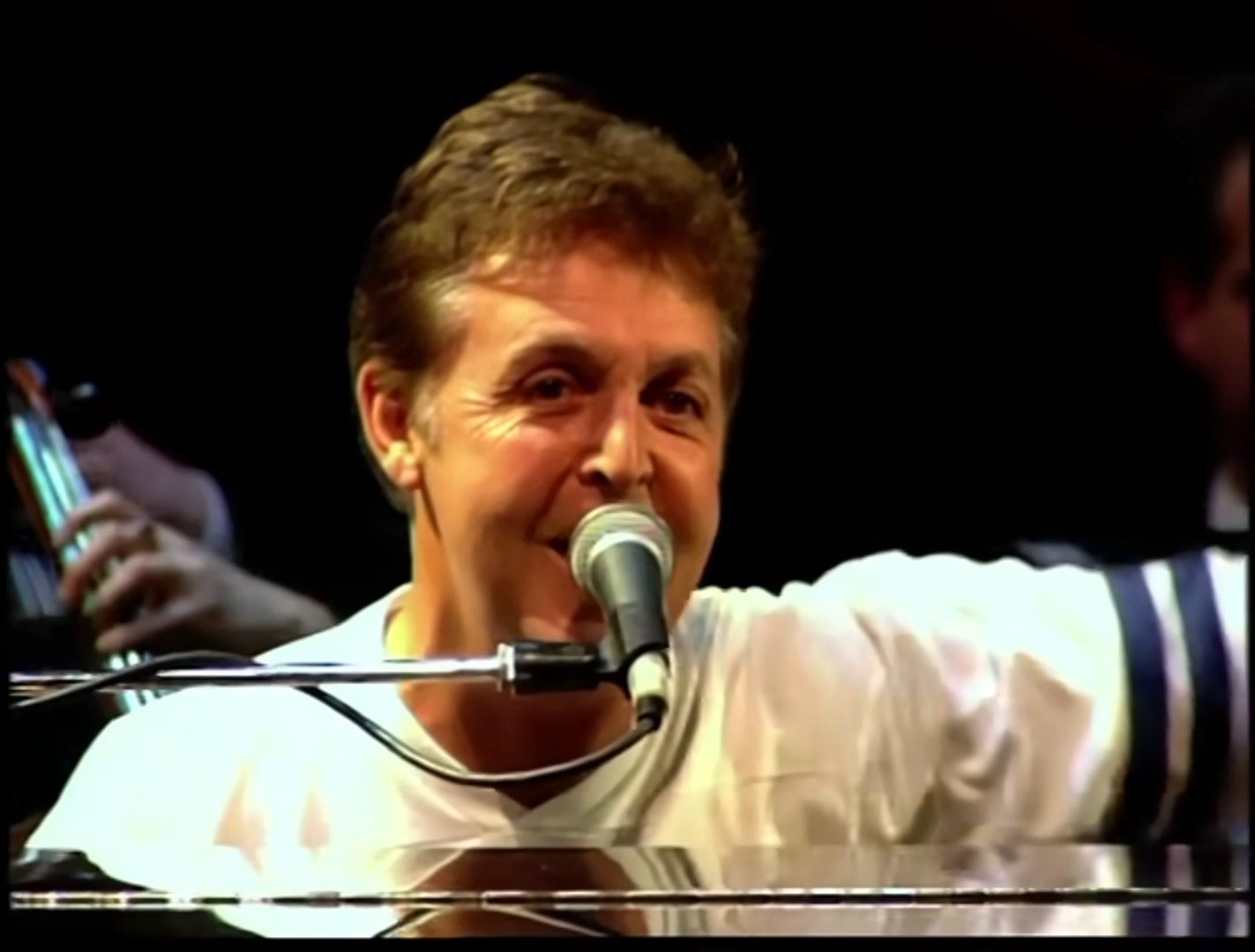

THE PAUL McCARTNEY STORY — FROM LIVERPOOL DREAMER TO A LIFE THAT REDEFINED MUSIC

For more than six decades, Paul McCartney’s life has unfolded in public view — and yet, much of his story has remained curiously private. That is what makes the announcement of a forthcoming feature film chronicling his life feel both overdue and quietly ambitious.
This will not be a film about trophies, charts, or cultural domination. Those facts are already well documented. Instead, the project sets out to explore the human journey beneath the songs — the moments that shaped the melodies long before the world learned to sing along.
McCartney’s story begins in post-war Liverpool, a city still rebuilding itself when a young boy picked up a guitar and began searching for a way forward. Music was not an escape at first, but a language — a way to process grief, belonging, and the desire to be heard. The early loss of his mother left a mark that would echo throughout his songwriting, infusing even his most hopeful melodies with an undercurrent of longing.

When The Beatles emerged, the transformation was swift and overwhelming. Sudden global fame arrived with little preparation and no precedent. The film is expected to examine that period not as a montage of success, but as a collision — between youth and responsibility, creativity and pressure, friendship and fracture.
McCartney’s partnership with John Lennon remains central, not as mythology, but as a complex creative bond. Their collaboration reshaped popular music, but it was also marked by competition, misunderstanding, and eventual distance. The film promises to explore how those dynamics influenced McCartney’s identity — both during The Beatles years and after their end.
What followed the band’s breakup is often misunderstood. While many narratives frame it as a fall from greatness, McCartney’s solo journey reveals something else entirely: resilience. The film traces his determination to continue creating when certainty disappeared — building a new musical life from the ground up, often in the face of public skepticism.
That period also highlights McCartney’s role as a husband and father, a dimension frequently overshadowed by his public persona. Rather than retreating into isolation, he chose family as a stabilizing force, allowing personal connection to coexist with artistic ambition.
As the decades passed, McCartney resisted the temptation to freeze his legacy. He continued to write, perform, and collaborate — not to chase relevance, but to stay curious. The film emphasizes this forward motion, portraying an artist who never treated his past as a resting place.
Equally important is McCartney’s relationship with ordinary people. His songs have always centered on everyday lives — lovers, workers, families, dreamers — and that connection is not accidental. The film positions his songwriting as an act of empathy, rooted in observation rather than ego.

Rather than portraying McCartney as an untouchable icon, the story frames him as someone who carried responsibility quietly. Fame never fully insulated him from doubt or loss. Instead, it amplified both. The courage lay in continuing — choosing music again and again, even when the cost was high.
The film’s creators have emphasized authenticity over spectacle. Expect moments of silence alongside triumph. Expect unanswered questions. Expect contradictions. McCartney’s life, like his music, resists simple categorization.
In revisiting his catalog — from “Yesterday” and “Eleanor Rigby” to “Hey Jude” and “Let It Be” — the film treats the songs not as milestones, but as companions to a life in motion. Each composition becomes a window into a particular moment, a particular struggle, a particular hope.
What emerges is not a story about becoming famous, but about staying human.
At 83, McCartney continues to perform, write, and engage with the world not as a relic, but as a participant. The film does not close his story. It contextualizes it.
In an era saturated with biopics, this one carries a different promise: not to explain Paul McCartney, but to understand him. Not to monumentalize, but to listen.
Because in the end, his greatest legacy may not be the music itself — but the example it set.
A life shaped by melody.
Sustained by curiosity.
And carried forward by an unshakable belief that art is never finished.
That is the Paul McCartney story — finally told on its own terms.