Il Volo’s Ignazio Boschetto and Piero Barone brought the Arena di Verona to its feet on May 12, 2024, delivering a thrilling and deeply connected performance of “La donna è mobile” from Verdi’s Rigoletto that left the audience in awe until the very last note.
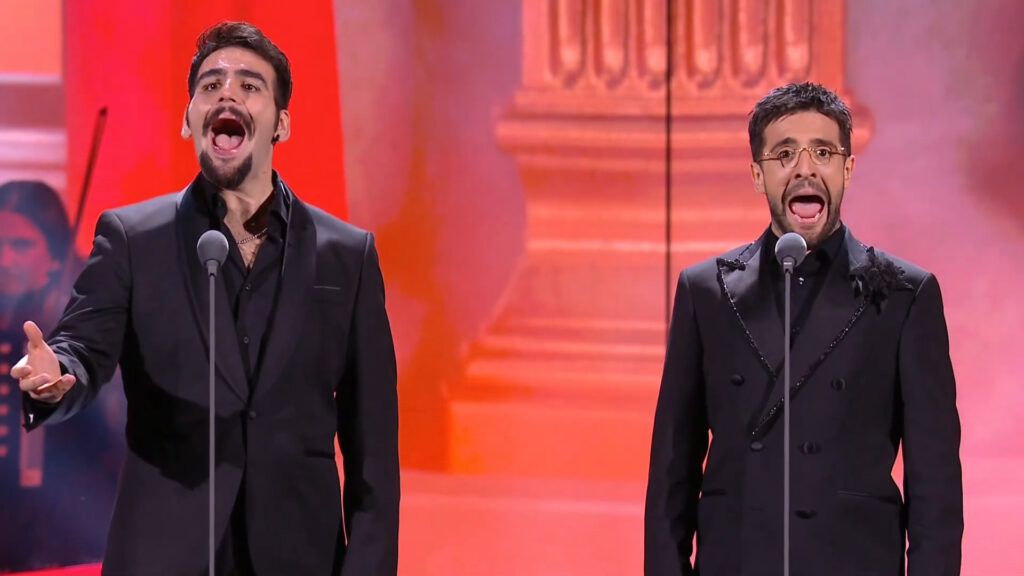
The two tenors transformed one of opera’s most famous arias into a shared moment of musical intuition and trust. From the opening phrase, Boschetto and Barone played off one another with ease, their voices blending and soaring with confidence, precision, and joy. They needed little more than a glance to know where the music was headed next, a level of unspoken understanding that only comes from years of performing together.
The performance earned a standing ovation inside the historic Arena, with fans praising the duo for turning a familiar showpiece into something fresh and electric. Online reactions poured in almost instantly, with listeners calling the aria “superb,” “magical,” and “impossible not to love.” Many highlighted the warmth and affection between the two singers, noting the genuine bond that shines through every shared phrase.

“La donna è mobile” is one of the most recognizable and demanding arias in the tenor repertoire. Written by Giuseppe Verdi in a bright major key and lively 3/8 time, it is designed as a bravura showcase, requiring agility, charm, and a fearless top register. First performed in 1851, the melody became an instant sensation, famously whistled in the streets the day after Rigoletto premiered. More than 150 years later, its irresistible energy continues to captivate audiences worldwide.

Within the opera, the aria is sung by the Duke of Mantua, a reckless nobleman whose carefree attitude toward love ultimately fuels the tragedy at the heart of the story. Its catchy tune contrasts sharply with the dark themes of betrayal and revenge, making it both deceptively light and emotionally charged.

By choosing this iconic aria, Boschetto and Barone paid tribute not only to Verdi’s genius but also to the enduring power of Italian opera. Their performance at the Arena di Verona was a reminder of Il Volo’s rare ability to bridge classical tradition and contemporary appeal — honoring the past while thrilling modern audiences.
As the final notes rang out and the applause surged, it was clear that this was more than a technical triumph. It was a moment of shared artistry, friendship, and passion — two magical voices, perfectly in sync, breathing new life into one of opera’s greatest masterpieces.