The Honest Paul McCartney Interview That Forever Changed the Image of The Beatles
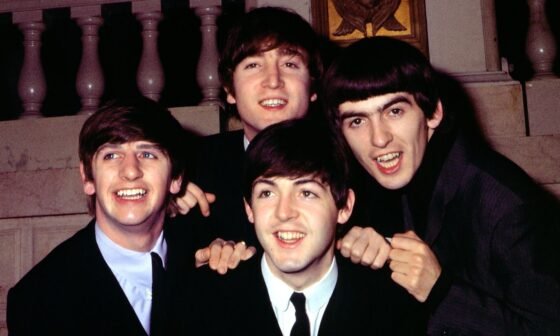
When The Beatles first arrived on the international music scene via their introduction to America, they were the good boys of rock ‘n’ roll. Clean-cut, boyishly charismatic, well-behaved, and in line with the societal standards of the time. Many of their contemporaries, such as The Rolling Stones, were not that. For the early years of their career, Paul McCartney and The Beatles held onto that image, and while they never went full “bad-boy”, they did start to drift away from this innocent and respectable image.
Videos by American Songwriter

There is no way to know if The Beatles did this on purpose. In reality, who cares if they did or didn’t? Nevertheless, The Beatles’ image went from the boys next door to counter-culture figures around 1966. Of course, there was not one thing that marked this transition, but a big one was seemingly when Paul McCartney confessed to taking a psychedelic drug on national television in 1967.
In retrospect, do people care that The Bea Btles did drugs? No, but given the day in age and their former reputation, it was a huge deal. An enormous deal given that the media of the time sensationalized, scrutinized, and spread it across the world.
Paul McCartney Told the Truth
The controversy started when Paul McCartney made comments about the psychedelic drug in an interview with Life Magazine in 1967. The news, by no surprise, was everywhere. Subsequently, the Independent Television News of the United Kingdom scheduled a follow-up interview.
Regarding his LSD use and the public acknowledgment of it, McCartney stated, “I was asked a question by a newspaper, and the decision was whether to tell a lie, or to tell him the truth.” As a result, McCartney was criticized for spreading and supporting psychedelic drug use. Though he made it very clear in the interview that he was not an advocate for the drug, and that the spreading of the news and the false narrative was the media’s fault.
“To say it, you know, is only to tell the truth. I’m telling the truth…I was asked, ‘Whether I had or not,’ and then from then on, a whole bit about how far it’s going and how many people it’s going to encourage is up to the newspapers and up to you.” McCartney continued, “You’re spreading this now at this moment. This is going into all the homes in Britain, and I’d rather it didn’t.”
McCartney made an incredibly valid point. However, the media, for the most part, doesn’t pull punches, especially when the story is a big as this. So, did he have a responsibility not to partake in drug use, or at least not to divulge that he did? Maybe, but from this moment on, The Beatles had a little bit of color added to their already colorful reputation.