On this day in 1969, a single, quietly devastating sentence slipped into the history of The Beatles—not shouted, not slammed into tape with drama, but spoken with a tired calm that said far more than anger ever could.
“Okay, well, I don’t mind. I’ll play, y’know, whatever you want me to play or I won’t play at all if you don’t want me to play. Whatever it is that will please you, I’ll do it.”
It was George Harrison, seated across from Paul McCartney during the Let It Be rehearsals, and the moment landed like a quiet fracture. The words sounded cooperative on the surface, even polite—but beneath them was resignation. Not rebellion. Not confrontation. Fatigue.
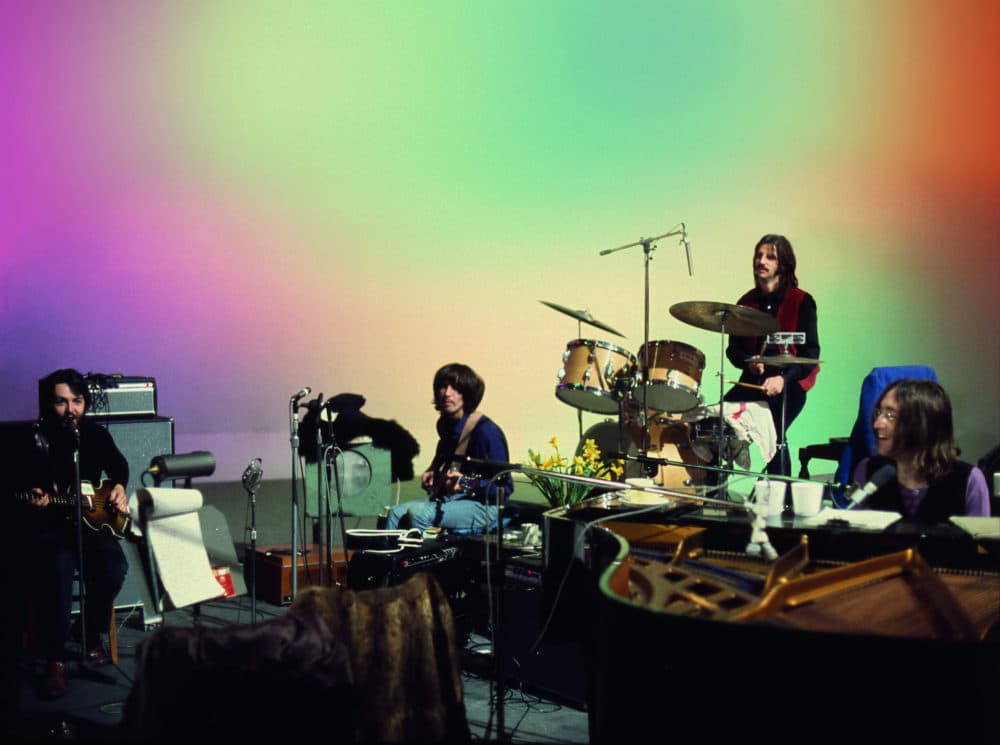
The Let It Be film would later frame this exchange as a dramatic clash, a sharp argument between two creative forces finally colliding. What it failed to show was how quickly the conversation technically “moved on.” The cameras kept rolling, the music resumed, and the day continued. But emotionally, something had shifted. The argument ended; the tension did not.
Those close to the band felt it. Ringo Starr would later reflect on how Paul’s approach had changed. In the early years, Paul invited collaboration—I wrote a song, show me how you play it. By 1969, that openness had narrowed. The language became directive. I wrote a song, and I want it to sound like this. For George, whose songwriting confidence had grown enormously, the shift felt suffocating.
Pattie Boyd saw the damage up close. She described a man who didn’t explode, didn’t vent, didn’t seek sympathy—but absorbed the frustration in silence. George didn’t bring the conflict home in words; he brought it home in mood. Anger stayed bottled. Anxiety lingered. Dignity became his armor. And yet, as Pattie later admitted, tension inside the band never stayed in the studio. It followed them into kitchens, bedrooms, and long, quiet nights.

What makes this moment so haunting is its restraint. George doesn’t threaten to quit. He doesn’t demand space. He doesn’t argue his musical worth. Instead, he offers to disappear inside the song—to play whatever is asked, or not play at all. It is the sound of someone reaching the end of negotiation, choosing survival over victory.
History now recognizes this period as the beginning of the end, but in January 1969, no one stood up and declared it so. The band kept working. They finished the project. They smiled when required. Yet something essential had cracked: the balance between equals, the sense that every voice mattered in the same way it once had.

Today, that short exchange feels heavier than any shouted argument. It captures a truth the film only hinted at—that the Beatles didn’t fall apart in one explosive moment, but through a series of quiet compromises, swallowed frustrations, and unspoken grief. George Harrison’s words remain, not as an act of submission, but as a dignified signal that even within the greatest band in the world, patience has limits—and silence can be the loudest warning of all.