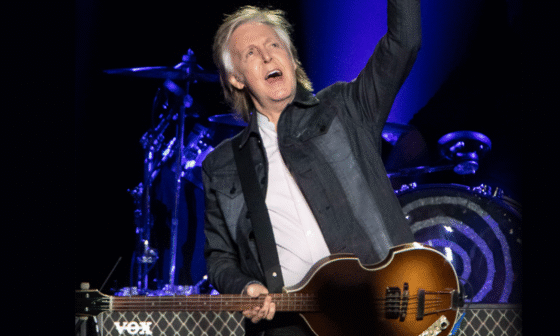
A Paul centerpiece… but the guitars are a John & George conversation: “You Never Give Me Your Money” and the Abbey Road sound
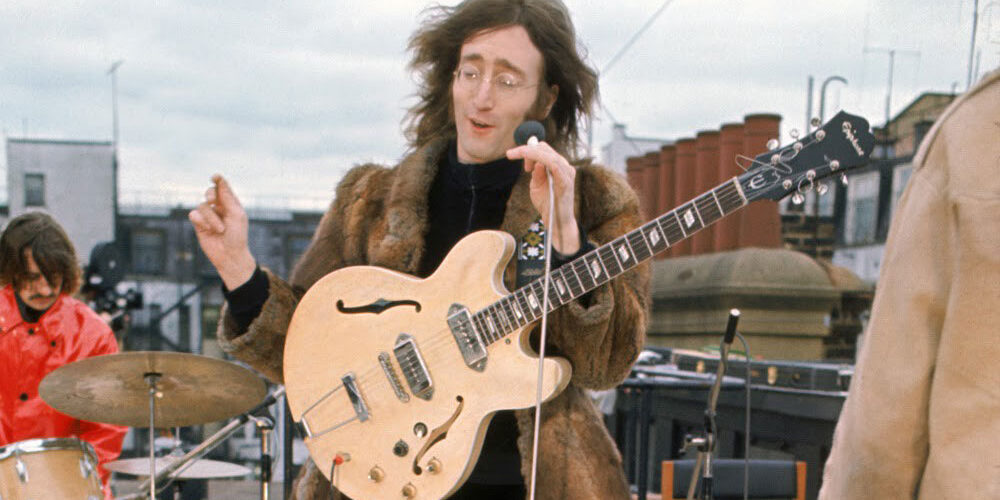
When people talk about Abbey Road, “You Never Give Me Your Money” is often treated as one of Paul McCartney’s defining statements—elegant melody, smart structure, and that emotional lift that sets up the medley. But there’s another angle that often gets missed: it’s also a perfect snapshot of how fluid the Beatles’ guitar roles had become by 1969.
In the studio, Paul anchored the track—lead vocal and piano. Ringo Starr held the drum groove. But the guitars don’t fall into a neat “lead vs. rhythm” split. Instead, John Lennon and George Harrison both contribute prominent electric parts that overlap, weave, and trade space like a dialogue rather than a hierarchy.
John’s Epiphone Casino brings biting, rhythmic electric lines—tight, present, and slightly gritty. George, on a Fender Telecaster routed through a Leslie speaker, supplies rotating, arpeggiated textures that practically paint the atmosphere. Those shimmering arpeggios aren’t just decoration; they’re part of what makes the track feel like pure Abbey Road—guitars acting as transitions, mood-shifters, and connective tissue.

What’s striking is that there isn’t a single “lead guitarist moment” meant to dominate the mix. The magic is the shared lead presence: John and George occupying the same sonic space without stepping on each other, their tones blending into one elegant current. It’s not showy soloing—it’s restraint, arrangement, and the art of leaving room.
It’s also worth remembering the song didn’t start out in its final form. Early sessions reportedly included a looser jam that drifted toward fast rock-and-roll energy before the band reshaped it, tightened its sections, and folded it into the long medley sequence where every fragment has to move the story forward.
Beatles writer Ian MacDonald later speculated—analysis rather than confirmed intent—that the arpeggiated figures echo ideas explored elsewhere on the album (notably “I Want You (She’s So Heavy)” and the middle section of “Here Comes the Sun”), and that the fragment-based structure carries a faint kinship with Lennon’s earlier collage-like experiment “Happiness Is a Warm Gun.” Whether or not those connections were deliberate, they highlight how interconnected the Abbey Road sessions were: motifs and textures resurfacing in different songs like recurring themes in a film.

So yes—“You Never Give Me Your Money” is a Paul spotlight in many ways. But listen closely and you’ll hear something just as Beatles: personalities blending. The track’s real signature isn’t a single guitar hero—it’s the way John and George share the air, turning electric guitar into a conversation that helps deliver one of the band’s most graceful transitions.
And that leaves the best question of all: when you listen, do you hear John and George as two distinct voices—or one blended guitar sentence?