On December 12, 2012, 12-12-12 Concert turned Madison Square Garden into something more than a venue. It became a gathering place for resolve, remembrance, and gratitude. What began at 7:30 p.m. stretched deep into the early hours of the morning, finally ending at 1:20 a.m.—not because the energy faded, but because no one wanted to leave.

The lineup was a roll call of modern music history, a true “who’s who” assembled for a single purpose: to stand with a city still recovering from Hurricane Sandy. Yet when the night reached its final chapter, one image crystallized everything the evening had come to represent.
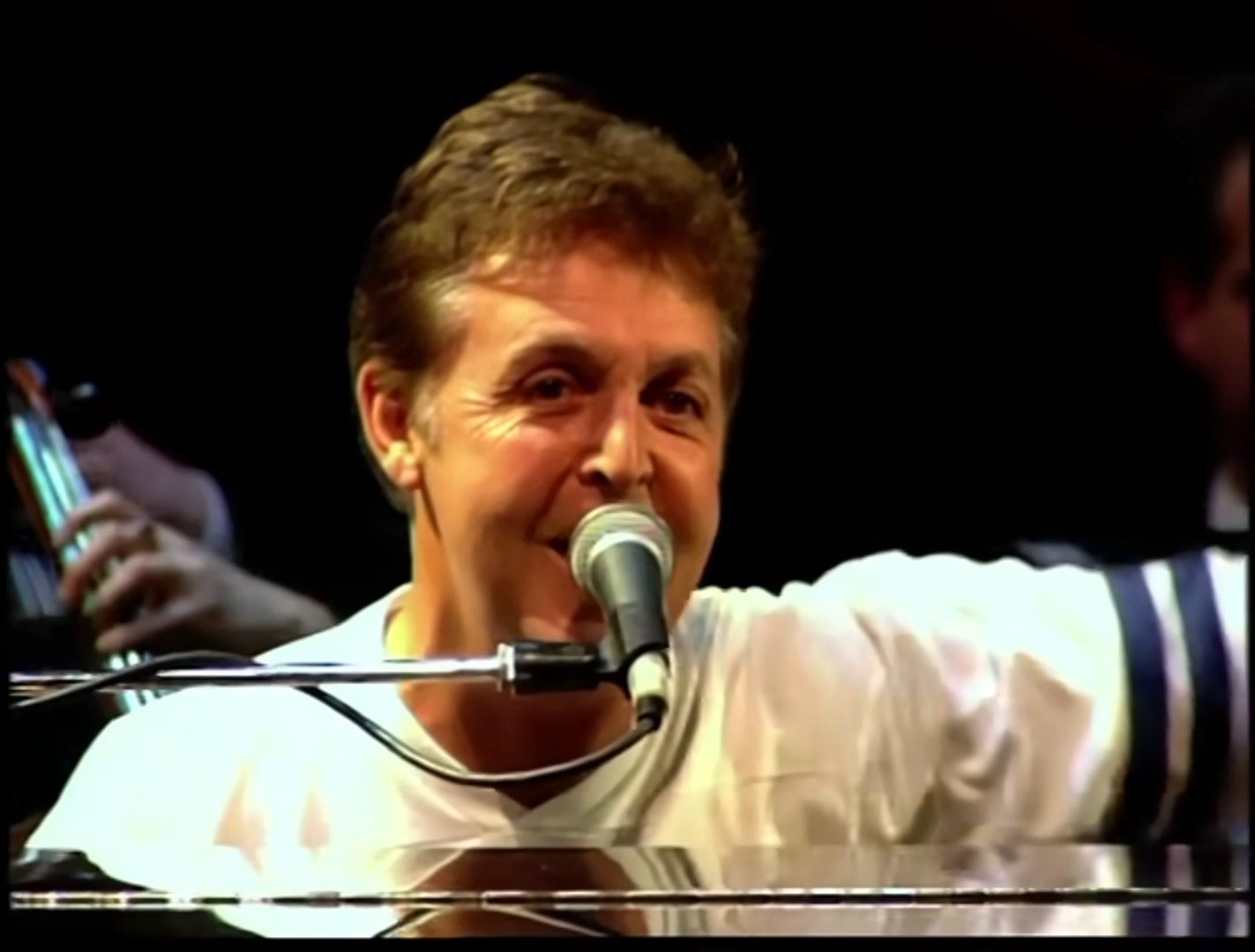
Paul McCartney, in a crisp white shirt and cap, stepped forward during the finale, arms raised—not in triumph, but in communion. Around him stood fellow performers, first responders, and crews who had carried New York through its darkest days. There was no hierarchy on that stage. Just voices.
The final song was Empire State of Mind, led by Alicia Keys—a choice that felt inevitable in hindsight. As the chorus swelled, the Garden transformed into a single, shared breath. Firefighters. Police officers. Legends. New Yorkers. All singing together.

For McCartney, the moment carried quiet symbolism. A musician whose career had helped soundtrack generations now stood shoulder to shoulder with those who had protected the city when it mattered most. There was no speech. No grand gesture. Just presence. Sometimes that is enough.
Those who were there remember the fatigue—the kind that comes after hours of music and emotion—but also the strange clarity that followed. This wasn’t a concert defined by solos or spotlights. It was defined by togetherness. By the understanding that music, at its most powerful, doesn’t distract from reality—it meets it head-on.

More than a decade later, the image of Paul during that finale still resonates. Not because it was loud or dramatic, but because it was human. A reminder that even in a city built on noise and motion, the most lasting moments often arrive quietly, arms raised, voices joined, as the lights begin to fade.