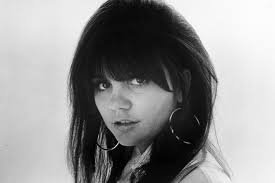
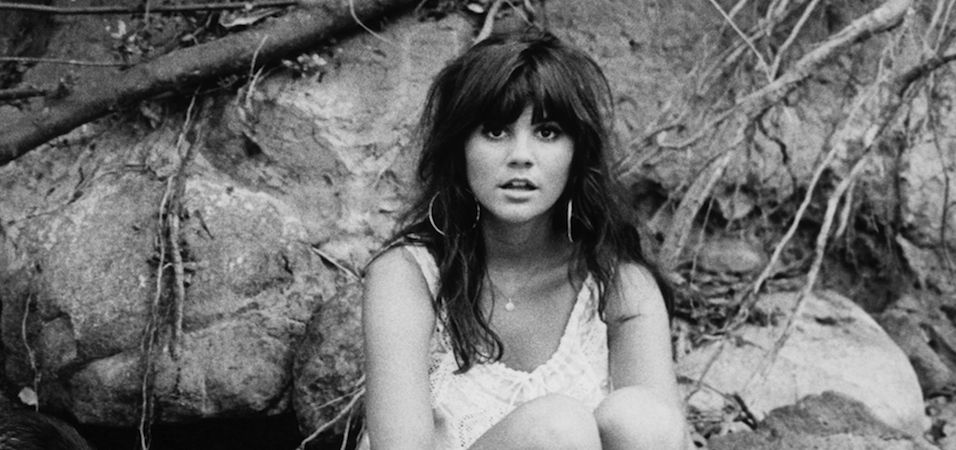
“The Long Way Around”isLinda Ronstadtat the beginning of her solo life—choosing the scenic route not out of romance, but because finding your true voice sometimes means taking every detour on purpose.
Right at the start, the hard facts place the song in a pivotal, almost fragile moment. “The Long Way Around” appears on Linda Ronstadt’s first studio album credited entirely to her, Hand Sown … Home Grown, released by Capitol Records in March 1969. It is track 6 on side one, written by Ken Edwards—the same Kenny Edwards who had been a key member of her earlier group, the Stone Poneys. And while the song was issued as a single in March 1969 (backed with “The Dolphins”), it did not register as a chart hit in the way her later work famously would.
If you want the closest thing to a “ranking at launch,” it comes indirectly and later. In January 1971, “The Long Way Around” resurfaced as part of a double A-side single with “(She’s a) Very Lovely Woman.” That release charted because of the A-side—“(She’s a) Very Lovely Woman” reached No. 70 on the U.S. Hot 100—while “The Long Way Around” itself is still listed as not charting. There is something fitting about that. This is a song that has always lived more like a personal letter than a billboard.
The story behind it is the story behind her, right then—young, talented, and uncomfortably between worlds. After the Stone Poneys’ success, Ronstadt stepped out alone, searching for material and a musical identity that was not borrowed from someone else’s pen. She remembered the country music of her childhood and began experimenting—only to be told she was “too country” for rock radio and “too rock” for country radio, a cruel little paradox that many trailblazers recognize immediately. To bridge that gap, she worked with producer Chip Douglas, aiming for “songs that had come out of Nashville but with a California twist.”
That is the emotional climate in which “The Long Way Around” makes sense. Written by Ken Edwards, it carries the sound of a past she is both grateful for and ready to outgrow. The title alone feels like a young person’s self-portrait in motion. Not “I arrived,” not “I know,” but I’m still traveling—and I’m taking the route that teaches me the most. In 1969, Ronstadt is not yet the arena voice, not yet the hitmaker whose phrasing could slice straight through a crowded room. Here, she is a seeker—still close enough to the folk clubs to smell the wood and cigarettes, yet already leaning toward the wider, brighter stage.
What makes the song quietly poignant is how it hints at a truth older than the singer herself. Love and longing rarely move in straight lines. “The long way” is the path we take when pride will not let us go directly to the door, when we circle the block because we are not sure we are welcome, when we keep driving because stopping would mean admitting what we really feel. The song’s country-rock setting (the album is explicitly framed as blending country rock and folk) gives that idea a particular American shape—roads, distance, a sense that the heart is always traveling even when the body stays put.
And then there is the deeper, almost biographical meaning that lingers. “The Long Way Around” feels like Ronstadt practicing the art she would later perfect—finding dignity inside vulnerability. Even at this early stage, she is not selling innocence; she is selling sincerity. She is learning how to inhabit a lyric as herself, not as a character. The album around it is largely made of covers—Dylan, Randy Newman, Fred Neil—yet this small Edwards-written piece becomes an intimate thread tying her old circle to her new ambition.
Critically, Hand Sown … Home Grown was received as a promising, distinctive step, with reviewers noting how Ronstadt was stretching out and beginning to locate her own voice. That idea—finding the voice—is exactly what “the long way around” implies. It is the patient route. The route that does not skip the learning. The route where you earn every note you will later sing like it was always yours.
So when you play “The Long Way Around” today, it does not just sound like an early track tucked into an early album. It sounds like a first draft of a destiny. You can hear the doorway opening. The young singer stepping out from the group name, out from the safety of shared history, and into the harder solitude of a solo career—still uncertain, still brave, still moving. In that sense, Linda Ronstadt is not merely singing about a detour. She is quietly blessing one. The winding road that shapes you, steadies you, and—without announcing it—leads you toward the voice the world will one day recognize on the first note.
Video