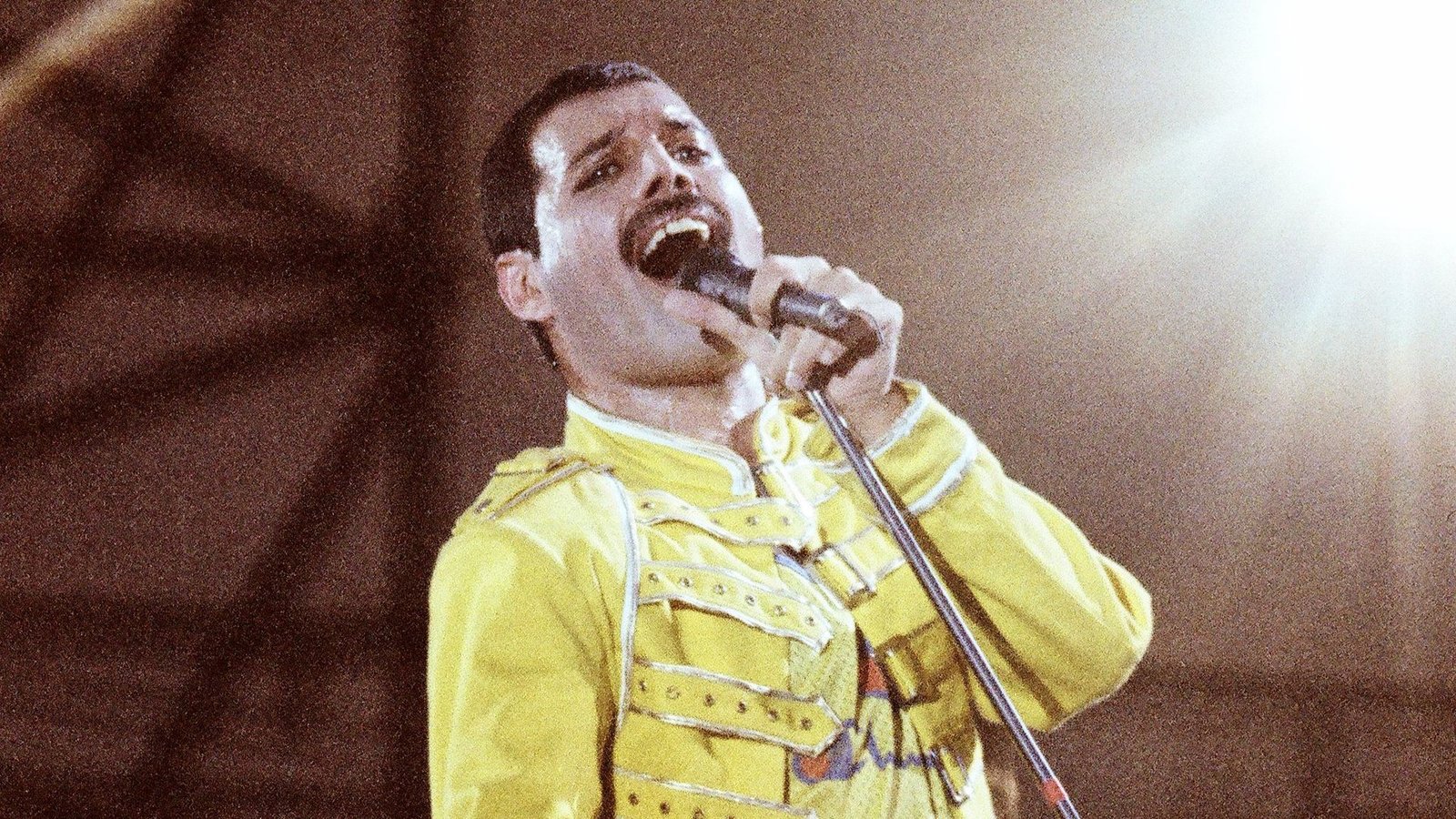
“I’M TIRED. I’LL FINISH IT TOMORROW.” BUT TOMORROW NEVER CAME. Switzerland, 1991. Freddie Mercury was so frail he could barely stand. He was recording his final song, “Mother Love.” His voice still held the power of a god, but his body was completely shattered. Before the final verse, Freddie turned to Brian May and said: “I need a little rest. I’ll come back and finish it later.” Freddie walked out of the vocal booth and never returned. He passed away just days later. The final verse had to be sung by Brian May. It wasn’t a performance; it was a heartbreaking farewell from the survivor to the legend who was gone.

Freddie

In the history of rock and roll, there are stories of excess, stories of triumph, and stories of tragedy. But few are as quietly heartbreaking as the story of the last time Freddie Mercury ever stepped in front of a microphone.

The year was 1991. The location was Montreux, Switzerland.

Outside Mountain Studios, the view of Lake Geneva was serene and timeless. Inside, however, time was running out faster than anyone wanted to admit.

Freddie Mercury, the greatest frontman who ever lived—the man who held 70,000 people in the palm of his hand at Live Aid—was fading. AIDS was ravaging his body. He was frail, gaunt, and often in immense pain. Walking was difficult; standing for long periods was nearly impossible.

But Freddie had a rule: The music comes first.

He knew he was dying. His bandmates—Brian May, Roger Taylor, and John Deacon—knew it too. An unspoken pact formed between them in those final months: Freddie would sing for as long as he had breath in his lungs, and they would make sure the world heard it.

The Shadow in the Booth

During those final sessions for what would become the Made in Heaven album, the atmosphere in the studio was a mix of intense creativity and profound sadness.

Brian May, Queen’s legendary guitarist, later recalled those days. He remembered how Freddie would arrive at the studio, needing assistance just to get to the vocal booth. He would sit down, gathering his strength, saving every ounce of energy for the red recording light.

And then, the miracle would happen.

When the tape started rolling, the frailty vanished. The voice that came out of that thin, weakened body was pure Freddie—powerful, soaring, and defying physical reality. It was a final, defiant roar against the dying of the light.

They were working on a track called “Mother Love.” It was a haunting, somber piece, a song about a man crying out for comfort and peace at the end of a long road.

It was Freddie’s reality set to music.

“I’m Tired”

They had recorded most of the song. Freddie was pushing himself harder than ever, hitting notes that would challenge a healthy singer, let alone a dying one.

They reached the final verse of the song. Freddie had just delivered a staggering vocal performance. The control room was silent, awestruck by the sheer will of the man in the booth.

But the tank was empty.

Freddie stopped. He looked through the glass at Brian May, who was manning the mixing desk.

“I’m tired,” Freddie said softly into the microphone. “I need a rest. I can’t do any more today. I’ll come back and finish it tomorrow.”

He took off the headphones. He slowly stepped out of the vocal booth. The heavy studio door clicked shut behind him.

Brian watched his friend leave, thinking they would pick it up the next day, just like they always had for twenty years.

The Tomorrow That Never Came

Freddie Mercury never came back to the studio.

That click of the door was the final punctuation mark on his recording career. He returned to his home in London, and just days later, on November 24, 1991, the world lost its greatest showman.

Back in Montreux, the tape for “Mother Love” sat on the shelf. It was a masterpiece with a missing ending.

The Final Goodbye

Some time later, Brian May had to face that tape. He had to finish the album.

He sat at the mixing desk, listening to Freddie’s isolated vocal track. It was perfect, until it suddenly stopped before the final verse. The silence on the tape was deafening.

Brian knew what he had to do. It was the hardest thing he had ever done in a studio.

Brian May stepped into the same vocal booth Freddie had walked out of. He stood before the same microphone. And with a heart heavy with grief, Brian sang the final verse that his friend couldn’t finish.

“My body’s aching, but I can’t sleep…”

When you listen to “Mother Love” today, you are hearing a seamless transition. The powerful, soaring voice is Freddie, fighting until his very last drop of energy was gone. The final, tender verse is Brian, saying goodbye to his brother.

It wasn’t just a recording session. It was an act of love, a final collaboration between two friends who changed music forever. Freddie couldn’t finish it tomorrow, so Brian finished it for him.

0 Shares:
Leave a Reply

Your email address will not be published. Required fields are marked *

You May Also Like
paul
Read More

THE NEW BEATLES FILM ARE FINALLY REAL — John Lennon, Paul McCartney, George Harrison, and Ringo Starr have faces again, the first images are everywhere, and the internet is predictably arguing about haircuts, cheekbones, and who looks closest to the four men who once rewired popular music forever. But there’s one detail hiding in plain sight that almost no one is talking about, and it has nothing to do with resemblance: it’s the way The Beatles are being separated, framed, and introduced as individuals rather than a unit — quietly mirroring the tensions, imbalances, and unspoken fractures that always existed beneath the harmony. And that raises a far more uncomfortable question for longtime fans: is this project really about celebrating the greatest band of all time, or about finally forcing us to confront a truth the music itself once kept beautifully out of view?

‘The Beatles’ Four-Part Biopics Debut First Look at Cast The Beatles are so big they’re not just getting one…
Beatles
Read More

By 1984, the Beatles were already legend. Their songs were sacred. And one rule was understood by everyone who loved them: You don’t remake a Beatles song like nothing happened. Yet that’s exactly what Paul McCartney did. What most fans don’t know is that when Paul decided to revisit one of the band’s most famous tracks, Ringo Starr refused to play on it. Not because of ego. Not because of a feud. Because John Lennon was gone. Ringo believed some things shouldn’t be touched once the four were no longer four — and this song was one of them. But what Paul did next is what makes this story unforgettable. Instead of modernizing the song… Instead of trying to outshine the original… Paul quietly copied something deeply personal John had done years earlier — not to replace him, but to remember him. Most listeners missed it. Some felt it without knowing why. And once you hear it, you can never un-hear it. This isn’t just a story about a remake. It’s about grief, restraint, and the moment a Beatle admitted that the magic couldn’t be recreated — only honored

The 1984 Beatles Remake Ringo Starr Refused to Play On (And the Quiet, Emotional Way Paul McCartney Copied…
kelly
Read More

“THIS ISN’T POP — THIS IS POWER” — KELLY CLARKSON’S OPERATIC ‘AVE MARIA’ LEFT THE WORLD SPEECHLESS The room wasn’t built for spectacle. No flashing lights. No backing track. Just hushed air, marble stillness, and the weight of history pressing in. In 2008, as the audience gathered for a solemn papal event, few expected what came next — until Kelly Clarkson stepped forward, closed her eyes, and released the opening phrase of Ave Maria. From the very first note, the atmosphere changed. Her voice — pure, rounded, astonishingly disciplined — floated through the space with operatic control and reverence. No pop inflections. No vocal runs. Just breath, tone, and unwavering pitch. A classical musician in attendance reportedly whispered, “She shouldn’t be able to do this… but she absolutely can.” The audience sat frozen, some visibly emotional, as Clarkson navigated the piece with flawless phrasing and cathedral-level projection. When she reached the final sustained note, the silence afterward felt endless — the kind that only follows something undeniable. Then came the applause, restrained but thunderous in its own way. Online, the reaction exploded almost instantly. “I thought I knew her voice,” one fan wrote. “I didn’t know she had THIS voice.” Another post went viral years later: “That was the moment every doubter lost the argument.” For pop fans, it was a shock. For vocal purists, it was a revelation. Kelly Clarkson didn’t just cross genres that day — she erased the lines between them, proving she wasn’t limited by format, fame, or expectation. As one comment perfectly summed it up: “She didn’t borrow opera for a moment. She earned it.”

“She’s a Vocal Chameleon!” Kelly Clarkson SHOCKS Fans With Opera-Level “Ave Maria” — The 2008 Pope Event Performance…
paul
Read More

The lights dimmed and a single spotlight fell on Paul McCartney, his silhouette framed against the piano as the first fragile chords of Golden Slumbers drifted into the air; in that instant, the arena seemed to dissolve, carrying everyone back to the twilight of the Beatles, where hope and farewell lived in the same breath; as the medley rose into Carry That Weight and crashed toward The End, fans clutched their hearts, whispering that this felt less like a performance and more like a journey through memory itself; when McCartney sang “And in the end, the love you take is equal to the love you make,” thousands of voices broke into unison, shaking the hall with tears and devotion; social media erupted with clips, calling it “a resurrection of Abbey Road,” while tabloids dubbed it “the night endings became eternal,” proof that McCartney still turns goodbyes into fire and forever.

A single spotlight, a fragile chord The lights dimmed. A hush spread like a tide. And then —…