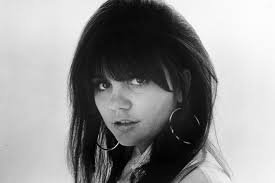
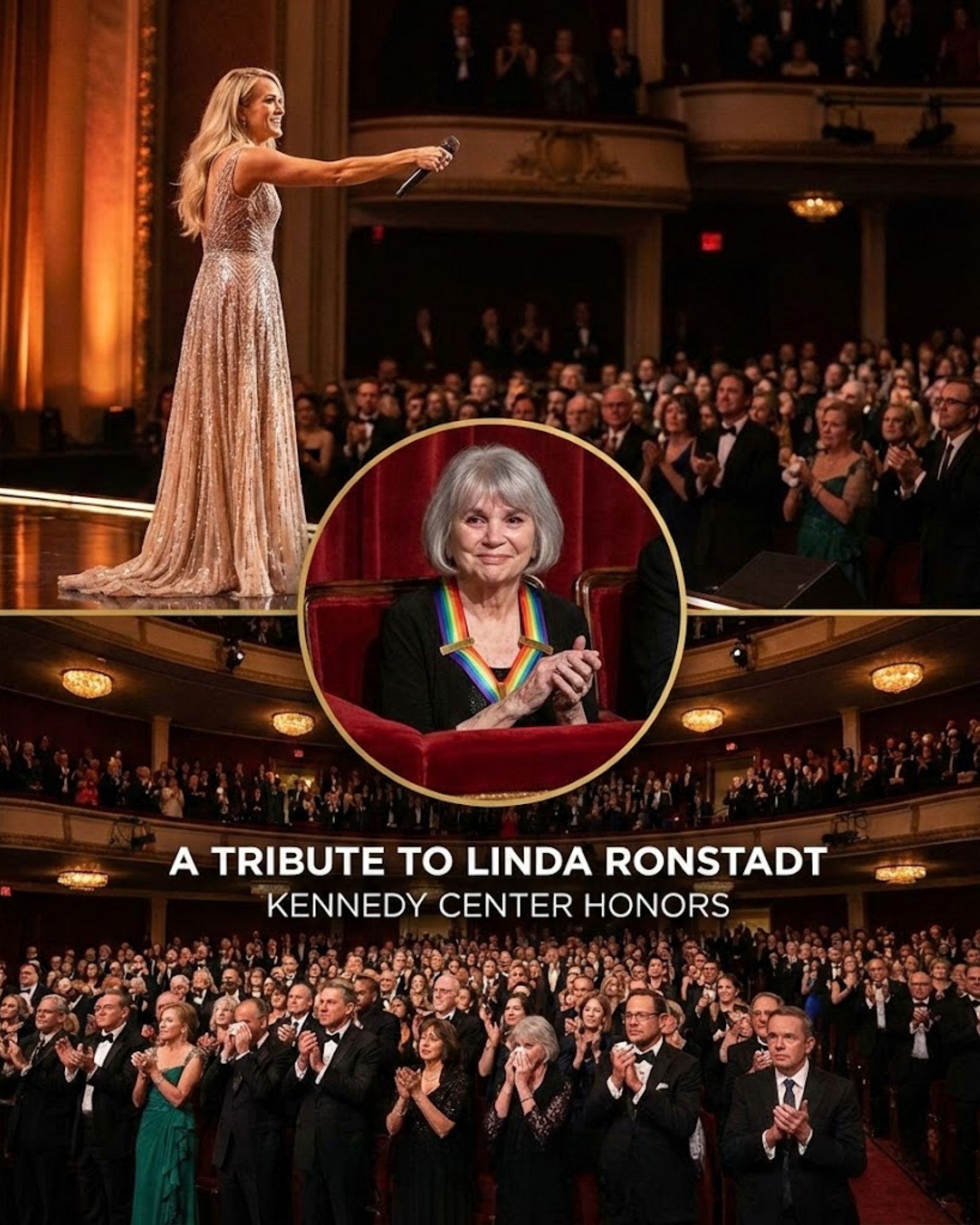
SHE TRIED TO SING ONE LAST TIME. BUT THERE WAS ONLY THE SOUND OF THE WIND. At the Kennedy Center Honors tribute, Carrie Underwood stepped out to sing “Blue Bayou.” Linda Ronstadt sat in the honoree box, her hands trembling from illness. As Carrie reached the climax, she suddenly pointed the microphone toward Linda as an invitation. Linda moved her lips. The whole world held its breath, waiting for that “golden voice” to soar. But no sound escaped. Her throat was locked tight. Instead of shame, Linda smiled and lip-synced along in silence. The entire room realized: The voice had died, but the soul was still singing louder than anyone.

Linda Ronstadt

Imagine being a painter, and one day you wake up and your hands have disappeared. Imagine being the fastest runner in the world, and your legs simply vanish. For Linda Ronstadt, it wasn’t imagination. It was her reality.

For three decades, Linda Ronstadt was a force of nature. They called her the “Queen of Rock,” but that title was too small. She conquered country, she mastered pop, she owned mariachi, and she soared through operettas. Her voice was a powerhouse—loud, precise, and absolutely unstoppable. It was the soundtrack to a generation.

But then, the music stopped.

Not because she wanted to retire. But because a cruel, rare disease called Progressive Supranuclear Palsy (PSP) came for her. It didn’t just rob her of her ability to walk easily; it stole the precise muscle control needed to sing. The voice that had sold 100 million records was silenced forever.

We all knew the facts. But we didn’t truly understand the loss until one unforgettable night at the Kennedy Center Honors.

The Glittering Tribute

The Kennedy Center Opera House was packed with the elite of Hollywood and Washington D.C. Linda sat in the presidential balcony box, wearing the iconic rainbow ribbon of an honoree. She looked elegant, but frail. Her movements were stiff, her hands resting trembling in her lap—the visible signs of the Parkinson’s-like disease ravaging her body.

On stage, a parade of superstars came out to pay tribute. Emmylou Harris choked back tears. Bonnie Raitt played slide guitar with ferocious love.

Then, country superstar Carrie Underwood stepped into the spotlight. The familiar, longing opening notes of “Blue Bayou” began.

The Invitation

Carrie Underwood has a massive voice, and she was doing the song justice. She hit the low notes with richness and the high notes with power. The audience was swaying, lost in the nostalgia of one of Linda’s greatest hits.

As the song built towards its emotional climax—that soaring bridge where the singer cries out their desire to return home—Carrie did something unexpected.

She turned away from the audience. She looked up toward the balcony box. With a gracious smile, she extended her arm and pointed her microphone directly at Linda Ronstadt.

It was a beautiful gesture. An invitation from one generation’s diva to another: Sing with me. This is your song.

The Deafening Silence

For a split second, time stopped. The entire opera house held its collective breath. A mixture of hope and terror filled the room. Could she? Just for a second? Could a miracle happen?

Up in the balcony, Linda’s instinct kicked in. It was muscle memory honed over forty years on stage.

She sat up straighter. She took a breath. Her lips parted. She formed the shape of the lyrics: “I’m going back someday…”

But there was no sound.

Not a whisper. Not a croak. Just air passing through silent vocal cords. It was like watching a magnificent bird try to fly with broken wings.

That silence was louder than any note Carrie Underwood had sung all night. It was the sound of a devastating finality. The realization hit everyone in the room like a physical blow: It’s really gone.

The Bravest Smile

This is the moment where most people would break. To be confronted with what you have lost, in front of the entire world, is unbearable.

But Linda Ronstadt didn’t cry. She didn’t look away in shame.

As Carrie continued to sing the parts Linda no longer could, Linda looked down at the stage and smiled. It was a gentle, brave smile.

And then, she continued to move her lips.

She sat there in the balcony, perfectly silent, lip-syncing along to her own masterpiece. She was participating in the only way she had left. It wasn’t a performance of sound; it was a performance of spirit.

A Standing Ovation for the Soul

Down below, the audience erupted. It wasn’t polite applause. It was a guttural, emotional standing ovation that lasted for minutes. People were openly weeping, wiping tears away with their formal gloves and handkerchiefs.

They weren’t clapping for the song. They were clapping for the courage it took to sit there and face the music you can no longer make.

In that silent moment, Linda Ronstadt taught us more about artistry than she did in 30 albums. She showed us that while a disease can steal a voice, it cannot steal the soul of the singer.

The Queen is silent now. But long after the curtain fell that night, her spirit was the loudest thing in the building.

0 Shares:
Leave a Reply

Your email address will not be published. Required fields are marked *

You May Also Like
neil diamond
Read More

“At 84, he didn’t finish the song — the stadium did.” Under the soft lights of Fenway Park, Neil Diamond sat in a wheelchair, hands trembling, smile still there. He started “Sweet Caroline.” One line in, his voice cracked and drifted away. The crowd didn’t let the song fall. It grew, warm and loud, until every seat was standing. When the chorus came, it sounded like gratitude more than music. Neil leaned toward the mic and whispered, “You finished the song for me.” His eyes shone. It felt less like a show and more like a goodbye wrapped in melody and light. The silence tried to arrive. Forty thousand voices wouldn’t allow it.

A Night That Was Supposed to Be Just Another Concert Fenway Park had seen championships, heartbreaks, and decades…
paul
Read More

No red carpet. No ribbon-cutting. No speeches. Just Paul McCartney unlocking a door at 5 a.m. — and 250 people receiving free medical care for the first time in years. No one knew this was happening until the very first patient walked in. And the quiet words Paul said that morning are leaving everyone who hears them in tears.

PAUL McCARTNEY OPENS AMERICA’S FIRST 100% FREE HOMELESS MEDICAL CLINIC There were no red carpets.  No ribbon-cutting ceremony.…
adam
Read More

In A Heartfelt And Soulful Performance For A Grammy Museum Special, Adam Lambert Delivered A Jaw-Dropping Cover Of The Weeknd’s Chart-Topping Hit “Blinding Lights.” Stripping Away The Original’s Glossy Production, Lambert Transformed The Synth-Pop Anthem Into A Raw, Emotionally Charged Ballad That Left Fans Mesmerized By His Impeccable Vocals And Artistic Vision. In A Cozy, Intimate Setting, His Soaring Falsetto And Dynamic Phrasing Brought Fresh Depth To The Song, Showing Off His Unmatched Versatility. This Unforgettable Rendition Not Only Reinvents The Iconic Track But Also Highlights Lambert’s Unique Ability To Connect Deeply With His Audience, Proving Once Again Why He’s One Of The Most Influential Artists Of His Generation

Adam Lambert Stuns With Hauntingly Beautiful “Blinding Lights” Cover At Grammy Museum Special In a performance that left…
Il Volo
Read More

Il Volo’s Piero Barone was in the middle of a soaring phrase, the kind that makes the air feel thinner. Then he noticed her. A young fan at the edge of the stage, eyes wide, frozen between shock and joy. Without breaking the song, Piero reached down and lifted her into his arms. His voice kept climbing. Clear. Fearless. Almost unreal. The lights softened. The crowd leaned in. No one rushed the moment. You could see it on his face — this wasn’t a gesture. It was instinct. A quiet kindness wrapped inside a powerful note. When the song ended, the applause came late, like people needed a second to breathe. And some moments… make you wonder what really happened after the music stopped.

Il Volo’s Piero Barone created a moment fans will never forget when, during a live concert, he gently lifted a…
Blake
Read More

“THEY SAID IT WOULD NEVER HAPPEN… AND THEN IT DID.” Blake Shelton and Miranda Lambert stood on stage and sang “Over You,” the song born from their shared grief over his brother. As Blake’s voice cracked and Miranda’s trembled, 12,000 people watched them reopen an old wound in real-time. It wasn’t a duet; one fan tearfully tweeted it was more like “an exorcism of everything they never said,” leaving millions wondering if they were witnessing closure or just a ghost.

Blake Shelton & Miranda Lambert Reunite for an Emotional “Over You” in Nashville Some songs don’t just play.…
Reba McEntire And Dolly Parton
Read More

“SHE SAID IT WOULD HURT TO SING THIS — AND IT DID.” Reba McEntire stepped onto the Grammy stage and admitted softly that this would be a hard song to sing. You could see it in the way she held the mic. The lights felt dimmer. The air heavier. She wasn’t alone. Brandy Clark stood beside her, the one who reshaped the lyrics. Lukas Nelson waited in quiet respect. Behind them, faces and names appeared, one after another. Reba didn’t push her voice. She let it breathe. Honest. Bare. When the final note faded, no one rushed to clap. The silence said more than applause ever could. It felt less like a tribute… and more like standing inside a shared memory that still hasn’t finished speaking.

Reba McEntire Delivers Emotional In Memoriam Performance at the 2026 Grammy Awards The Grammy Awards are a celebration…