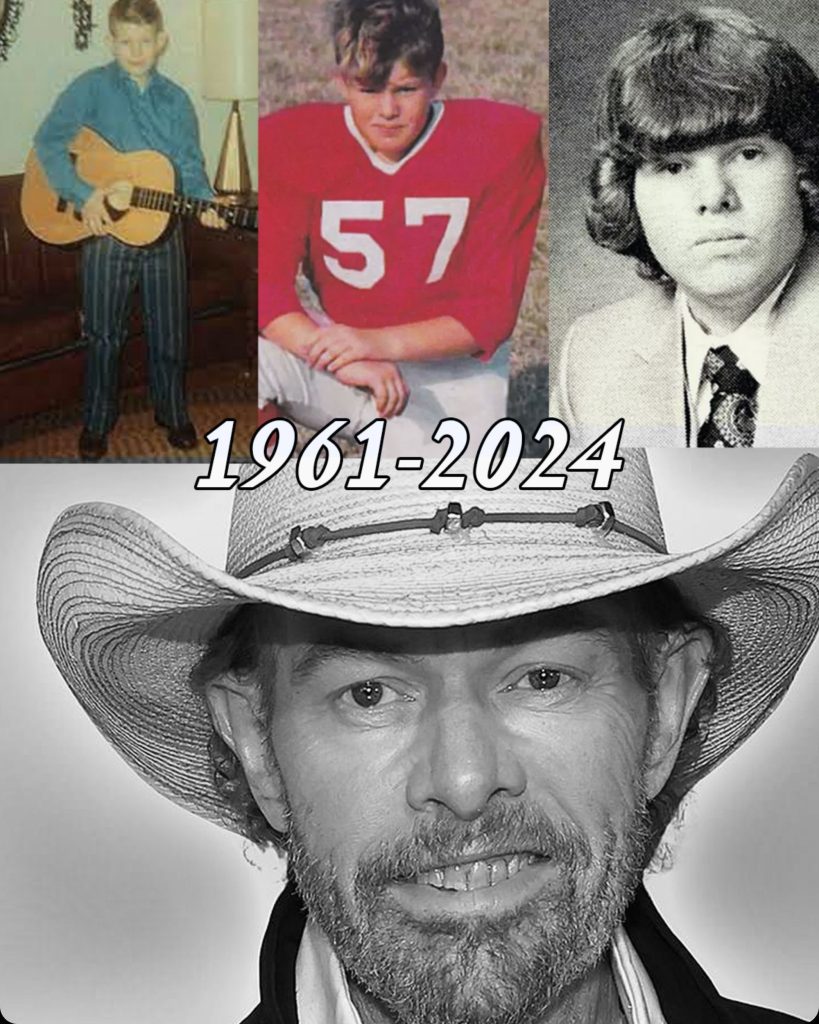
From a boy in Oklahoma with a guitar too big for his hands, to a high school kid in jersey number 57, Toby Keith’s story was never about shortcuts. It was about grit, laughter, and the steady climb of a dreamer who refused to quit. Each picture in this collage tells a chapter — a son leaning into his mother’s arms, a young man chasing touchdowns, a teenager staring into the camera with fire in his eyes. And then, the cowboy hat, the voice, and the songs that would carry him into the hearts of millions. Toby’s journey was not polished or easy, but it was real — grounded in family, faith, and the kind of hard lessons that only small towns can teach. Perhaps that’s why his music feels like home: because it was built from every stage of a life well lived, from 1961 to 2024.

toby-keith

Introduction:

A few years ago, I happened upon The Mule late one night, expecting a standard crime drama to pass the time. The film delivered its story with quiet restraint, but what stayed with me long after the screen faded to black wasn’t a scene or a line of dialogue — it was a song. As the credits rolled, a voice, worn yet steady, carried a message that felt less like entertainment and more like a personal reminder about time, aging, and the quiet courage required to keep moving forward. That song was Toby Keith’s “Don’t Let the Old Man In.”

Written in 2018, the piece emerged from an unexpectedly intimate source. Toby Keith had spoken with Clint Eastwood during a golf tournament, where Eastwood — then in his late eighties and preparing to direct and star in The Mule — shared the phrase that would become the song’s heartbeat: “I don’t let the old man in.” The line struck Keith with immediate force. Within days, he had transformed those words into a composition that distilled decades of life experience into a few spare, unforgettable minutes.

About

Musically, the song is disarmingly simple. A gentle acoustic guitar forms its backbone, supported by minimal production that leaves space for Keith’s textured, deeply human vocal performance. There is no grand orchestration, no dramatic swell — only a melody that feels almost hymn-like in its steadiness. This restraint is precisely what gives the song its emotional power. It sounds less like a studio creation and more like a late-night confession shared between old friends.

Lyrically, the song frames aging not as an enemy, but as an internal negotiation. The “old man” of the title is not merely a number of years; it is the voice of surrender, the temptation to slow down in spirit before the body truly demands it. Lines such as “Ask yourself how old you’d be / If you didn’t know the day you were born” challenge listeners to reconsider how much of aging is mindset. The tone is never defiant in a loud or rebellious way. Instead, it carries a quiet resolve — a decision to stay engaged with life, to keep showing up, even when the road grows steeper.

Toby Keith cause of death

After its release in December 2018 and its prominent placement in The Mule, the song quickly resonated far beyond country music audiences. It became a staple in Keith’s live performances, often delivered with visible emotion. As he later faced serious health challenges, the song’s meaning deepened, transforming into an anthem of endurance not only for him, but for listeners confronting illness, loss, or personal setbacks. Veterans, survivors, and everyday people have embraced it as a source of strength, sharing its message widely as a reminder that resilience is as much mental as physical.

Today, “Don’t Let the Old Man In” stands among Toby Keith’s most enduring works. It is more than a soundtrack piece or a late-career single; it is a life lesson set to music. Each time it plays, it invites reflection: not on how young we are, but on how fully we choose to live. In the end, its message is simple and quietly profound — the old man only wins if we open the door.

Video:

0 Shares:
Leave a Reply

Your email address will not be published. Required fields are marked *

You May Also Like
beatles
Read More

“Every Generation Still Finds Its Way Back to Us” — Ringo Starr Explains Why The Beatles Never Stopped Belonging to the World, How Teenagers Stream the Same Songs Their Grandparents Once Held on Vinyl, Why Abbey Road’s Simplicity Became Immortal, and How the Band’s Music Quietly Keeps Reintroducing Itself to Humanity Decade After Decade Without Ever Asking Permission

Ringo Starr explains lasting Beatles legacy: “Every generation listens to us” Ringo Starr, the drummer of the legendary…
Led Zeppelin
Read More

After nearly three decades of silence, the unthinkable roared to life: Led Zeppelin reunited—loud, unrelenting, and absolutely glorious. As Robert Plant, Jimmy Page, and John Paul Jones stepped onto the stage, time didn’t rewind—it detonated. And when Jason Bonham sat behind his father’s throne, pounding out the first thunderous beats of “Kashmir,” the crowd erupted in tears, screams, and pure disbelief. This wasn’t just a concert. It was a resurrection. Legends didn’t return for nostalgia—they returned to remind the world why they’ll never be replaced. One night. One song. One band. And a firestorm that made rock and roll feel immortal all over again.

Led Zeppelin Reunites After 27 Years—And Rock Will Never Be the Same It wasn’t just a concert. It…
ben haggard
Read More

Every time Ben and Noel sing Mama Tried, it feels like the audience is transported back to 1968 — the year Merle first told his own story through music. The song was born from the memory of a troubled youth, and of a mother who tried everything to save her son from the wrong path, only to watch him end up behind bars. Noel brings a seasoned, weathered tone to his voice, reviving the original spirit their father left behind. Ben adds a younger, more rustic touch — a gentle reminder that this story still holds weight for today’s generation. Together, their voices don’t just perform a hit — they extend Merle’s honest confession, threading it into the present. For Ben and Noel, Mama Tried isn’t just a legacy to preserve — it’s their way of continuing their father’s story, reminding audiences that the most powerful country music always begins with a real wound.

“Scroll down to the end of the article to listen to music.” Introduction There are songs that define…
BRIAN
Read More

At a commemorative concert in London, Brian May stepped out, his signature white curls glowing, clutching his weathered Red Special guitar. By his side stood Roger Taylor. But the true center of attention was a haunting void in the middle of the stage—a lone, upright microphone stand with no one behind it. The music began. “Love of My Life.” Brian plucked the strings, the notes ringing out with heartbreaking sorrow. He didn’t sing. Instead, he let 80,000 fans fill the silence, singing Freddie Mercury’s part for him. Brian closed his eyes, tilting his head toward the heavens as if communing with an old friend. For a moment, it felt like Freddie was really there—right beside him, draped in his royal cape, conducting this colossal choir. When the song faded, Brian walked slowly toward that empty microphone and made a gesture that moved even the toughest men to tears…

In the world of rock and roll, silence is usually the enemy. Concerts are built on noise—the roar…