ON THIS NIGHT IN 1967, The Beatles DELIBERATELY BROKE EVERY ORCHESTRAL RULE TO CREATE 24 BARS THAT CHANGED MUSIC HISTORY. Paul McCartney stood in EMI Studio One conducting a 40-piece orchestra instructed not to play together, not to listen to each other, sliding from the lowest possible notes to the highest in rising chaos, recorded repeatedly until it sounded like 200 musicians, while fake noses, paper glasses and rolling cameras turned a formal session into something dangerously unrepeatable. And almost no one outside that room was ever meant to see how close it came to going completely off the rails.

Beatles

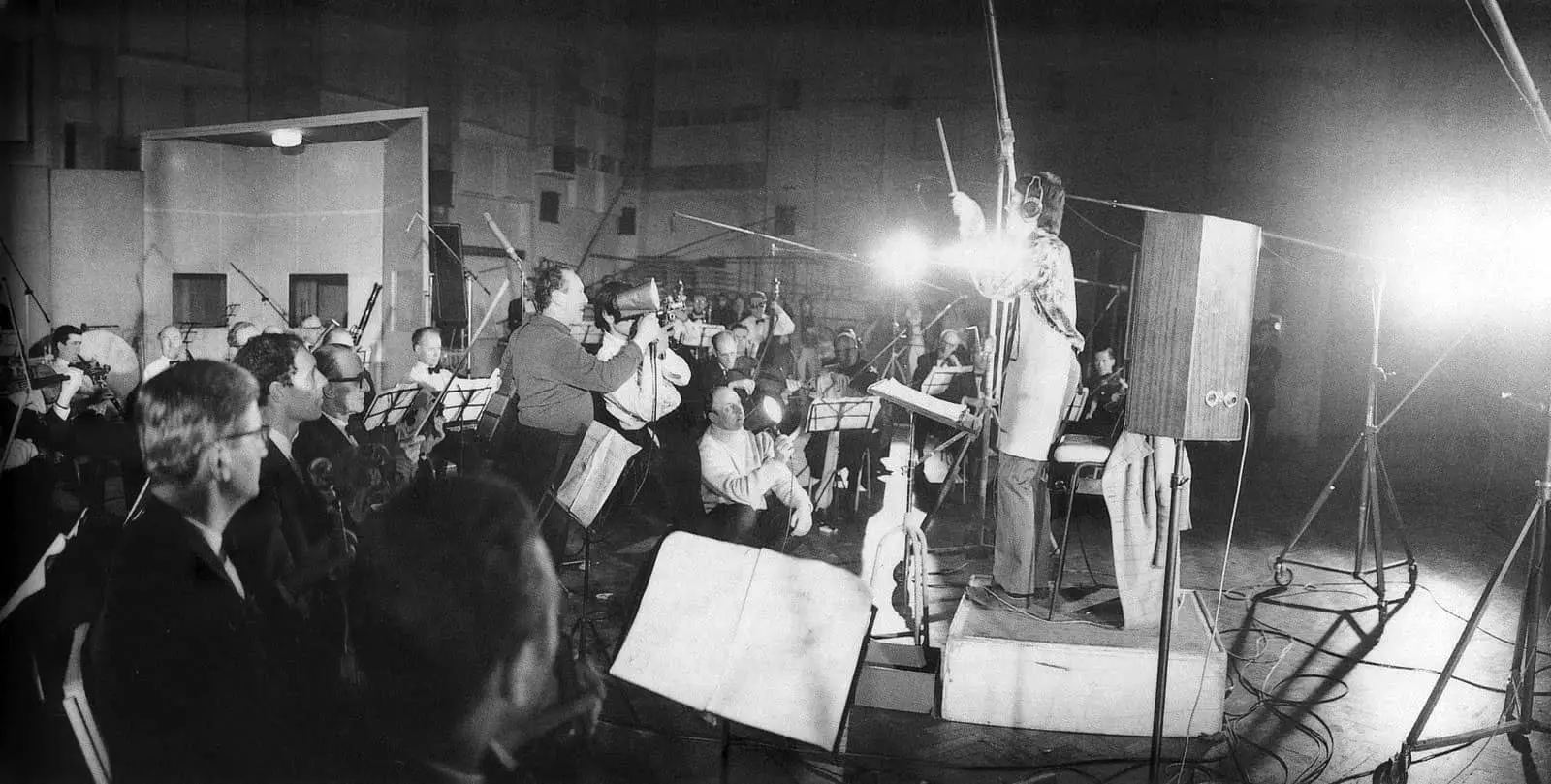
This date in 1967: Paul conducting the 40-piece orchestra for the 24-bar instrumental passage on ‘A Day in the Life’. The Studio One session at EMI took place from eight in the evening until one in the morning.
10 February 1967: Recording: A Day In The Life | The Beatles Bible

“What I did there was to write, at the beginning of the 24 bars, the lowest possible note for each of the instruments in the orchestra,” George Martin would explain. “At the end of the 24 bars, I wrote the highest note each instrument could reach that was near a chord of E major. Then I put a squiggly line right through the 24 bars, with reference points to tell them roughly what note they should have reached during each bar.
“The musicians also had instructions to slide as gracefully as possible between one note and the next. In the case of the stringed instruments, that was a matter of sliding their fingers up the strings. With keyed instruments, like clarinet and oboe, they obviously had to move their fingers from key to key as they went up, but they were asked to ‘lip’ the changes as much as possible too.
“I marked the music ‘pianissimo’ at the beginning and ‘fortissimo’ at the end. Everyone was to start as quietly as possible, almost inaudibly, and end in a (metaphorically) lung-bursting tumult. And in addition to this extraordinary of musical gymnastics, I told them that they were to disobey the most fundamental rule of the orchestra. They were not to listen to their neighbours.

“A well-schooled orchestra plays, ideally, like one man, following the leader. I emphasised that this was exactly what they must not do. I told them ‘I want everyone to be individual. It’s every man for himself. Don’t listen to the fellow next to you. If he’s a third away from you, and you think he’s going too fast, let him go. Just do your own slide up, your own way.’ Needless to say, they were amazed. They had certainly never been told that before.”
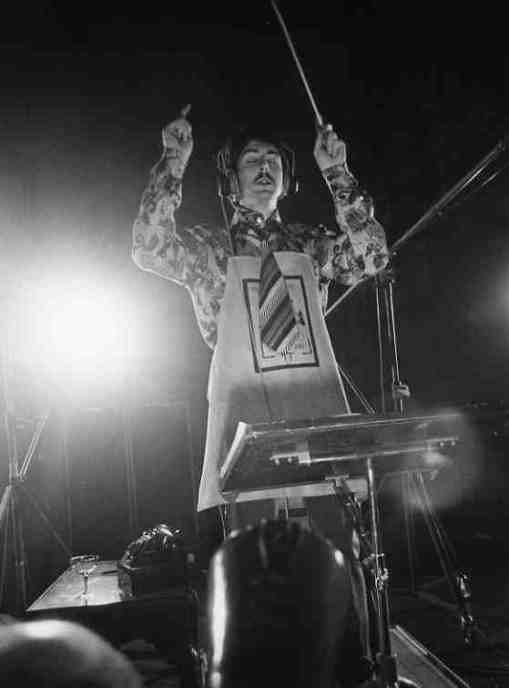
Paul McCartney conducting the orchestra for "A Day in the Life" at EMI Recording Studios, Sgt Pepper sessions, 1967.

The orchestra was recorded onto a separate reel of tape that, thanks to Ken Townsend and the EMI technical team figuring out how to run two four-track machines together, ran parallel to The Beatles’ previously-recorded instruments and vocals – allowing for said orchestra to be recorded five times and sound like 200 session musicians.
“After one of the rehearsals I went into the control room to consult Geoff Emerick,” The Beatles’ producer continued. “When I went back into the studio the sight was unbelievable. The orchestra leader, David McCallum, who used to be the leader of the Royal Philharmonic, was sitting there in a bright red false nose. He looked up at me through paper glasses. Eric Gruenberg, now a soloist and once leader of the BBC Symphony Orchestra, was playing happily away, his left hand perfectly normal on the strings of his violin, but his bow held in a giant gorilla’s paw. Every member of the orchestra had a funny had on above the evening dress, and the total effect was completely weird.”

Intending to produce a TV special about the making of the Sgt. Pepper, assistant Tony Bramwell oversaw the use of silent colour film to capture the evening’s proceedings.

Paul McCartney presumably recording an orchestra part of a song

“We handed out loaded 16mm cameras to invited guests including, among others, Mick and Marianne, and Mike Nesmith of The Monkees,” he’d recall. “They were shown what to press and told to film whatever they wanted. The BBC then banned the subsequent video. Not because of the content of the footage, but because the song itself had drug references.”

Here’s some of that footage…

0 Shares:
Leave a Reply

Your email address will not be published. Required fields are marked *

You May Also Like
Fleetwood mac
Read More

“LANDSLIDE DIDN’T JUST PLAY — IT BROKE US.” When Fleetwood Mac released their haunting ballad in 1975, nobody was ready for the emotional wreckage it would leave behind. The delicate guitar picked like falling glass, Stevie Nicks’ trembling voice cut like truth itself, and suddenly fans everywhere felt seen, exposed, undone. “IT WASN’T A SONG — IT WAS A CONFESSION,” one critic wrote at the time. Another fan whispered decades later: “I still can’t hear it without crying… it’s my whole life in three minutes.” Nearly 50 years on, Landslide hasn’t aged — it’s only grown heavier, sharper, and more devastating. Fleetwood Mac didn’t just write a classic… they wrote the soundtrack to our scars.

Back in 1975, Fleetwood Mac delivered a heart-wrenching masterpiece with “Landslide,” a song that still resonates deeply with…
paul-mccartney
Read More

“At the end, George Harrison spoke 3 words — and they ended decades of hurt.” In that small Los Angeles hospital room, everything felt quieter than it should’ve. George Harrison was painfully thin, but his eyes were sharp, almost peaceful. Paul walked in slow, like he already knew this would be their last real moment. No cameras. No crowds. Just two men who once changed the world… and once hurt each other more than they meant to. George reached for Paul’s hand, squeezed it with what little strength he had left, and whispered three soft words. Paul froze. Then his eyes flooded. He held George’s hand tighter, like he was trying to keep him here a little longer. Those words didn’t belong to fame or history. They belonged to brothers.

The Final Words Between Paul McCartney & George Harrison — A Farewell That Healed Decades of Silence Introduction…
Blake
Read More

It was supposed to be a smooth promo rollout — but just as Keith Urban faces intense headlines over his divorce from Nicole Kidman, a leaked video from his upcoming music competition series with Blake Shelton, The Road, has taken the internet by storm. Set to officially premiere on Sunday, October 19, 2025, the show promises to be more than just another talent contest — and this early footage proves it. The leaked clip, allegedly pulled from an internal NBC preview, shows Keith fighting back tears during an audition where a contestant performs a song about “holding your family together when love starts to fade.” Blake, sitting beside him, quietly says, “Man, that one hit close to home, huh?” Keith nods, visibly emotional, before whispering, “More than you know.” Fans immediately flooded social media, calling it “the most real moment ever caught on a music show.” The leaked video also reveals stunning visuals — dusty highways, roadside bars, and small-town singers chasing one last chance. Each episode reportedly follows artists on a literal and emotional journey, “from heartbreak to hope.”

Leaked Video From Keith Urban & Blake Shelton’s New Show The Road Stuns Fans — “The Most Real Moment Ever…