Il Volo at Super Bowl LX: The Night the Stadium Fell Quiet
Super Bowl nights are built for noise. For explosions of sound and color. For moments that feel too loud to hold inside a screen. But on a cool February evening in 2026, Super Bowl LX delivered something nobody expected: a pause so deep it felt like the entire stadium leaned forward together.
It started like every other championship night. The lights pulsed. The crowd roared in waves. Cameras swept across painted faces, waving flags, and players warming up with shoulders loose and eyes locked. Everything about the atmosphere said spectacle.
And then, right before the halftime lights hit full blaze, something changed.
The scoreboard dimmed. The noise softened, not because anyone asked for it, but because people sensed something different was about to happen. The stage didn’t roll out with the usual chaos. No stampede of dancers. No fireworks punching the sky. Instead, a narrow walkway appeared, lit in warm gold, almost like an aisle in an old theater.
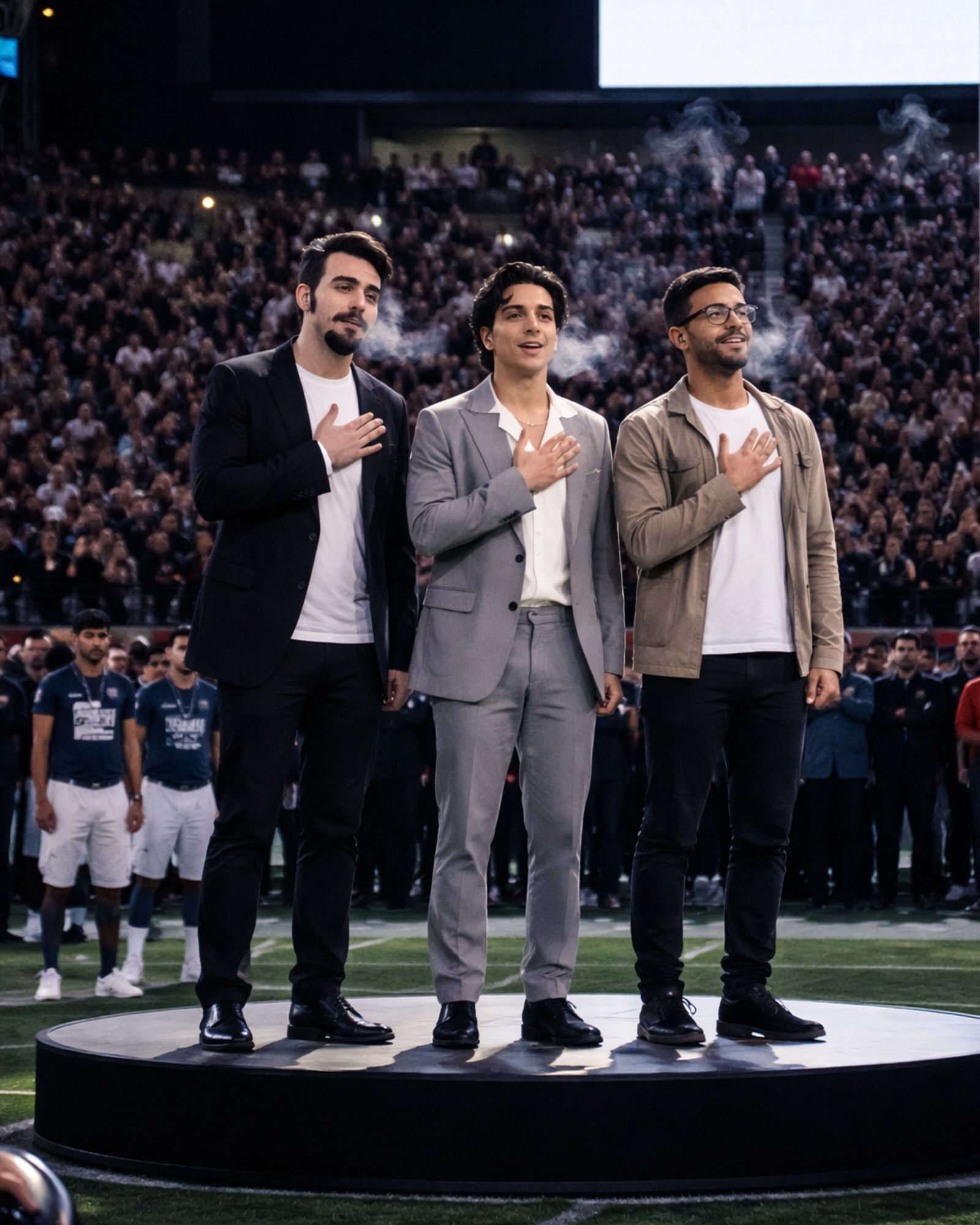
Three figures stepped into that light.
Il Volo.
A Different Kind of Entrance
At first, the crowd didn’t know what to do with them. Not because Il Volo didn’t belong there, but because the energy was so unexpected. Super Bowl halftime is trained into us as an adrenaline rush. Il Volo walked in like they were carrying something fragile, something worth protecting.
No grand announcement. No booming introduction. Just the sound of footsteps and a quiet hush spreading like a blanket.
Someone near the front lifted a phone to record, then lowered it again, almost embarrassed to interrupt the moment. In the upper levels, people leaned over the rails. In the lower bowl, you could see hands stop mid-clap. Even on the sidelines, players who had been bouncing and shouting suddenly went still, as if they were hearing a voice from somewhere far away.
Il Volo didn’t try to compete with the stadium. Il Volo invited the stadium to listen.
The First Note That Changed Everything
When the first note rose, it didn’t blast through the speakers like a command. It drifted, steady and clean, the way a candle flame holds its shape even in a draft. It was unmistakably a vocal sound—human, warm, controlled—yet strong enough to reach every corner of the crowd.
There’s a moment in big events where the audience decides whether something is worth their attention. That decision happened quickly. Because the singing didn’t feel like performance first. It felt like presence.
As the harmony built, you could see the emotional shift ripple outward. People turned to look at the person next to them, not to talk, but to silently confirm, Are you hearing this too?
It was the kind of sound that makes you remember someone you haven’t thought about in years.
It wasn’t about language or genre. It was about the physical sensation of voices blending so smoothly that the stadium itself seemed to relax.
What the Cameras Caught
Broadcast cameras love reactions, but they rarely capture a stadium-wide stillness. That night, they did. The shots weren’t just of cheering fans. They were of faces softened by surprise. Of eyes fixed on the stage, not blinking. Of security guards standing a little straighter. Of sideline staff frozen with their hands clasped in front of them, like they didn’t want to move.
At one point, the camera found a young kid in a jersey, mouth open in awe, tugging a parent’s sleeve as if to ask a question without daring to speak. A few rows behind him, an older man wiped his cheek quickly, pretending it was the cold air.
Even the commentators—trained to fill every second—fell into a rare silence. And that silence became part of the performance, as important as the music itself.
Not a Halftime Show, a Halftime Moment
The brilliance of the idea, in this imagined version of Super Bowl LX, wasn’t that Il Volo tried to turn the Super Bowl into an opera house. It was the opposite. Il Volo met the Super Bowl exactly where it was—loud, chaotic, hungry for spectacle—and offered something steadier.
The harmonies didn’t feel like a distraction from the game. They felt like a reminder that huge crowds can still share a quiet emotion at the same time. For a few minutes, the stadium stopped being sections and seats and team colors. It became a single room listening together.
The final passage rose like a promise. Not flashy. Not begging for applause. Just honest, controlled, and full of that rare kind of confidence that doesn’t need to shout.
When the Last Note Faded
There’s usually a big ending. A cue to scream. A final burst of light. But here, the ending was the most surprising part. When the last note disappeared, nobody exploded into cheers right away.
They waited.
Not because they didn’t love it, but because they didn’t want to break it. People looked around, almost unsure what the correct reaction was. It felt like leaving a cathedral. Like stepping out of a memory too quickly might ruin it.
Then applause started. First scattered, then building, then becoming a storm. But it wasn’t the usual roar of hype. It was gratitude. The kind that says, Thank you for giving us something we didn’t know we needed.
Why This Story Sticks
Even as a fictional “what if,” the idea of Il Volo at Super Bowl LX lingers because it flips the script. It imagines a halftime show that doesn’t chase bigger noise, but deeper feeling. It asks a simple question: what happens if the biggest stage in American sports chooses quiet, even briefly?
Maybe that’s why the thought of it feels so real. Because everyone has experienced a moment when a song makes the world pause. And whether it happens on a stadium stage or in a car at night, the effect is the same.
So here’s the curiosity that keeps following the story: if Il Volo ever did step into that halftime light, would the stadium really fall silent?
Or would we finally admit that sometimes the most unforgettable Super Bowl moment isn’t a touchdown at all—it’s the instant a crowd forgets to breathe.