One Father. Two Sons. Three Voices That Stopped a Hall
There are concerts where you remember the songs, and then there are concerts where you remember the silence. Not the awkward kind. The kind that happens when thousands of people feel the same thing at once and don’t want to break it.
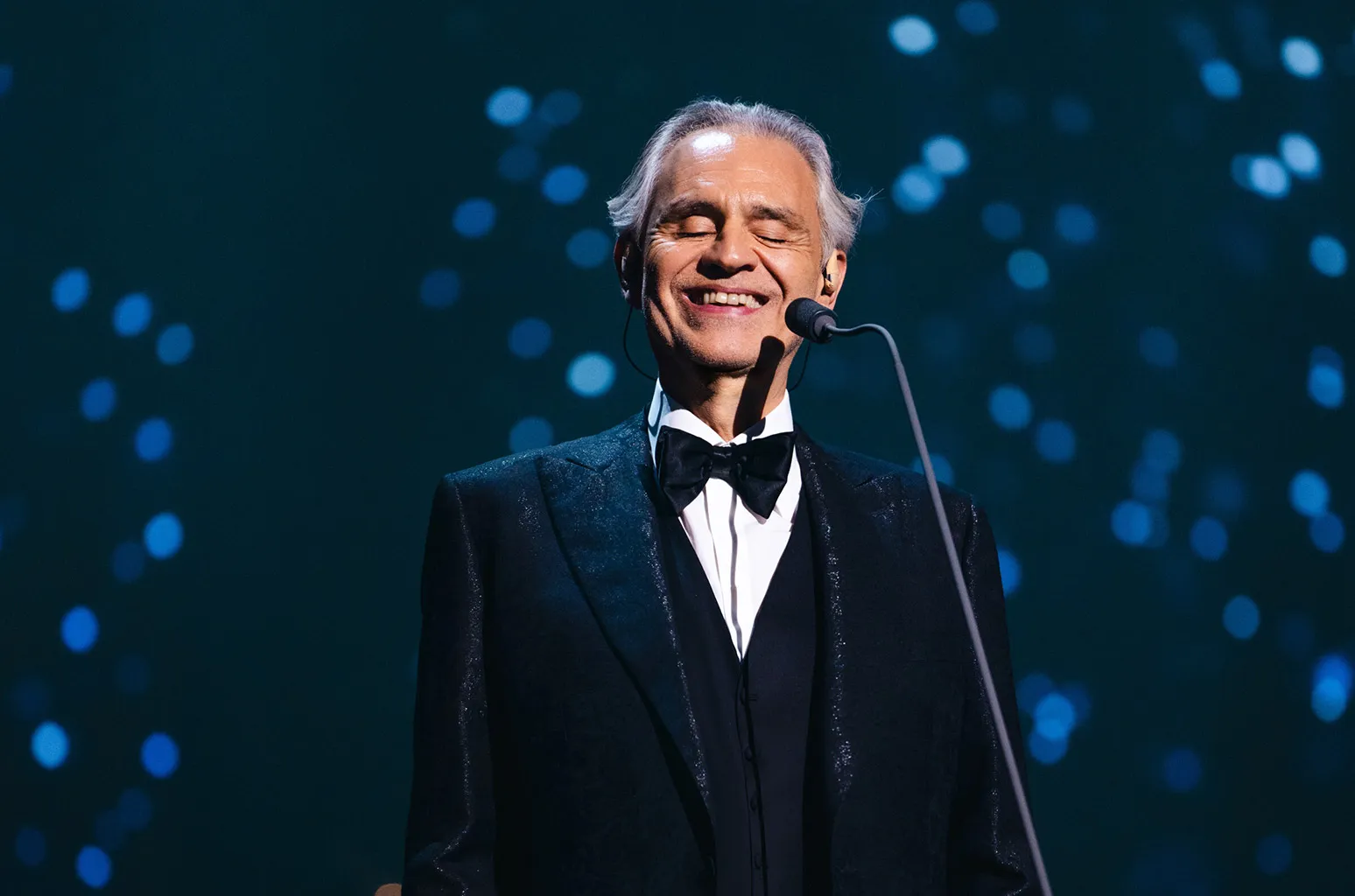
That’s what it felt like the night Andrea Bocelli walked onto the stage under warm, glowing lights. The room was ready for him. The orchestra was ready. The audience was ready. And still, something about the way he stepped forward made it feel like this was going to be different.
Andrea Bocelli stood alone at first. No big introduction. No dramatic pause for applause. Just a quiet presence and a calm breath, like someone about to say something important without raising their voice.
Then it happened.
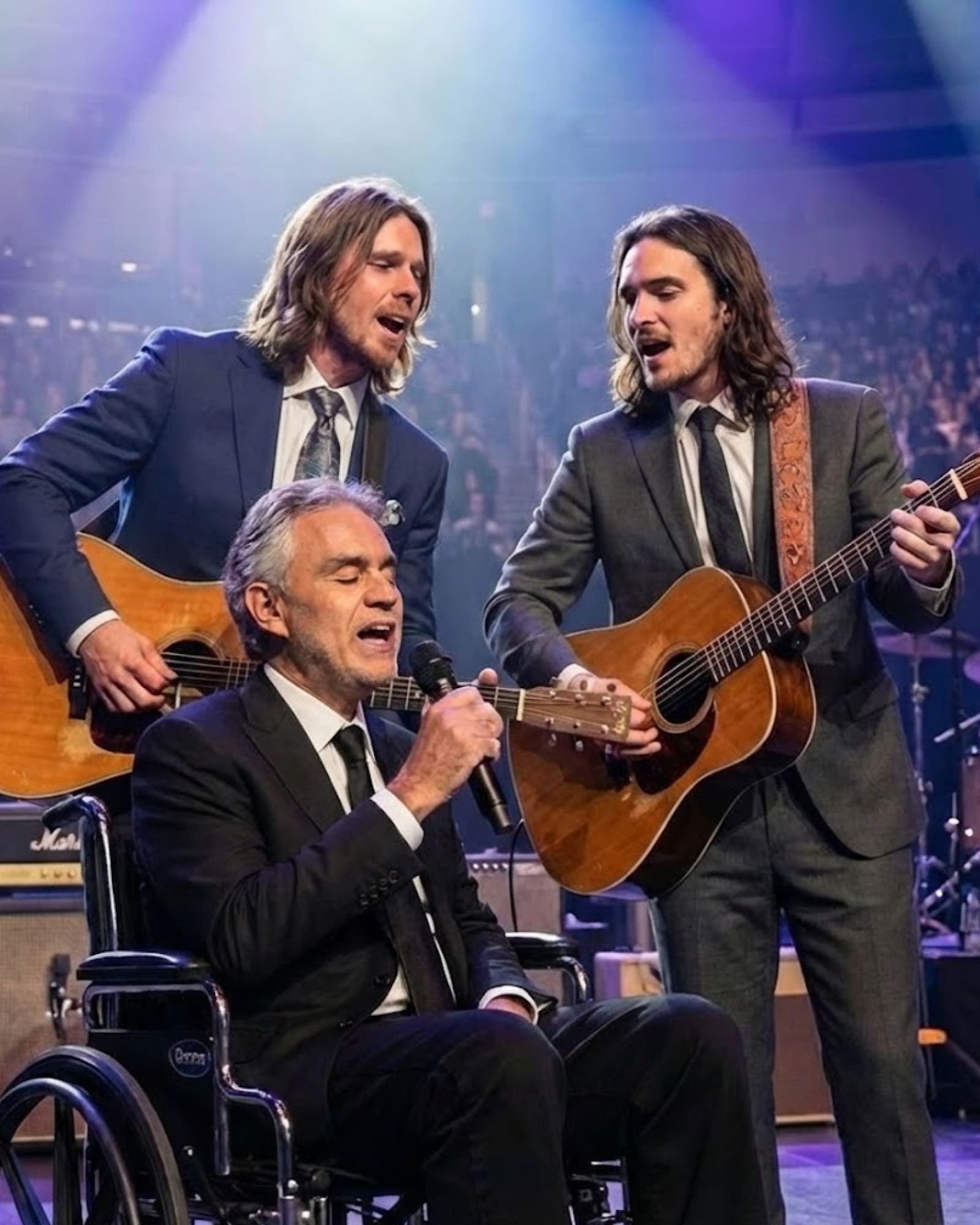
Almost casually, Matteo Bocelli and Amos Bocelli appeared beside their father. No announcement. No spotlight sweeping across the stage to “reveal” the moment. They simply walked in and took their places the way family does—like they belonged there, because they did.
Some people in the crowd noticed right away. You could see a few heads tilt, a few hands lower their phones, as if instinctively deciding this wasn’t the kind of moment you wanted to watch through a screen.
Andrea Bocelli paused. Just for a second. His eyes softened, and if you were close enough, you might have caught that small flicker of emotion people get when they’re trying to stay steady in front of an audience.
Then Andrea Bocelli began to sing.
The Song Started, and the Room Leaned In
It wasn’t loud. It didn’t need to be. The first notes carried a kind of calm confidence, the kind that doesn’t ask for attention but receives it anyway.
Matteo Bocelli joined in with a voice that lifted the melody without trying to overpower it. There was something bright in his tone—something that felt young but grounded, like he knew exactly where the song needed to go.
And Amos Bocelli held it steady, quietly shaping the moment with a gentle musical presence. The effect wasn’t flashy. It was balanced. Like the way a family works when it’s at its best—each person adding something different, each person listening as much as they give.
You could feel the audience change. It wasn’t about cheering anymore. It wasn’t about waiting for the “big part.” The room leaned forward in a way that felt almost protective, as if everyone was trying not to disrupt whatever was happening onstage.
For a few minutes, it didn’t feel like a concert. It felt like a memory being made in real time.
No words. No signal. Just presence.
Why It Felt Bigger Than Music
There’s a reason moments like this land so hard.
We’re used to seeing families in public. Photos. Interviews. Headlines. But seeing a father and his sons share one stage—without any forced drama, without a speech telling you what to feel—hits differently.
Because it’s familiar.
Most people know what it’s like to watch time move. To notice your parents aging. To realize you’re becoming the next chapter whether you feel ready or not. To feel that mix of pride and fear when you see someone you love step into their own strength.
In that hall, Andrea Bocelli, Matteo Bocelli, and Amos Bocelli weren’t just performing a song. They were showing something quieter: how legacy actually works. Not in trophies or headlines, but in the way one voice becomes two, and then three.
People didn’t clap right away. That was the most telling detail. The audience wasn’t confused. They weren’t uninterested. They just didn’t want to interrupt the feeling. The stillness settled between notes, and it felt respectful, almost sacred.
Even when the song swelled, it still felt controlled. Not controlled like rehearsed. Controlled like a family trying to keep their composure in front of strangers while sharing something personal.
The Moment That Froze Time
At some point, you stop thinking about technique. You stop listening like a critic. You listen like a person.
You notice the small things: the way Andrea Bocelli held his posture, steady and calm. The way Matteo Bocelli seemed to watch for the tiniest cue, as if the real performance was the connection. The way Amos Bocelli stayed present without needing attention, keeping the moment grounded.
And then you realize what you’re really watching: love, translated into music.
When the final notes faded, the room didn’t explode right away. There was a beat—just a breath—where the crowd seemed to ask itself, “Did that really just happen?”
That’s the kind of moment people carry home. The kind they bring up days later in casual conversation, still sounding slightly surprised. The kind that makes you think about your own family, even if you didn’t mean to.
Because yes, it was a performance. But it also felt like a reminder: time passes, and love stays. And sometimes, the most unforgettable part of a concert isn’t the loudest note. It’s the quiet truth sitting beside it.