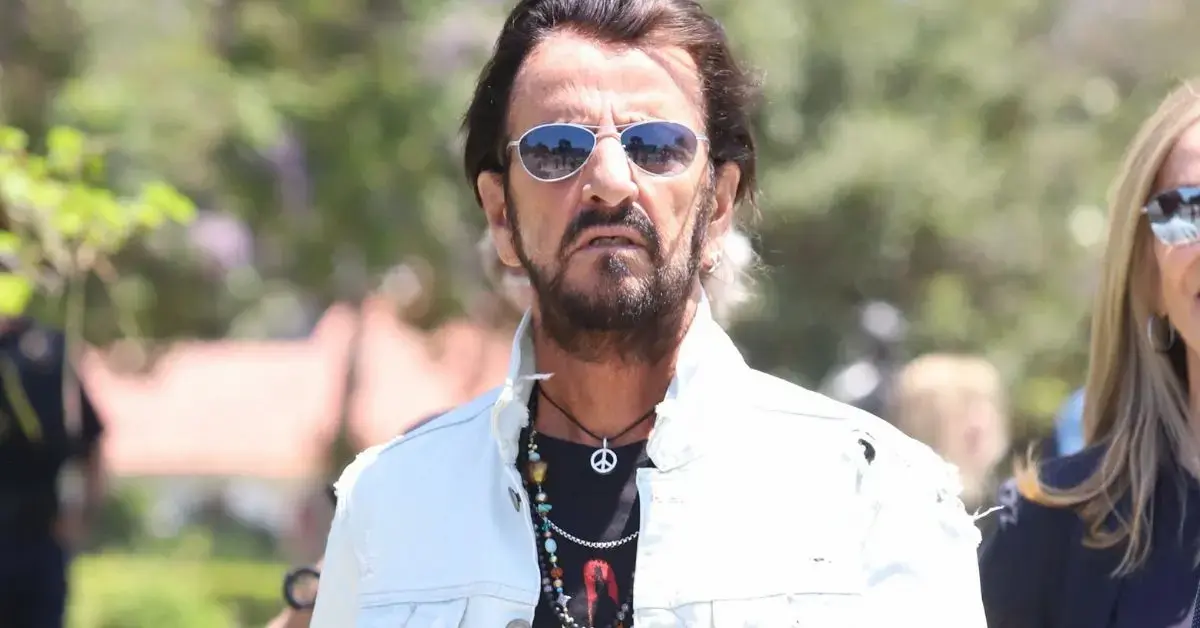
London — February 2026
When news broke that Ringo Starr had secured a major Netflix deal to tell his life story, the reaction wasn’t explosive — it was reflective. For many, the announcement felt overdue. After decades of being described, analyzed, ranked, and mythologized, the drummer who helped anchor the most influential band in modern history is finally choosing to speak in his own rhythm.
Those close to the production say the series will unfold in layered chapters rather than a straight-line chronology. It begins not with stadiums, but with hospital rooms in postwar Liverpool — the childhood illnesses that kept him out of school for long stretches and quietly shaped his resilience. Friends and historians note that Ringo’s sense of timing didn’t just come from music; it came from long hours listening, observing, surviving. Before the screaming crowds, there was a boy learning patience.

The series reportedly devotes significant time to the Beatlemania years — not as spectacle, but as pressure. Archival footage will be paired with newly recorded interviews in which Ringo reflects on what it meant to become globally famous before turning 25. The cameras will not only revisit the roar of Shea Stadium or the flash of Ed Sullivan lights, but also the private toll: the isolation, the expectations, and the unspoken hierarchy within a band that reshaped culture overnight.
Producers hint that one of the most anticipated segments will explore the narrative that followed him for decades — the label of “the lucky one” or “the other Beatle.” Music scholars interviewed for the project challenge that reduction, pointing to his distinctive swing feel, inventive fills, and left-handed phrasing on a right-handed kit as defining elements of The Beatles’ sound. In this telling, Ringo isn’t a footnote. He is foundation.
Beyond the band, the documentary turns to reinvention. His solo career. The All-Starr Band concept that redefined collaborative touring. The battles with addiction in the late 1970s and the recovery that followed. According to insiders, these sections are handled without dramatization — simply told, steady and unvarnished. “He doesn’t perform vulnerability,” one production source said. “He just states the facts.”

What makes this project different from past retrospectives is tone. It is neither defensive nor triumphant. Instead, it carries the quiet confidence of someone who no longer needs to compete with memory. At 85, Ringo Starr is not chasing legacy; he’s contextualizing it. The emphasis, sources say, is less on proving importance and more on understanding endurance — how a working-class musician remained culturally relevant without reinventing himself beyond recognition.
Industry analysts view the deal as part of a broader shift in streaming platforms toward authoritative, first-person storytelling. But for fans, the appeal is simpler. It’s the chance to hear him speak without interruption. To see him framed not by headlines, but by history told from within.
If early production notes are any indication, the final episode will not end with a crescendo. It will close, fittingly, on rhythm — a rehearsal room, a drum kit, and a man still keeping time. Not because he has to. Because it’s who he has always been.
And in an era that often rewrites the past in louder fonts, Ringo Starr’s decision to tell his story quietly may be the most compelling note of all.