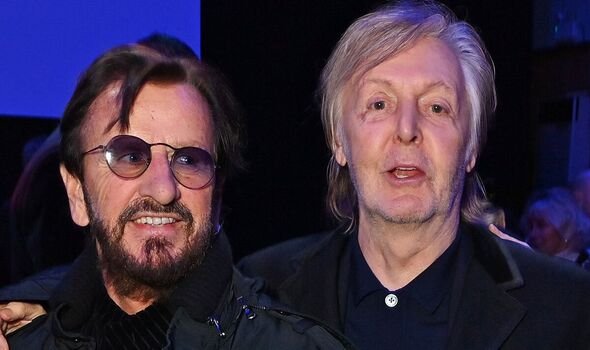
At 85, Ringo Starr is not retreating into legacy. He is expanding it. This week, the former Beatle officially announced a brand-new tour, a decision that feels less like a victory lap and more like a continuation of something he never intended to finish. The headline could have leaned on nostalgia, but Ringo’s tone is different. “I’m not done yet,” he said — not as a challenge, but as a simple statement of fact. For a musician who has spent more than six decades behind a drum kit, movement has always mattered more than myth.
The announcement arrives at a time when most artists of his generation have slowed their schedules or shifted into curated retrospectives. Ringo, instead, is stepping back into arenas with the calm assurance of someone who understands exactly why he is there. He does not carry the weight of proving relevance. He carries the rhythm of continuity. His career has never depended on spectacle. Even at the height of Beatlemania, he was the steady pulse beneath the chaos, the drummer who made room for everyone else while anchoring the sound that changed popular music forever.

This new tour is not framed as a farewell, nor as a reunion, nor as an attempt to recreate the 1960s. It is presented as something simpler and perhaps more radical: presence. Those close to the rehearsals describe a room filled not with sentimentality but with focus. Ringo’s energy, they say, is measured and deliberate. He moves with the ease of experience, not the urgency of youth, but there is no trace of reluctance. If anything, there is clarity. At 85, he knows the value of each stage he steps onto.
The phrase “I’m not done yet” resonates precisely because it resists conclusion. It suggests unfinished chapters, unfinished conversations, unfinished songs. For Ringo, music has never been about frontman dominance or narrative control. It has been about connection — the shared beat between musician and audience. Through decades of solo work and with his All-Starr Band, he has cultivated a touring life built on collaboration and joy rather than competition. This tour continues that philosophy. It is not a monument to the past; it is an invitation to the present.

There is also something quietly powerful about an 85-year-old artist choosing forward motion in an industry obsessed with youth. Popular culture often frames aging as withdrawal, as if creativity must obey a timetable. Ringo refuses that framework. His voice may carry the grain of time, his movements may be slower than they once were, but neither signals retreat. Instead, they signal evolution. The rhythm is still there — perhaps deeper now, perhaps steadier, perhaps more aware of silence between the notes.
For fans across generations, the announcement carries layered meaning. For those who grew up with The Beatles, it represents continuity — proof that the music that shaped their youth still breathes. For younger audiences, it offers something rarer: the chance to witness history not as archive, but as living presence. Ringo does not perform like a relic. He performs like a man who still finds purpose in the act itself.
Ultimately, this tour matters not because of scale, but because of intent. It is not about proving stamina or competing with modern spectacle. It is about honoring a lifetime of rhythm by continuing to play it. At 85, Ringo Starr is not chasing applause. He is answering instinct. He is stepping forward not to relive what was, but to affirm what still is. And in doing so, he reminds the world that some lights do not fade — they simply learn how to glow differently.