RIVALS, WAVES, AND A QUIET PIANO: PAUL McCARTNEY AFTER NEIL SEDAKA

Music history has a way of simplifying what was never simple.

By 1964, the British Invasion had redrawn the pop landscape almost overnight. American charts shifted dramatically as bands from Liverpool and London surged forward. For artists who had dominated the late 1950s and early 1960s, the change was abrupt. Among them was Neil Sedaka, whose string of hits suddenly found less space on radio playlists increasingly shaped by the new British sound.

It is easy, in hindsight, to frame that era as a clean break — one generation replacing another. But careers rarely end in a single moment. Sedaka would later describe those years as a kind of wilderness: diminished airplay, fewer large venues, and the quiet work of starting over.

At one point, he remarked that he could write in the style of Paul McCartney. It was not necessarily a declaration of rivalry as much as acknowledgment of influence. Rather than retreat, Sedaka relocated to London, played smaller clubs, and gradually rebuilt his audience. Reinvention became a necessity. He later recorded orchestral work with the London Symphony Orchestra — a move that signaled ambition beyond pop formulas.
The narrative of competition between artists of that era has long circulated among fans. The British Invasion did not merely introduce new sounds; it reshaped market realities. Yet those who lived through the transition often describe something more nuanced than “killed careers.” The industry shifted. Tastes evolved. Some artists adapted in new directions; others found renewed success later in unexpected ways.

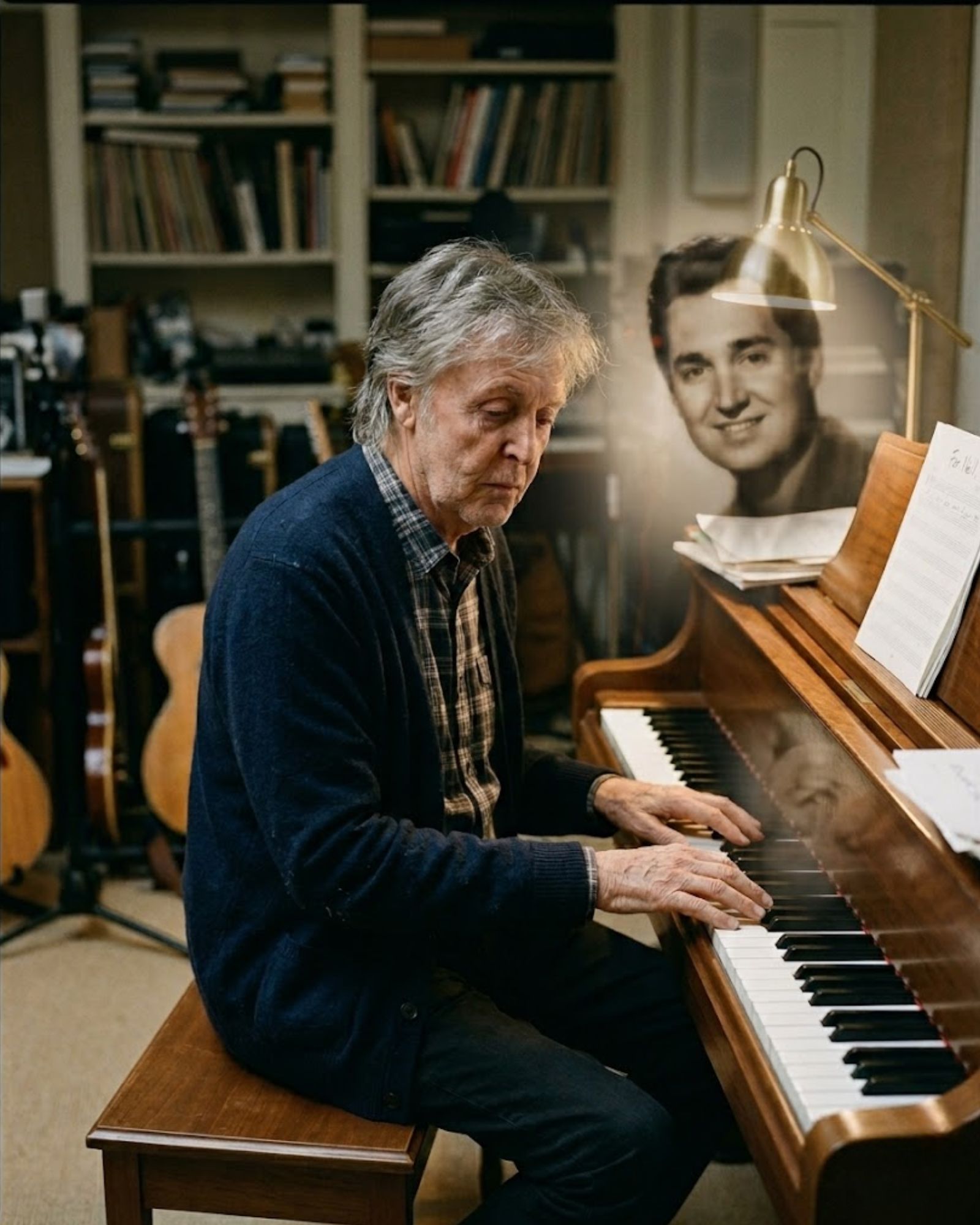
When news of Sedaka’s passing began circulating, attention naturally returned to those intersections in music history. Reports suggested that Paul McCartney quietly cleared his schedule in the hours that followed. There was no immediate public statement. No social media tribute. Just an absence.

According to someone close to him, he spent the evening alone at his piano.

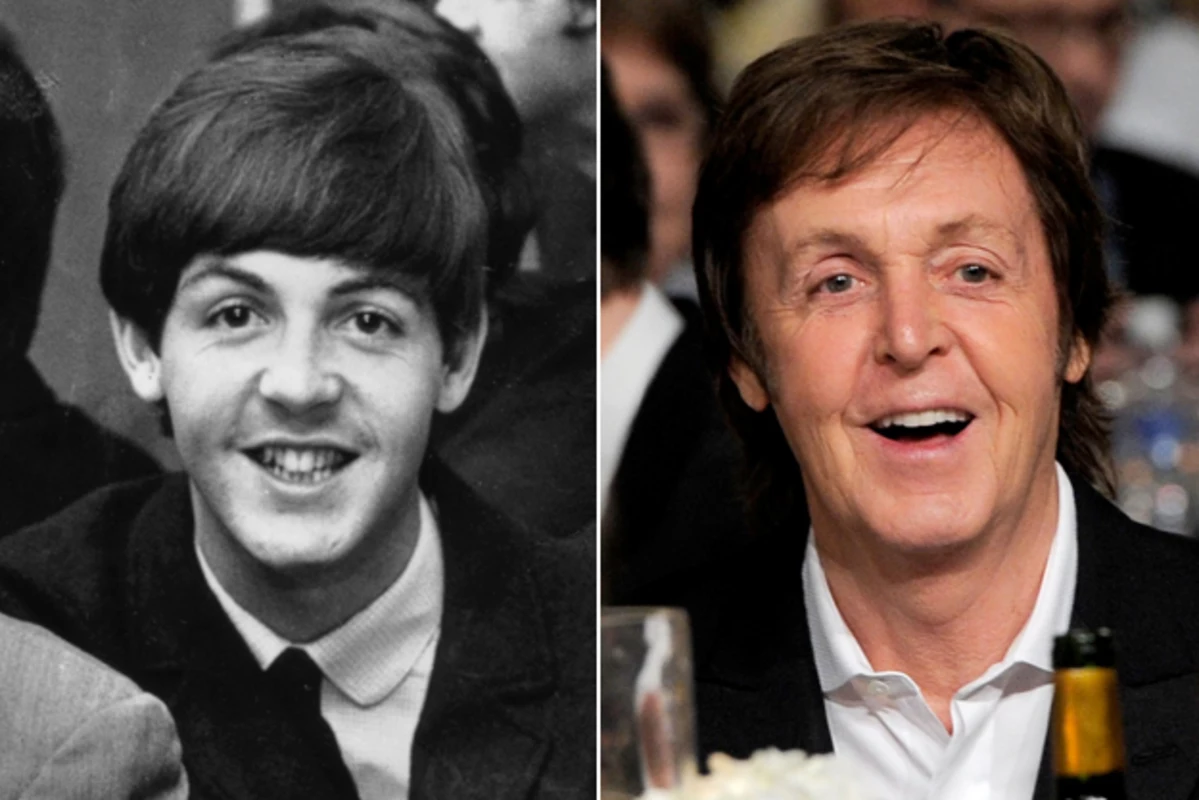
If true, the image feels consistent with how McCartney has often processed change — privately first. For artists whose careers span decades, rivals are rarely just competitors. They are markers of shared eras. They represent chapters of cultural evolution that few outside the industry fully understand.

The idea that McCartney “buried” Sedaka’s career belongs more to dramatic storytelling than to documented fact. The British Invasion was a tidal shift involving many bands, market forces, and audience appetite. Sedaka himself would experience revival later in the 1970s. Music history, when examined closely, reveals cycles rather than casualties.

Still, loss reshapes perspective.

For musicians who began their journeys in the early 1960s, time has gradually narrowed the circle of contemporaries. Each passing carries personal resonance beyond public headlines. Even without public statements, gestures — canceled engagements, a quiet evening at the piano — can suggest reflection.

If McCartney did sit alone that night, playing something that felt neither entirely his nor entirely Sedaka’s, it would not necessarily signal rivalry resolved. It would signal shared history acknowledged.

Pop music often thrives on narratives of triumph and displacement. Yet behind those narratives are writers who listened to one another, borrowed ideas, and competed in ways that sometimes sharpened craft rather than destroyed it.

Sedaka once said he could write like McCartney. McCartney, in turn, has often spoken of the importance of strong melody — something both men valued deeply. Their careers unfolded differently, but they occupied overlapping chapters of the same story.

When an era’s voices begin to fade, what remains is not chart position but influence.

And sometimes, the most fitting tribute is not a statement.

It is a melody played in private.

0 Shares:
Leave a Reply

Your email address will not be published. Required fields are marked *

You May Also Like
Stephen Wilson
Read More

Stephen Wilson Jr. didn’t just perform at the 2025 CMAs—he tore the whole room open and put it back together again. His haunting version of “Stand By Me” felt less like a song and more like a storm rolling through the arena. One spotlight. One trembling voice. And suddenly the entire crowd was frozen, hanging on every note as he poured years of pain, love, memories, and unanswered questions into the air. By the time he clutched a rosary at the end, it stopped being a performance altogether. It became a prayer. A confession. A son talking to his father the only way he still knows how. What started in quiet living rooms—him singing through tears, trying to make sense of the grief—had now become a hymn echoing across Nashville’s biggest stage.

Sometimes, one voice and one spotlight is all it takes to shake an entire arena. Stephen Wilson Jr.…
jelly
Read More

“MILLIONS WERE WATCHING, BUT JELLY ROLL WAS TALKING TO GOD.” Jelly Roll stood on the Grammy stage with shaking hands and wet eyes. He didn’t sound like a winner. He sounded like someone who had survived himself. His voice cracked as he said Jesus doesn’t belong to parties or labels. He belongs to the lost. The words hung in the bright lights, heavier than the trophy. He spoke about a prison radio, a Bible, and nights when hope felt illegal. You could almost see those old walls behind him as he whispered, “I love you, Lord.” Tattoos, tears, and a quiet pause between breaths. It felt less like a speech and more like a confession. Some stories don’t start on stages. They start in the dark. And this one still has pages left.

“Jesus Is For Everybody” — When Jelly Roll’s Tears Turned the Grammys Into Holy Ground No one could…
Il Volo
Read More

“I’ve Never Heard Anything Like This!” When IL Volo Took the Stage at Radio Italia Live, No One Was Prepared for What Came Next. Their Performance of “Capolavoro” Wasn’t Just Powerful — It Was an Emotional Earthquake. As Their Voices Rose in Perfect Harmony, Something Unexpected Happened Mid-Song That Left the Audience in Stunned Silence. Every Note Felt Like It Carried a Story of Love, Loss, and Triumph. By the Final Crescendo, Fans Were Wiping Away Tears, Unable to Believe What They Had Just Witnessed. One Viewer Wrote, “This Isn’t Just Music — It’s Pure Emotion in Human Form.” IL Volo Didn’t Just Sing — They Made the World Feel.

  Il Volo’s “Capolavoro” on Radio Italia Live: A Performance That Took Our Breath Away15 Years, One Voice,…
Beatles-on-the-Rooftop
Read More

73 MILLION Americans tuned in… and pop culture never recovered. On Feb. 9, 1964, The Beatles hit The Ed Sullivan Show and detonated Beatlemania in real time — screams, tears, and a clear “before vs after” moment that changed music, fashion and youth culture overnight. 62 years later, that footage still feels unreal.

THE NIGHT THAT CHANGED AMERICA FOREVER: How 73 MILLION Viewers Watched The Beatles Ignite ‘Beatlemania’ on The Ed…
THE MONKEES
Read More

WHEN THE MONKEES CHANGED TELEVISION FOREVER: It was September 12, 1966, when The Monkees first premiered on NBC — a quirky new show about four young dreamers in a make-believe band. No one knew that within months, fiction would become reality. With hits like “I’m a Believer” and “Last Train to Clarksville,” they leapt from TV screens to radio waves, capturing the spirit of a generation. Blending humor, heart, and unforgettable melodies, The Monkees redefined pop entertainment and left a legacy that still dances brightly in the memories of those who grew up singing along.

WHEN THE MONKEES CHANGED TELEVISION FOREVER It was September 12, 1966, when the world first met four mischievous, wide-eyed…