It wasn’t just a duet. It felt like a door quietly reopening after years.
When Paul McCartney stepped back onto the stage for his encore, the crowd expected a classic. What they didn’t expect was the figure who followed him into the light. As the first aching notes of “Oh! Darling” rang out, Chrissie Hynde appeared beside him — and suddenly, the night shifted. This wasn’t just another stop on a tour. It was a reunion few realized they’d been waiting for.
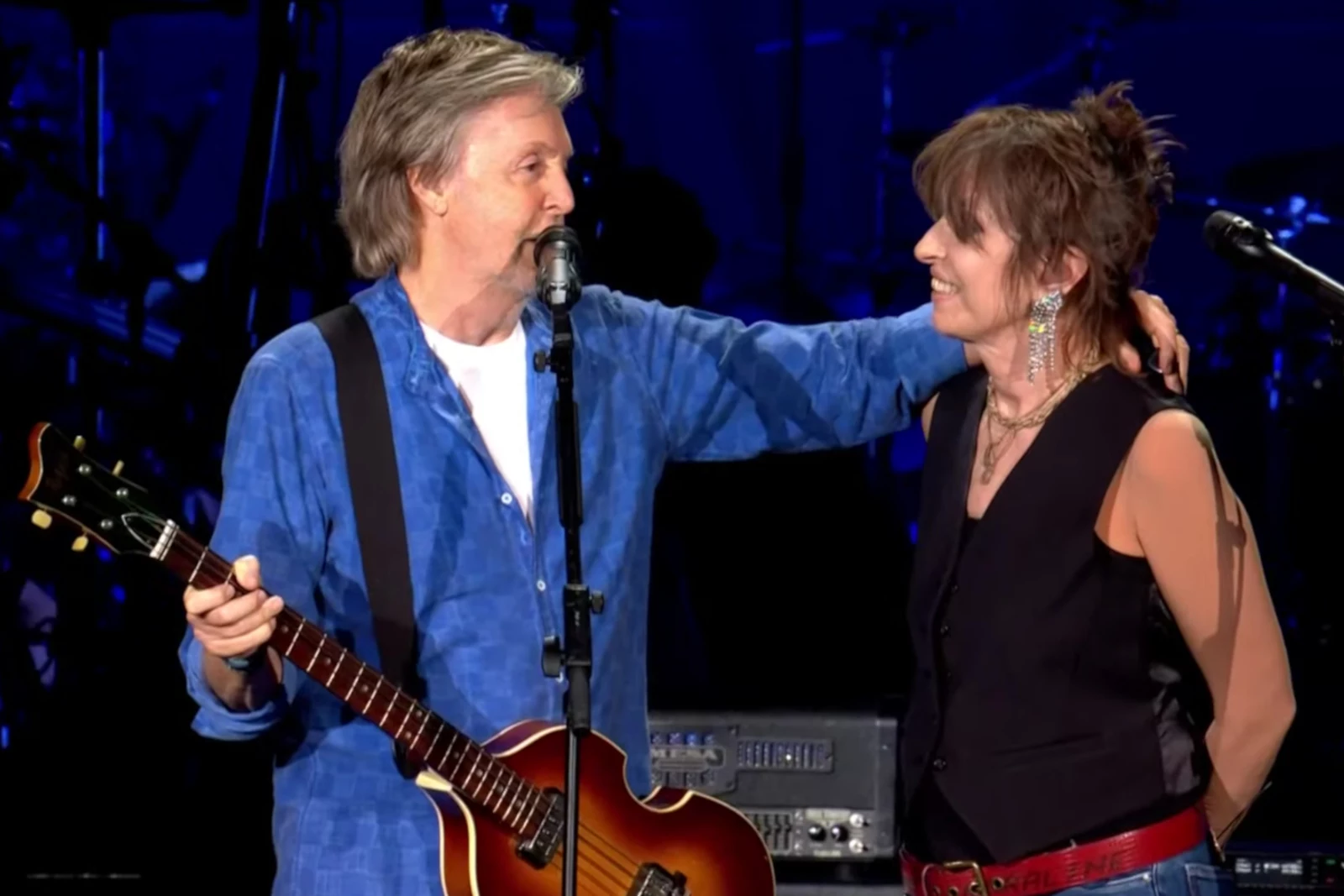
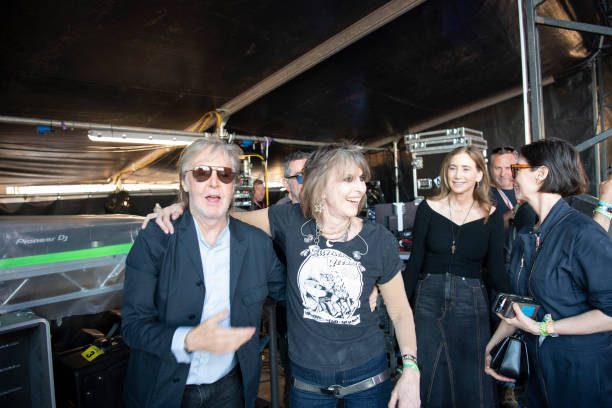
For years, the two British rock icons had moved in overlapping circles — benefit concerts, mutual admirers, the shared DNA of UK rock royalty. But a moment like this, shoulder to shoulder on a Beatles classic from Abbey Road, hadn’t happened in a long time. Time had passed. Careers had evolved. Stages had changed. And yet, when they stood together again, it felt disarmingly natural — almost inevitable.
McCartney’s voice, still carrying that familiar rasp that once defined an era, opened the song with restrained control. Then Hynde stepped in. Her smoky, defiant tone didn’t soften the edges — it sharpened them. “Oh! Darling” has always been a plea wrapped in power, but that night it sounded different. Less like a performance. More like a conversation between two artists who understood every crack and tremor in the lyrics.
There was a moment — subtle, but impossible to miss — when they turned toward each other and traded lines up close. No theatrics. No exaggerated gestures. Just focus. The kind of musical eye contact that only happens when both performers trust what the other will do next. The band pulled back slightly, letting the tension breathe. And the audience, thousands strong, fell into a hush usually reserved for something fragile.
What made it electric wasn’t volume. It was restraint. They didn’t try to recreate 1969. They didn’t chase the past. Instead, they leaned into who they are now — veterans of stages around the world, artists who have lived through decades of change in music and in life. The urgency in their voices didn’t feel accidental; it felt earned.
Fans later described the performance as “unexpectedly emotional.” Some said it was the closest they’d felt to the rawness of early Beatles recordings in years. Others simply called it “fire.” But what lingered wasn’t nostalgia. It was the sense that this reunion meant something personal — even if the full story remained unspoken.
Why now? That question hung quietly in conversations afterward. There had been no major press build-up, no promotional hints of a special guest. Just a spontaneous-feeling moment that seemed to unfold organically. Perhaps that’s why it resonated so deeply. It didn’t feel engineered. It felt chosen.

As the final chorus swelled, their harmonies locked in tightly — not perfect in a polished studio way, but perfectly human. McCartney let the last note stretch, Hynde’s voice threading through it before both stepped back, exchanging a brief, knowing smile. The applause wasn’t explosive at first. It was stunned. Then it rose — long, sustained, grateful.
In an industry built on constant reinvention, surprise collaborations, and headline moments, this felt different. It wasn’t about shock value. It wasn’t about proving anything. It was about two artists revisiting a song that once defined heartbreak and turning it into something seasoned, resilient, and alive again.
And maybe that’s why the performance will linger. Because for a few minutes, it wasn’t about history. It was about connection — the kind that doesn’t fade with time, but waits quietly until the right night to return.