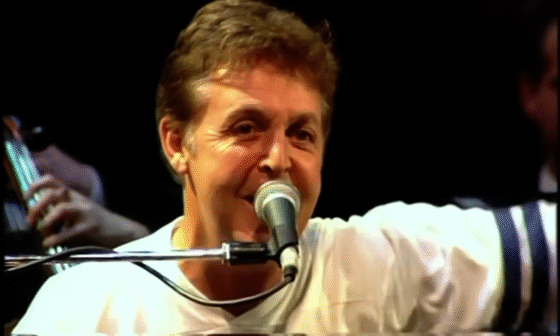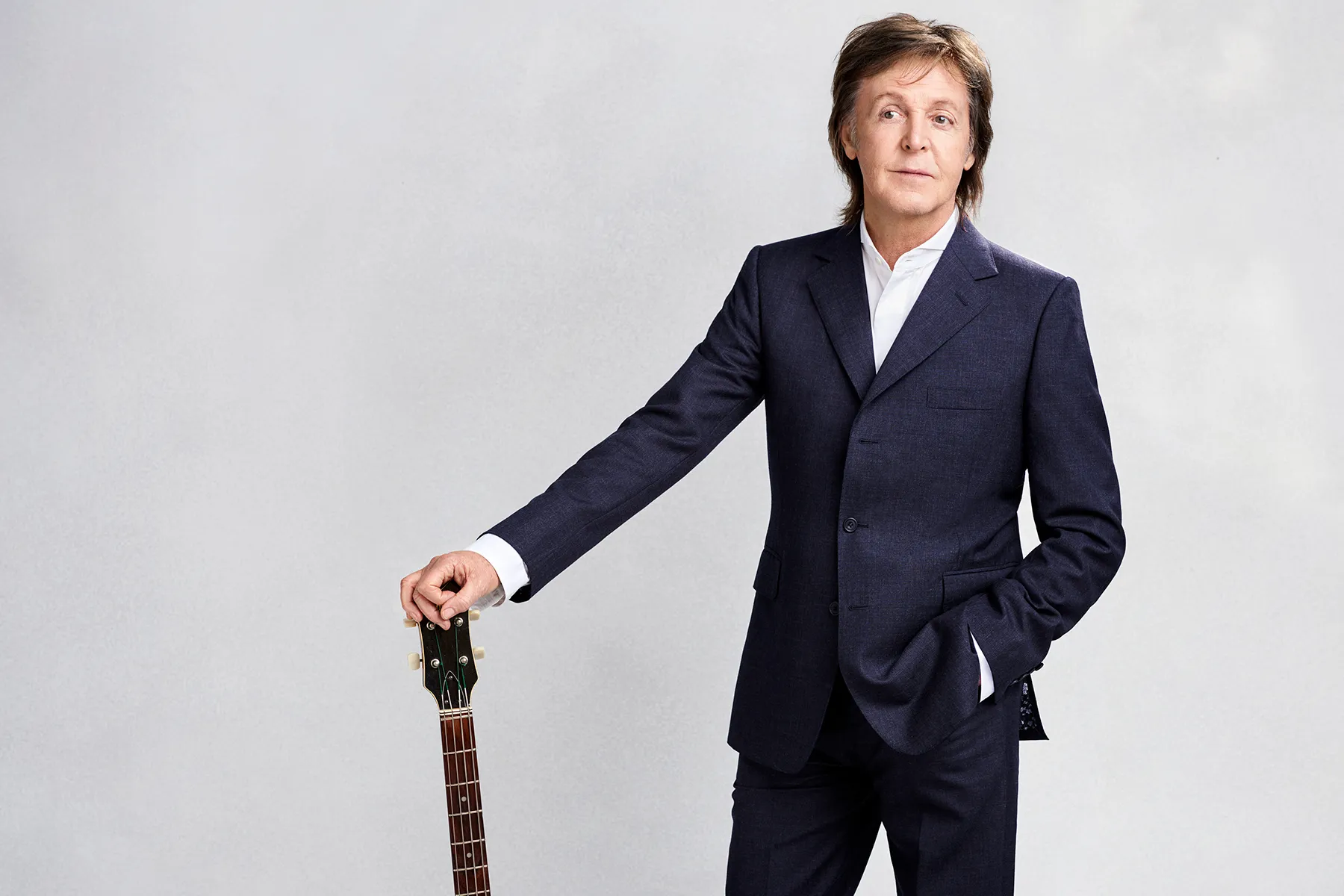
“‘Well, what about me?’” Paul McCartney admits he still holds a grudge over how his Rock & Roll Hall of Fame solo induction played out — and says it wasn’t about trophies, but fairness. After agreeing to induct John Lennon in 1994, McCartney claims he felt the Lennon–McCartney “equals” story started being rewritten, with public narratives increasingly painting him as “less than” in the partnership. He even hints a promise of recognition “next year” never came — and that frustration stuck for years. And when his solo induction finally arrived in 1999, one heartbreaking detail made the moment feel far less celebratory than people think…

paul-mccartney

Paul McCartney Admits He Still Holds a Grudge Over His Late Rock & Roll Hall of Fame Induction

For many musicians, induction into the Rock & Roll Hall of Fame represents recognition from the industry they helped shape. For Paul McCartney, however, the honor also carries complicated memories. In a 2015 interview recently published in full by Vanity Fair, the former Beatle revealed that he still feels resentment over how his solo induction unfolded during the 1990s.

McCartney explained that the issue was not about awards themselves but about fairness and recognition. While The Beatles were inducted as a group in 1988, each member later became eligible as a solo artist. John Lennon entered the Hall of Fame in 1994, with McCartney personally delivering the induction speech at the ceremony.

A Promise That Never Materialized

According to McCartney, Rolling Stone co-founder and Hall of Fame figure Jann Wenner asked him to induct Lennon during that first year of eligibility. McCartney agreed, but afterward began to question why his own solo work had not yet been recognized.

“I said, ‘Yeah, sure.’ Then I put the phone down. I thought, Well, what about me? I’m not inducted,” he explained. “Now John’s going to go in. The thing about John Lennon and McCartney was we were always equal. But, of course, once John got murdered, he became the martyr — the Buddy Holly, the James Dean character — because of the atrocity. So a revisionism started to go on … so that naturally colored my thinking.”

Reports connected to the interview suggest McCartney believed he had been promised induction the following year if he participated in Lennon’s ceremony. That recognition did not arrive as expected, leaving him frustrated with the process.

Frustration With Public Narratives

McCartney also pointed to what he saw as a growing narrative that minimized his contributions to The Beatles. He suggested that both Wenner and Lennon’s widow, Yoko Ono, played roles in shaping how history remembered the band’s creative partnership.

“Yoko would be saying things like, ‘Oh, Paul only booked the studio,’” he added. “People have said the greatest things about me. But luckily, there is this thing called history, and there are these things called record books, so I can say, ‘Well, no, I actually did more than that.’”

The comments reflect a long-standing sensitivity about how the Lennon-McCartney partnership has been portrayed since Lennon’s death in 1980. McCartney has often argued that the pair worked as equals, even as public perception shifted over time.

Recognition Finally Arrives

McCartney was eventually inducted into the Rock & Roll Hall of Fame as a solo artist in 1999, five years after Lennon’s induction. Neil Young introduced him at the ceremony, marking formal recognition of a post-Beatles career that included Wings and a successful solo catalog.

By the time the honor arrived, the moment carried personal weight. His wife Linda McCartney, who had supported his solo career for decades, had died the previous year. McCartney later acknowledged that the delayed recognition changed how he viewed the achievement, adding emotional complexity to an award many artists see as purely celebratory.

0 Shares:
Leave a Reply

Your email address will not be published. Required fields are marked *

You May Also Like
Riley Green
Read More

Fans absolutely lost it after witnessing Riley Green’s explosive performance at the 2025 CMAs, with one person screaming online, “I’ve never wanted to be a microphone more than right now.” And honestly? You can’t blame them. Riley didn’t just sing—he blew the roof clean off the arena. His red-hot, heart-ripping performance of “Worst Way” hit so hard it felt like the whole building shook. The moment he hit that final note, Keith Urban shot out of his seat, yelling “WOAHH!” like he’d just seen lightning strike the stage. Backstage, Riley’s girlfriend was in tears—happy, stunned, overwhelmed—because Nashville had just witnessed the most earth-shaking, stop-everything-and-watch moment of the entire night. It wasn’t just a performance. It was a detonation.

Riley Green performs his hit song “Worst Way” at the 59th Annual CMA Awards (Photo Credit: Jason Kempin/Getty…
Julian Lennon
Read More

Julian Lennon did something he once swore he’d never do—he performed his father’s iconic song Imagine. For years, he had avoided stepping into that shadow, knowing the weight of carrying John Lennon’s legacy and the endless comparisons that would follow. He even said the only time he would ever sing Imagine would be if the world was ending. But as war rages in Ukraine, Julian felt that moment had come. With nothing more than a guitar and a room lit by soft candlelight, he poured his heart into an acoustic version of the timeless anthem. His voice carried not just the melody, but also a message of hope for a broken world. It wasn’t just a performance—it was a prayer for peace, a son reaching across generations to honor his father, and a reminder that even in the darkest of times, hope still flickers like a flame in the night.

There’s no doubt that becoming a musician when your father was the legend, John Lennon, cannot be easy.…
paul-mccartney
Read More

When Paul and Linda McCartney released Uncle Albert / Admiral Halsey, nobody expected the quirky, patchwork track to become one of the most beloved post-Beatles anthems — yet fans still call it a masterpiece of whimsy and genius; the song stitched together fragments of melodies like a musical collage, with Paul’s playful voice and Linda’s harmonies turning oddball lines into magic; critics at first scratched their heads, but soon the single soared to No. 1, proof that McCartney could reinvent pop on his own terms; decades later, fans replay the high-quality recording and marvel at how the song feels both chaotic and comforting, a glimpse into the couple’s shared creativity; whispers say Paul once admitted it was one of his proudest solo achievements, not because it was perfect, but because it was theirs; tabloids now dub it “the strangest love letter ever written,” a reminder that sometimes nonsense carries more truth than logic.

The anthem nobody expected When Paul and Linda McCartney released Uncle Albert / Admiral Halsey in 1971, few could have…
John Lennon
Read More

“John glanced over and joked—only half-joking: ‘You still keeping up with me, Ring? ” Los Angeles, 01/01/1975 — On The Rox. It looks like two old friends stepping out together on New Year’s Day, but there’s a thin, brittle tension in the air: Lennon, restless and unsteady in the middle of his “Lost Weekend,” and Ringo, sharper dressed and calmer, like he’s quietly trying to keep the night from sliding off the rails. No shouting. No scene. Just a look, a pause—enough to make you imagine the truth: some of the scratches left behind after the Beatles’ breakup never fully disappeared. And even when they’re walking side by side, it feels like… they’re close, but careful, as if one wrong word about the past could set everything off. A moment of “together” that still hints at the hardest thing to name: friendship after a fracture—still there, just not innocent anymore.

REVEALED: The night John Lennon and Ringo Starr slipped into L.A.’s most notorious “rock hideaway” — and the…
Aerosmith
Read More

The glittering facade of rock and roll’s greatest era has been shattered by a lawsuit so dark it threatens to destroy a legend forever. A bombshell legal filing alleges that in 1975, at the height of his fame, Aerosmith frontman Steven Tyler assaulted a teenage model in a New York City apartment—forcibly kissing her and dry-humping her until she was left with a life-long physical injury. This isn’t just a scandal from the past; it’s a horrifying account of abuse that has haunted the victim for nearly five decades, now exploding into the open with the power to rewrite the entire history of one of music’s most iconic bands and bring a rock god to his knees.

Aerosmith frontman Steven Tyler assaulted teen model in 1975 by kissing and dry-humping her in NYC, leaving her…