When Time Folded Back: The Night John Lennon and Paul McCartney Found Their Way Back to Each Other

John Lennon

In March 1974, far from the noise of headlines and expectations, a small but meaningful moment unfolded in California. It didn’t take place on a stage or in front of an audience. There were no grand announcements, no sense of history being made in real time. And yet, what happened that day would come to hold a quiet significance for fans of The Beatles.

John Lennon and Paul McCartney—once inseparable collaborators—found themselves in the same room again.

Just a few years earlier, that would have seemed almost impossible. The breakup of The Beatles had not been gentle. It had been layered with creative differences, personal tensions, and emotions that spilled beyond private conversations into public interviews and music. Lennon’s How Do You Sleep? stood as one of the clearest expressions of that strain, its words sharp enough to suggest that some distances might never be crossed again.

But life rarely moves in straight lines.

Paul McCartney on Reconnecting with John Lennon After the Beatles' Split

During what would later be known as Lennon’s “Lost Weekend,” he was living in Los Angeles, separated from Yoko Ono and spending time with May Pang. It was Pang who encouraged him to reconnect with people from his past—not as a public gesture, but as something personal. Among those connections was McCartney, the songwriting partner who had once shared not just music, but a formative chapter of life.

When they finally met, the moment didn’t carry the weight of expectation. There was no script for how it should unfold. And perhaps that’s why it worked.

Accounts of their reunion describe something simple and human. They talked. They laughed. The sharp edges that had once defined their relationship seemed to soften, replaced by something more familiar. For a brief time, they stepped outside of the narrative that had grown around them—the story of rivalry, distance, and unresolved tension.

And then, almost naturally, music found its way back in.
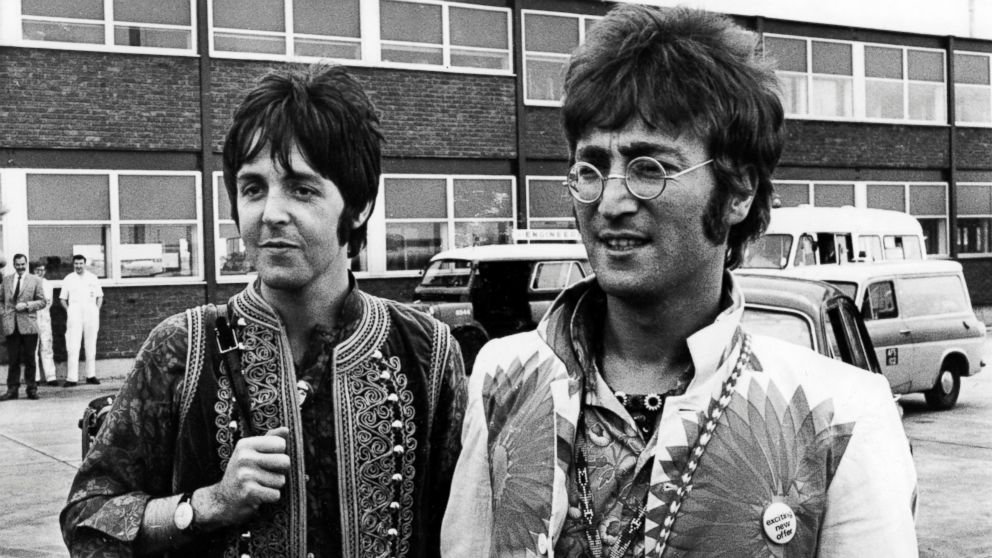
Paul McCartney Remembers How He Found Out John Lennon Had Died - ABC News

During an informal studio session, they played together again. It wasn’t a polished performance or a planned collaboration. There was no audience waiting to hear the result. But in that moment, it didn’t matter. The act of playing—of sharing music the way they once had—carried its own meaning. It suggested that beneath everything that had happened, something essential had remained intact.

For those who understand their history, that brief reunion holds a lasting resonance.

It reminds us that relationships, even those shaped by conflict, don’t always end in finality. Sometimes, they pause. Sometimes, they wait. And sometimes, given the right moment, they find their way back—quietly, without needing to prove anything to the world.

The meeting in 1974 didn’t rewrite the past. It didn’t erase the tensions or change the course of history. But it offered something else—something quieter, yet just as meaningful.

A reminder that the bond between John Lennon and Paul McCartney was never fully broken.

It was simply waiting for a moment when it could be felt again.

0 Shares:
Leave a Reply

Your email address will not be published. Required fields are marked *

You May Also Like
Tom
Read More

“Netflix SHOCKER: Sir Tom Jones Uncensored — The Untold Story Netflix just crossed the line. The official trailer for “Sir Tom Jones: The Fire Inside” has dropped—and it’s not asking for your attention, it’s commanding it. This raw, no-holds-barred documentary dives deep into the journey behind the music legend, exposing the working-class struggle, the personal losses, and the relentless stamina that shaped one of the most powerful voices in music history.” Sir Tom Jones: ‘I might be old but my voice is still young’ – BBC News Netflix has ignited intense conversation with the release of the official trailer for Sir Tom Jones: The Fire Inside—a documentary that doesn’t ask for attention so much as demand it. From its opening seconds, the film signals that this will not be a polished celebration or a carefully managed tribute. Instead, it positions itself as a raw, uncompromising portrait of one of music’s most enduring and powerful voices. The trailer suggests a story that goes far beyond fame. Born into a working-class life, Tom Jones rose from modest beginnings to international superstardom, carrying with him both the weight of his origins and the cost of leaving them behind. The Fire Inside appears determined to explore that tension—how grit, ambition, and survival shaped not only his voice, but his identity. What sets this documentary apart is its refusal to soften the edges. The film reportedly delves into personal losses that defined Jones offstage, including moments of isolation that followed global success. Rather than framing endurance as glamour, the narrative leans into stamina—emotional, physical, and creative—as the true engine behind his longevity. Industry observers note that this approach marks a shift from traditional legacy documentaries. Instead of focusing solely on accolades and iconic performances, The Fire Inside appears to ask harder questions: What does it take to last? What is sacrificed along the way? And how does a performer keep burning when the spotlight never fully fades? Equally striking is the documentary’s emphasis on voice—not just as an instrument, but as a form of resistance. The trailer hints at behind-the-scenes footage and candid reflections that reveal how Jones fought to remain relevant without compromising his core sound. In an industry obsessed with reinvention, his defiance may be one of his greatest achievements. Netflix’s decision to present an uncensored narrative has already divided opinion. Some viewers praise the platform for honoring truth over myth, while others question whether such intimacy risks crossing personal boundaries. But that tension may be precisely the point. The Fire Inside seems less concerned with comfort than with honesty. If the full documentary delivers on the promise of its trailer, it will stand not just as a biography, but as a meditation on endurance, class, grief, and the cost of greatness. This is not a farewell. It is an excavation. And for audiences accustomed to seeing Sir Tom Jones as an icon frozen in time, The Fire Inside may be the most revealing performance of his career—one delivered without a microphone, and without compromise.

Netflix has ignited intense conversation with the release of the official trailer for Sir Tom Jones: The Fire…
Beatles
Read More

“We did alright… didn’t we?” Paul McCartney stood before the bronze figures of The Beatles, silent, as if speaking with old friends. No microphone. No song — just a quiet smile carrying decades of memories. He didn’t say a word, yet memory moved. In that moment, the past wasn’t distant — it was right there, breathing with the present. And piece by piece, the memories of his brothers surfaced, as if he were telling them everything at once.

There are moments in music history that don’t arrive with noise. They don’t announce themselves. They simply happen…
Elvis
Read More

HEARTFELT PROMISE: JUST NOW in Los Angeles, California, USA — Riley Keough Shares Her Mother’s Final Words About Preserving Graceland. In an emotional interview with Vanity Fair, Riley revealed that her late mother, Lisa Marie Presley, once told her, “Keep Graceland a home — don’t turn it into a place that sells tickets.” Riley has vowed to honor that wish, promising to protect the heart and history of Elvis’s beloved home, not as a business, but as a sacred family legacy.

HEARTFELT PROMISE: Riley Keough Reveals Her Mother’s Final Wish — “Keep Graceland a Home” Los Angeles, California —…