In a city where history lingers in every stone, it takes something extraordinary to make time feel as though it has stopped. Yet that is exactly what happened in Rome when Il Volo stepped onto the stage to honor one of Italy’s greatest musical legends, Ennio Morricone.

Morricone, who passed away in 2020, left behind a legacy that reshaped film music and transcended generations. His compositions carried emotion in their purest form—melodies that could tell stories without a single word. For many, his absence marked the end of an era. But on this particular night in Rome, it felt as though his spirit had quietly returned.
The setting itself added weight to the moment. Performing in a hall where Morricone had once conducted, Il Volo faced not just an audience, but the memory of a master whose influence still filled the space. It wasn’t simply a concert—it was a conversation between past and present.
The tribute centered on “Nella Fantasia,” a piece that has become synonymous with Morricone’s ability to blend cinematic beauty with emotional depth. As the first note emerged, sung by Piero Barone, the atmosphere shifted immediately. His voice carried a softness that felt almost reverent, as if he were carefully placing each note into the silence.
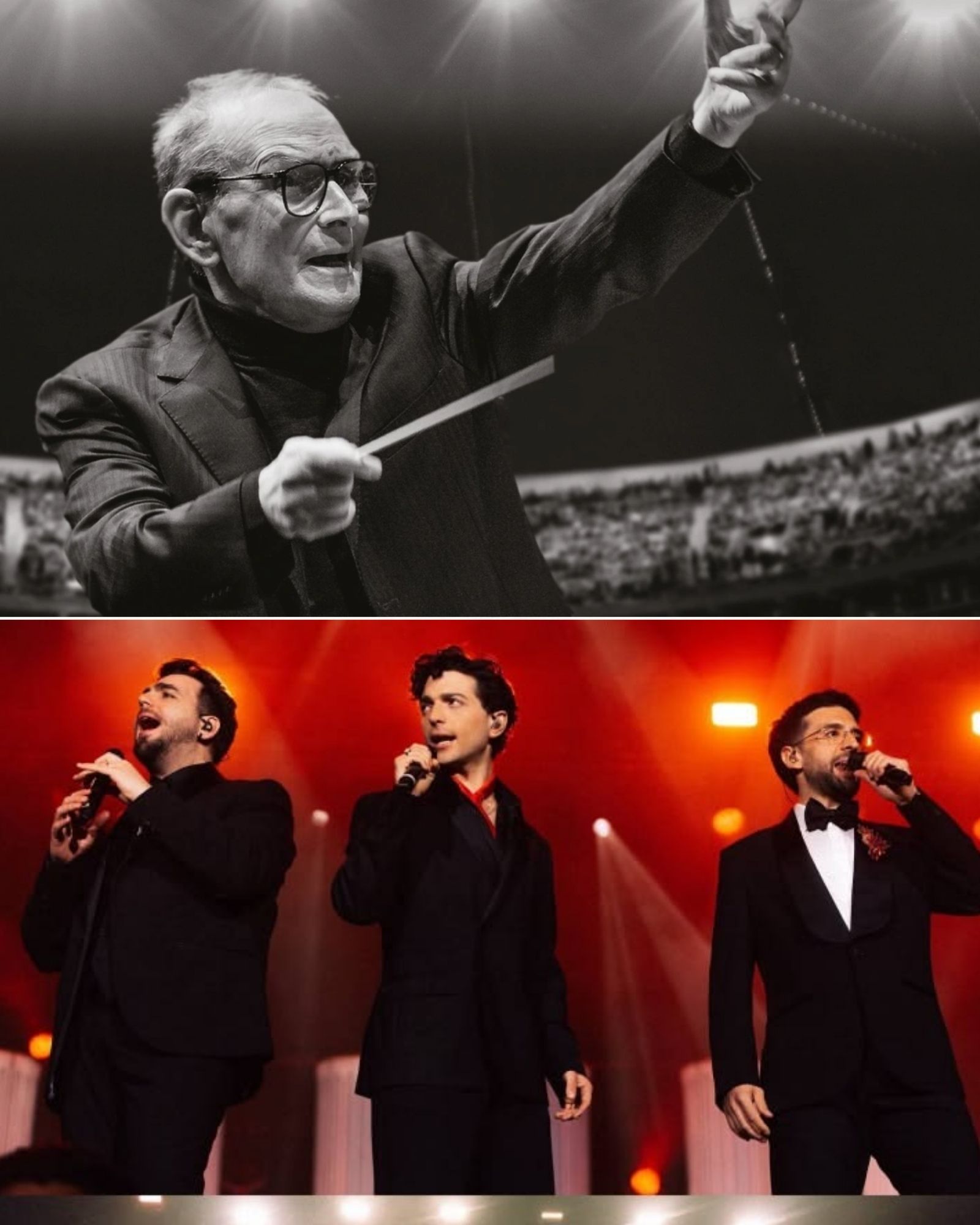
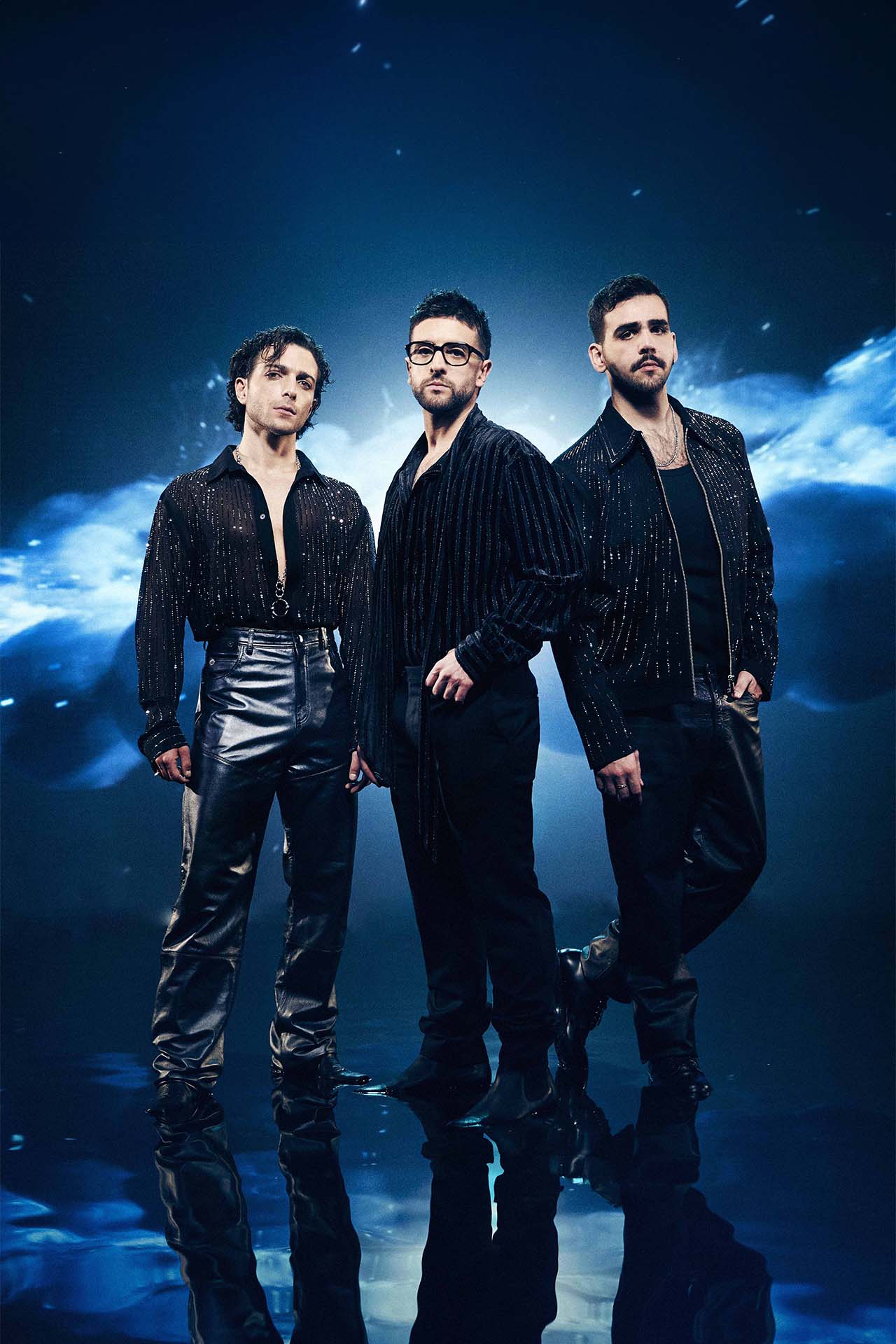
Then came Ignazio Boschetto, whose deeper, fuller tone added weight and warmth. The sound began to expand, filling the hall with a richness that drew the audience further into the moment. Finally, Gianluca Ginoble joined, completing the harmony. Together, their voices blended seamlessly, creating something that felt larger than the sum of its parts.
For a brief instant, there was a pause—so subtle it might have gone unnoticed, yet powerful enough to be felt. The orchestra seemed to hold back, as though waiting for a cue that would never come. It was in that silence that the performance reached its emotional peak.
In that moment, the absence of Morricone became a presence of its own. Not seen, not heard, but deeply felt. The music carried his influence so clearly that it was easy to imagine him there, guiding the performance with the same quiet intensity that had defined his career.
For the audience, it was more than a tribute. It was a reminder of what music can do—how it can preserve memory, bridge time, and bring people closer to something beyond themselves. Rome, a city already steeped in history and meaning, seemed to rise even higher in that instant, as if touched by something eternal.
Il Volo did not try to imitate Morricone or recreate what had been lost. Instead, they honored him in the most meaningful way possible: by letting his music live, breathe, and resonate in a new moment. And for those who were there, it felt as though the maestro had never truly left at all.