For fans of The Beatles, the story has always been told through sound—iconic songs, groundbreaking albums, and moments that changed music forever. But one of the most powerful chapters between Paul McCartney and George Harrison didn’t happen on stage or in a studio. It happened quietly, in a hospital room, far from the world that once surrounded them.
By the time McCartney arrived in New York to see Harrison, the reality of the situation was clear. Harrison was seriously ill, and both of them understood that their time together was limited. There was no need for formalities or carefully chosen words. Their shared history spoke louder than anything they could say.
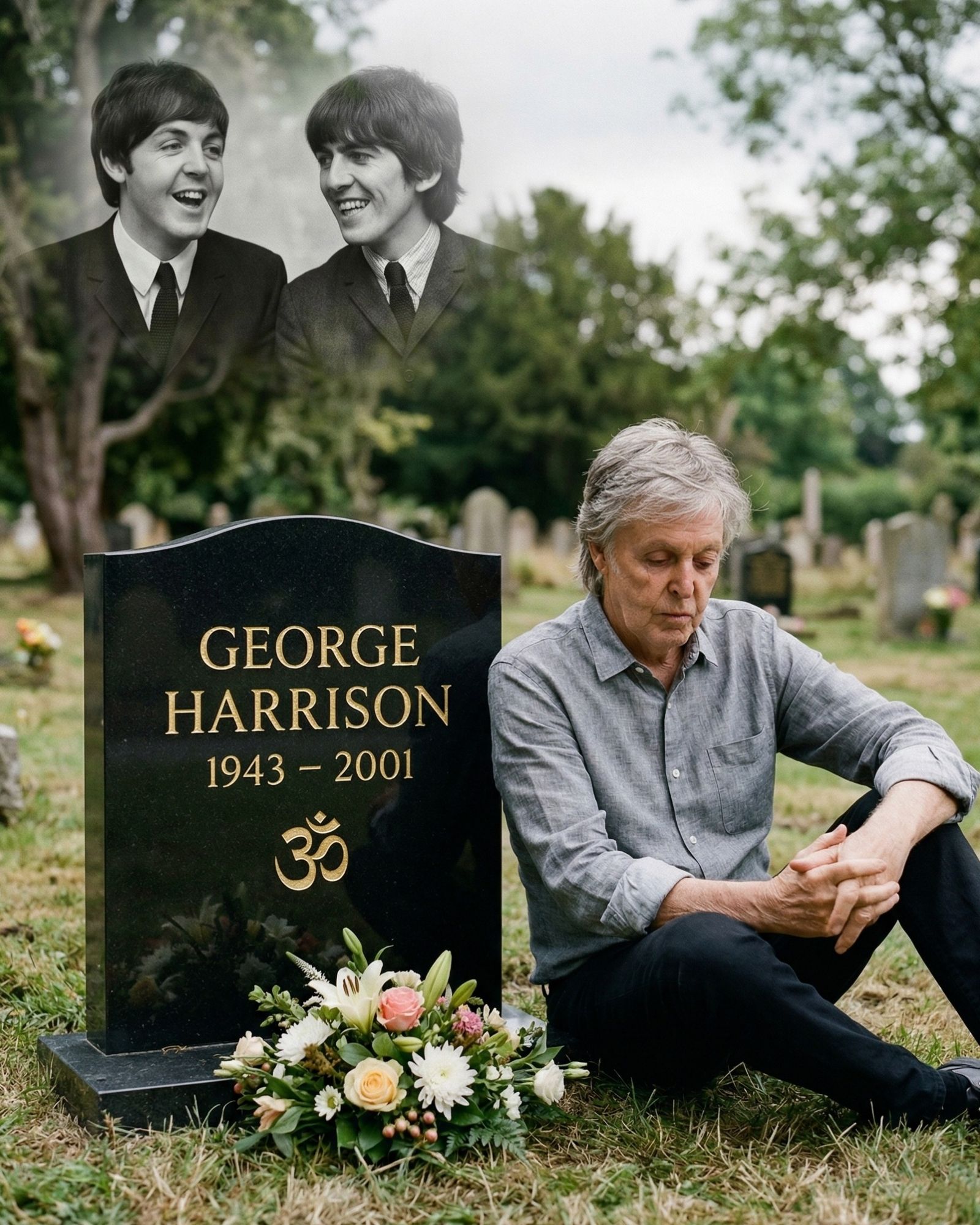
Instead of revisiting their fame or the legacy they had built together, their conversation drifted somewhere much simpler. They went back to the beginning—to Liverpool, where everything started, and to Hamburg, where they sharpened their craft night after night. It was a return to a time before the world knew their names, when they were just two young musicians trying to find their place.
In those memories, there was comfort. The pressure, the expectations, the global recognition—all of it faded into the background. What remained was the bond they had built over decades, shaped by both triumph and tension, but never fully broken.
Harrison, weakened by illness, didn’t speak much. But he didn’t need to. At one point, he laughed softly—triggered by a small, almost forgotten memory from their early days. It was a reminder that even in the most difficult moments, fragments of joy can still surface.
Then came a gesture that would stay with McCartney long after the moment had passed.
Without saying anything, Harrison gently moved his thumb against McCartney’s hand, tracing a small circle. It was simple, almost instinctive. But in that quiet movement was something profound—an unspoken acknowledgment of everything they had shared.
For McCartney, it stood out precisely because it was so unlike them. Physical expressions of emotion hadn’t been a defining part of their friendship. Yet in that moment, words weren’t necessary. The gesture said everything.
There was no dramatic goodbye, no carefully crafted final message. Just presence. Just connection.
As the visit came to an end, the weight of the moment lingered. McCartney knew he was saying goodbye, even if it wasn’t spoken aloud. And Harrison, in his own quiet way, seemed to understand it too.
Stories about legendary musicians often focus on their biggest achievements—the records, the tours, the cultural impact. But moments like this reveal something deeper. They remind us that behind the music were real friendships, shaped over time, carrying meaning that extended far beyond fame.
For fans, it’s easy to get caught up in the scale of what The Beatles accomplished. But in that hospital room, none of that mattered. There were no audiences, no expectations—just two people who had once stood at the beginning of something extraordinary, now sharing a quiet ending together.
And sometimes, it’s those smallest, most personal moments that leave the strongest impression.