Eric Clapton’s Hidden Letters Reveal a Love Story Marked by Longing, Loyalty, and Heartbreak

eric

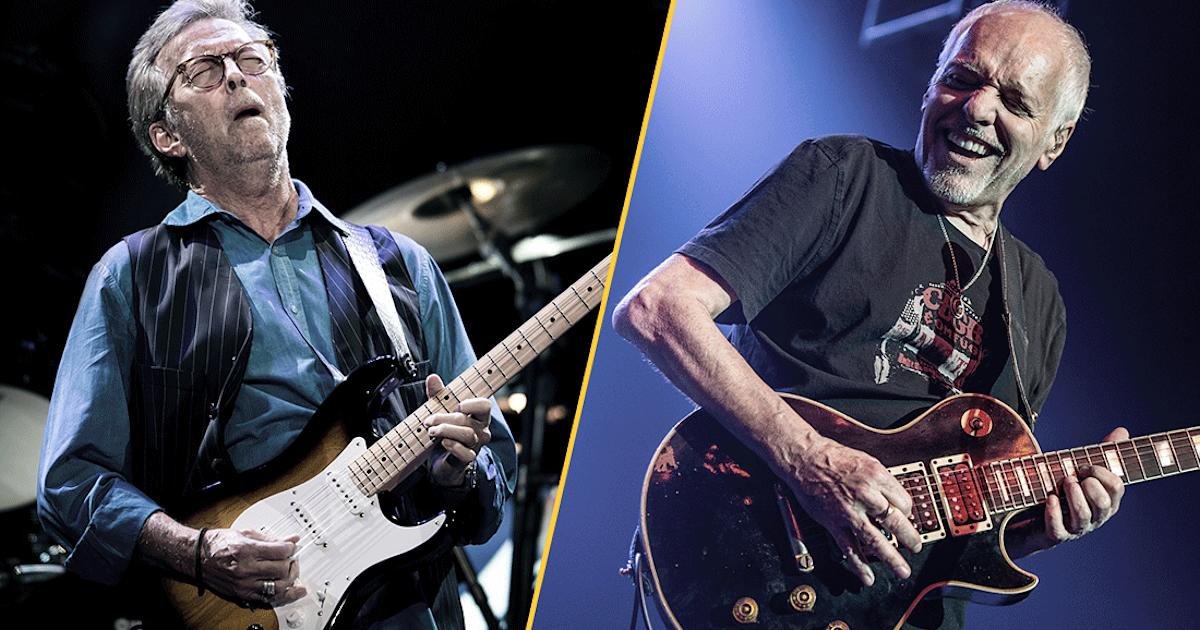
For decades, the life and music of Eric Clapton have been closely followed, with fans often finding pieces of his personal story reflected in his songs. But recently uncovered letters—reported by The Guardian—have brought renewed attention to one of the most emotionally complex chapters of his life, offering a glimpse into feelings that were once kept private.

At the center of this story is a relationship that began simply enough: shared music, creative collaboration, and long nights spent writing and talking. Yet over time, what existed between Clapton and the woman he wrote to grew into something far deeper and far more complicated. His letters, described as intensely personal, reveal a man grappling with emotions he could neither fully understand nor suppress.

In these writings, Clapton does not hold back. He questions his own value, expresses longing, and confronts the painful reality of loving someone who may never fully be his. There is a vulnerability in his words that contrasts sharply with the confident persona many associate with him on stage. It’s not the voice of a guitar legend—it’s the voice of someone searching for clarity in a situation that offers none.

What makes this story particularly poignant is the context in which it unfolded. The woman at the heart of Clapton’s letters was not unattached, nor was she removed from his professional world. Instead, this emotional entanglement existed alongside a close personal and musical relationship with someone Clapton respected and worked with—adding layers of tension, guilt, and unspoken conflict.

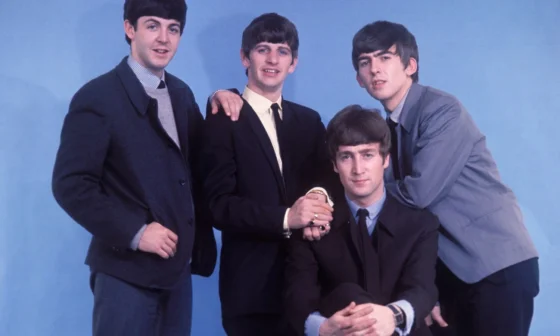
For those familiar with Clapton’s history, the situation echoes the well-known connection between him, George Harrison, and Pattie Boyd. Harrison, a member of The Beatles, shared both friendship and musical ties with Clapton. Boyd, meanwhile, became the subject of Clapton’s deep and enduring affection—an emotional reality that would later inspire some of his most iconic songs.
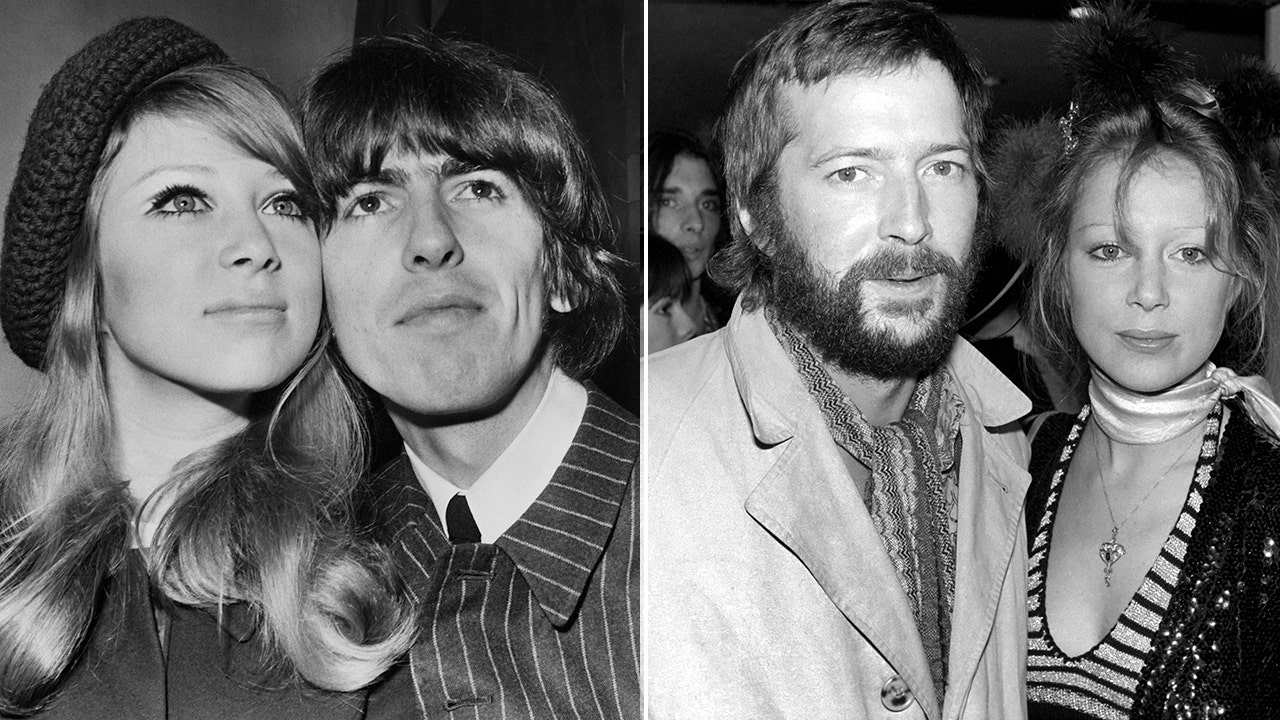
Beatles' George Harrison, Eric Clapton love triangle 'was like an arranged marriage': book

Yet the letters suggest that the emotional landscape was even more complicated than many realized. Rather than a dramatic confrontation, the tension appears to have unfolded quietly, almost painfully so. It was not defined by sudden decisions, but by prolonged uncertainty—a slow unraveling of boundaries between friendship, loyalty, and love.

This is perhaps what resonates most strongly today. The story does not fit neatly into categories of right or wrong. Instead, it reflects something more human: the way emotions can grow unexpectedly, the way timing can complicate even the most genuine feelings, and the way relationships can become entangled despite the best intentions.

Looking back, it is easy to frame the situation as scandalous. But the tone of these letters suggests something else entirely. They reveal a man caught between desire and restraint, between hope and doubt. They show how deeply he felt, and how difficult it was to reconcile those feelings with the reality around him.

For fans, these insights add new depth to Clapton’s music. Songs that once seemed like general expressions of love and heartbreak now carry a more specific weight. They become, in a sense, extensions of the emotions found in those letters—echoes of a time when everything felt uncertain and intensely real.

Beatles' George Harrison & Eric Clapton Were in a Love Triangle With Model Pattie Boyd

In the end, the story uncovered in these writings is not just about love—it is about conflict, timing, and the fragile balance between personal desire and loyalty to others. And perhaps that is why it continues to resonate. Because long after the headlines fade, what remains is something deeply familiar: the complexity of the human heart, laid bare in words never originally meant to be seen.
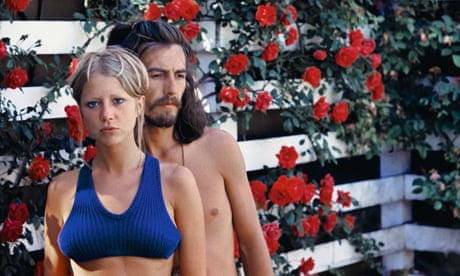
George Harrison & Pattie Boyd in Rose Garden, 1968
0 Shares:
Leave a Reply

Your email address will not be published. Required fields are marked *

You May Also Like
Beatles-on-the-Rooftop
Read More

The wind on Savile Row still howls the same way it did in 1969 — but yesterday, the street below was silent. No sirens. No crowds. Just five men carrying the heaviest last names in music history: Julian Lennon, Sean Lennon, James McCartney, Dhani Harrison, and Zak Starkey. They quietly stepped onto the roof of Apple Corps, plugged into vintage amps, and played Don’t Let Me Down. It wasn’t a cover — it was a resurrection. And when the final note faded, the silence that followed said more than the music ever could. Something changed. Something deeply human. And no one is talking about it. ▶️ Listen to the song in the first comment

The wind on Savile Row still howls the same way it did on January 30, 1969. But yesterday,…
Il Volo
Read More

“THE CROWD DIDN’T CHEER — THEY CRIED.” The room didn’t slowly quiet down. It stopped. Willie Nelson walked into the single spotlight beside Alan Jackson’s wheelchair. No announcement. No buildup. Just two men who’ve carried country music for over half a century. Alan sang first. That familiar baritone. Still steady. Still honest. Then Willie joined in. Not to perform. To stand with him. They looked at each other beneath those old cowboy hats. No words. Just understanding. No one cheered. People wiped their eyes. It didn’t feel like a show. It felt like two friends telling the truth out loud — and letting the silence finish the rest.

Il Volo’s Ignazio and Gianluca Dazzle Mantova with “Unchained Melody” In a breathtaking highlight from their Mantova concert,…
Stephen Wilson
Read More

Stephen Wilson Jr. didn’t just perform at the 2025 CMAs—he tore the whole room open and put it back together again. His haunting version of “Stand By Me” felt less like a song and more like a storm rolling through the arena. One spotlight. One trembling voice. And suddenly the entire crowd was frozen, hanging on every note as he poured years of pain, love, memories, and unanswered questions into the air. By the time he clutched a rosary at the end, it stopped being a performance altogether. It became a prayer. A confession. A son talking to his father the only way he still knows how. What started in quiet living rooms—him singing through tears, trying to make sense of the grief—had now become a hymn echoing across Nashville’s biggest stage.

Sometimes, one voice and one spotlight is all it takes to shake an entire arena. Stephen Wilson Jr.…
Billy Preston
Read More

“You’re giving us a lift.” January 22, 1969 — Billy Preston walked into Apple Studios just to “say hello”… and accidentally gave The Beatles the one thing they were missing: air to breathe again. The room had been tight with tension while they worked on Don’t Let Me Down / I’ve Got a Feeling / Dig a Pony… then Billy sat at the keys, and suddenly everything sounded sharper, lighter, and more Beatles. Some fans still call it the moment the Get Back sessions changed colour — because a “fifth” presence didn’t take centre stage… he simply kept the whole thing from falling apart.

The DAY Billy Preston walked into Apple Studios and ‘SAVED’ the crumbling Get Back sessions — as Lennon…
paul
Read More

“‘Thank you for those very first days…’ — before The Beatles were The Beatles, Paul McCartney and John Lennon had a quiet teammate, and Liverpool is now saying goodbye.” Len Garry, a founding member of The Quarrymen — the band that came before The Beatles — has died at 84, leaving behind a piece of the story many fans rarely talk about, but history can’t erase. He played alongside Paul and John in the late-’50s Liverpool circuit, including a key Cavern Club appearance, before a serious illness in 1958 forced him out — right before everything became legendary.

Quiet legend who helped shape Beatles dies at 84 Len Garry, an early member of The Quarrymen who…