Andrea Bocelli Turns a Nashville Concert into a Moving Tribute of Silence and Song

andrea bocelli

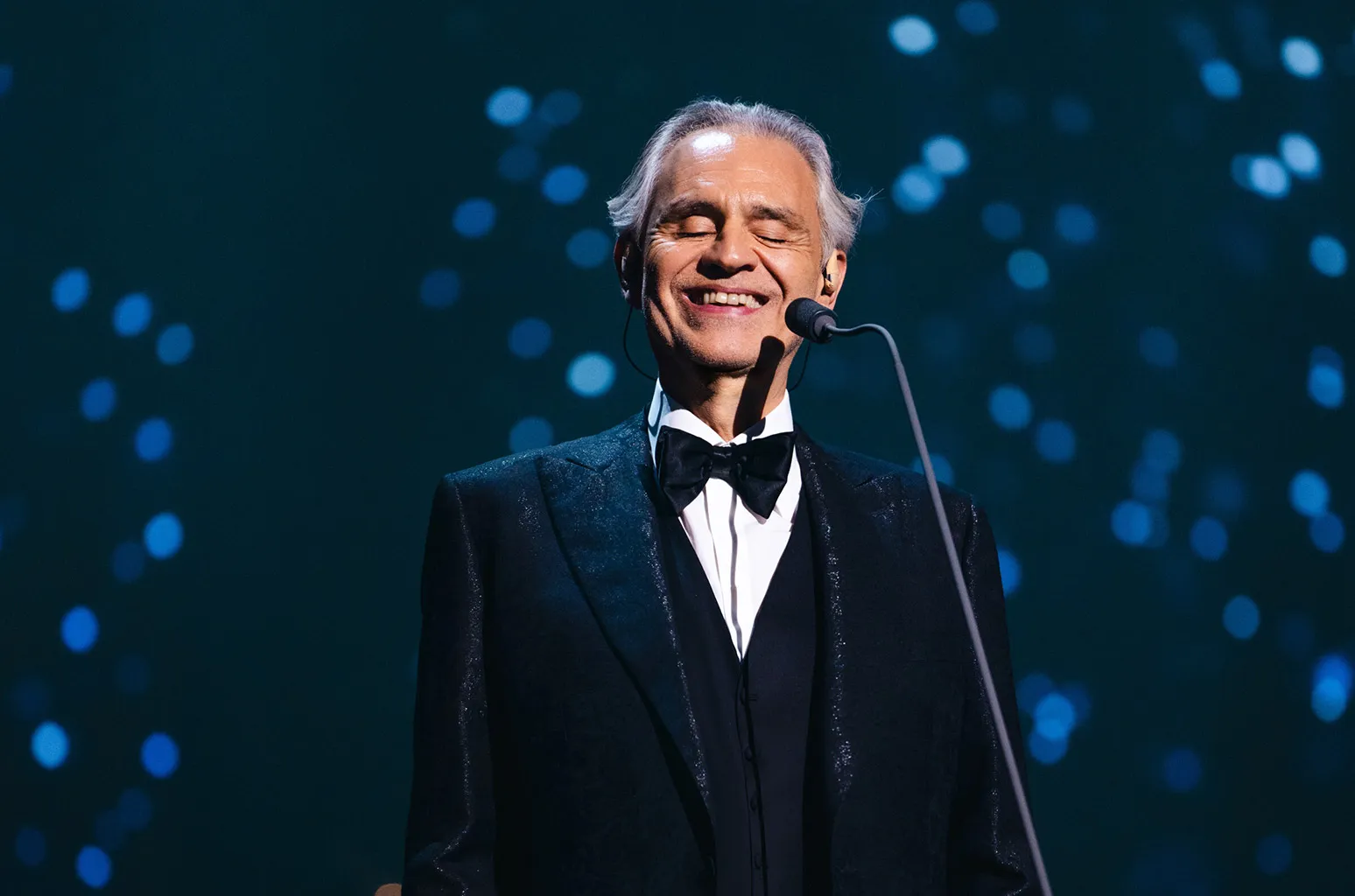
Concerts are often defined by their biggest notes—the crescendos, the applause, the moments when sound fills every corner of a stadium. But during a recent performance in Nashville, Andrea Bocelli reminded his audience that sometimes the most powerful moment is silence.

Midway through his set, as the music reached a dramatic peak and the stage glowed under bright lights, Bocelli made an unexpected choice. He stopped.

At first, the pause felt almost surreal. A stadium filled with more than 25,000 people suddenly found itself without music, without movement—just anticipation. Then Bocelli stepped forward and addressed the audience, asking them to join him in a one-minute moment of silence to honor those lost in the September 11 attacks.

What followed was extraordinary in its simplicity.

The crowd responded immediately. Conversations ended. Phones lowered. The energy that had moments earlier been filled with excitement shifted into something quieter, more reflective. For sixty seconds, the stadium stood completely still.

In a live setting, silence of that scale is rare. It carries weight. It demands presence. And in that moment, it connected thousands of individuals in a shared act of remembrance.

When the minute passed, Bocelli did not rush to break the stillness. Instead, he allowed it to settle before gently reintroducing sound. The opening notes of Ave Maria emerged softly, almost like a continuation of the silence itself.

His voice, controlled and expressive, gradually filled the space. What began as a quiet solo grew into something larger as the audience responded—not with the usual cheers, but with emotion. Some joined in softly. Others stood with flags raised. Many simply listened, visibly moved.

The transition from silence to song created a powerful contrast. It turned the performance into something more than entertainment—it became a moment of collective reflection and unity. The music did not erase the silence; it built upon it, giving shape to the emotions that had filled the stadium just moments before.

For Bocelli, whose career has spanned some of the world’s most prestigious stages, this kind of moment reflects a deeper purpose behind the performance. His concerts often blend technical brilliance with emotional storytelling, but here, the storytelling came not just from the music, but from the space around it.

Those in attendance described the experience as unforgettable—not because of spectacle, but because of how it made them feel. It was a reminder that even in a setting designed for grand sound, connection can be found in stillness.

By the end of the piece, the atmosphere had shifted once again. The quiet reverence of the tribute gave way to a sense of shared strength. Applause returned, but it carried a different tone—less about excitement, more about appreciation.

In that Nashville stadium, Andrea Bocelli didn’t just perform. He created a moment that brought thousands of people together—not through volume, but through meaning. And long after the final note faded, it was that silence, and what followed it, that remained.

0 Shares:
Leave a Reply

Your email address will not be published. Required fields are marked *

You May Also Like
KISSREVENGE
Read More

“The Apple Never Falls Far From the Tree” — Sons of KISS Legends Paul Stanley and Gene Simmons Announce Explosive Debut Single “Body Down” 🎸🔥 Rock royalty just passed the torch. Stanley and Simmons — sons of KISS icons Paul Stanley and Gene Simmons — are stepping out from the shadows of the arena lights with their debut single “Body Down.” Described as a gritty, modern twist on classic KISS attitude, the track delivers heavy riffs, slick vocals, and the kind of swagger that can only be born from bloodlines of rock history. Industry insiders say the song “hits like vintage fire with a Gen Z pulse,” proving that the spirit of KISS isn’t fading — it’s evolving. As fans flood social media with excitement, one thing’s clear: the next generation of rock gods has officially entered the stage.

The sons of Kiss stars Paul Stanley and Gene Simmons will release their debut single Body Down on…
paul-mccartney
Read More

“At the end, George Harrison spoke 3 words — and they ended decades of hurt.” In that small Los Angeles hospital room, everything felt quieter than it should’ve. George Harrison was painfully thin, but his eyes were sharp, almost peaceful. Paul walked in slow, like he already knew this would be their last real moment. No cameras. No crowds. Just two men who once changed the world… and once hurt each other more than they meant to. George reached for Paul’s hand, squeezed it with what little strength he had left, and whispered three soft words. Paul froze. Then his eyes flooded. He held George’s hand tighter, like he was trying to keep him here a little longer. Those words didn’t belong to fame or history. They belonged to brothers.

The Final Words Between Paul McCartney & George Harrison — A Farewell That Healed Decades of Silence Introduction…
Craig Brewer
Read More

Hollywood passed. Again. And again. Not because the story was weak. Not because the music didn’t work. But because executives believed one thing would doom the film from the start: “Audiences won’t like these characters.” That’s what director Craig Brewer was told repeatedly while trying to get Song Sung Blue made. Studio after studio rejected it — openly, bluntly, and without apology. The reason? Not the plot. Not the performances. But “the way they’re living.” In a recent interview with Variety, Brewer revealed just how harsh the response was behind closed doors. Executives didn’t believe viewers would connect with grounded, working-class characters who weren’t polished, aspirational, or easy to “like.” They feared the film was too real. Too honest. Too uncomfortable. So Hollywood said no. What makes this story shocking is what happened next. After years of rejection and skepticism, Song Sung Blue has finally premiered — and early reactions suggest the very qualities studios were afraid of may be exactly what gives the film its emotional power. Because audiences don’t just want fantasy. They want truth. They want stories that look like real life — messy, imperfect, and human. This isn’t just a movie release. It’s a quiet rebuke to an industry that often underestimates viewers

Song Sung Blue Was Rejected for Being “Too Real” — Now It’s Finally Reaching Audiences Before it ever reached…