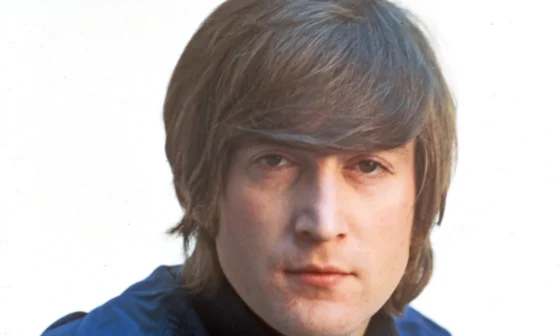
For millions of fans, the story of John Lennon and Paul McCartney is one of music’s most legendary partnerships—a bond that reshaped popular culture and defined a generation. But behind the songs, the fame, and the mythology, there was something far more human: a friendship that evolved, fractured, and—just before it was too late—began to heal again.
By 1980, the tension that had once driven the two apart was slowly giving way to something softer. Years earlier, their split had been marked by public disagreements, sharp lyrics, and lingering resentment. Yet time, distance, and maturity had a way of reshaping things. Conversations became easier. Old wounds didn’t disappear, but they no longer defined everything.
There was even a sense—quiet, unspoken—that they might find their way back to something closer to what they once had.
Then, suddenly, it was over.
John Lennon’s death didn’t just shock the world; it froze that fragile reconciliation in place. For Paul McCartney, the loss was deeply personal. It wasn’t only about mourning a friend—it was about facing the reality that certain things would now remain unresolved forever.
In the years that followed, Paul spoke openly about his grief, but also about something more difficult to articulate: regret. Not the kind that comes from dramatic mistakes, but the quieter kind—the kind that grows out of ordinary moments that never quite happened.
He has reflected on the conversations they didn’t finish, the visits that didn’t take place, and the words that never found their way into the air. Their last interactions had been warm, even hopeful, but they hadn’t reached the point where everything had been said.

And that’s what stayed with him.
Among those unspoken things was something simple, yet deeply significant. Paul later admitted that there were feelings—words of appreciation and acknowledgment—that he never directly expressed to John while he had the chance. It wasn’t because they weren’t there. It was because, like so many people, he assumed there would always be more time.
That assumption is something many can recognize. Relationships, especially long and complicated ones, often feel like they exist outside of deadlines. There’s always another day to call, another chance to say what matters. Until suddenly, there isn’t.
For fans, it’s tempting to see Lennon and McCartney as larger-than-life figures, their story preserved in records and headlines. But moments like these reveal something much more relatable. At its core, their story is about connection—how it can bend without breaking, how it can be repaired, and how fragile it ultimately is.

Paul has carried that absence with him ever since—not as a dramatic confession, but as a quiet truth. It doesn’t overshadow the music they made or the bond they shared, but it adds a layer of poignancy to it.
Because in the end, even the most extraordinary partnerships are made up of ordinary human moments. And sometimes, it’s the words left unsaid that echo the longest.