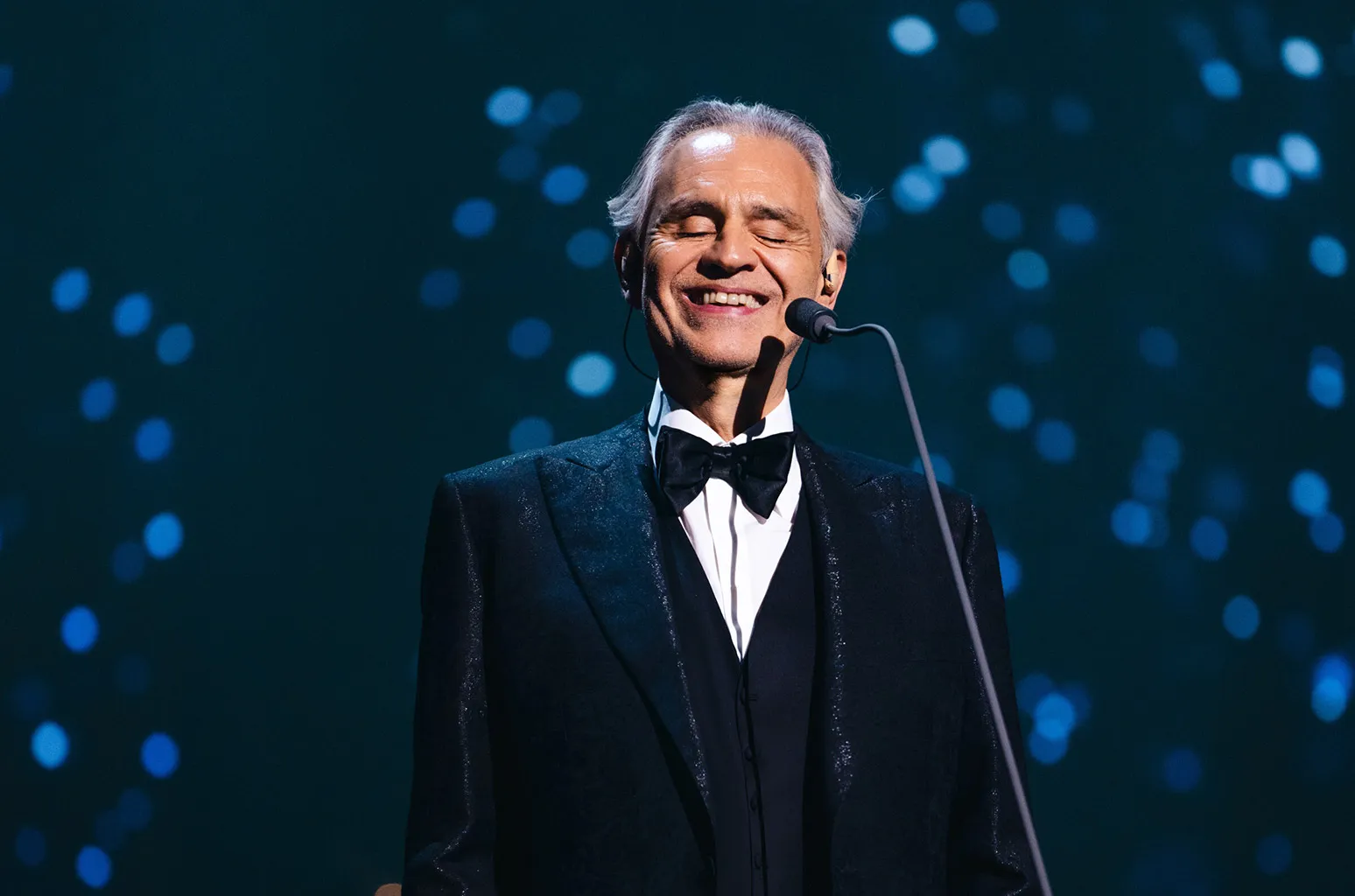
There are performances that impress, and then there are moments that stay with you long after the music fades. At the Teatro del Silenzio, one such moment unfolded as Amos Bocelli and Matteo Bocelli took the stage.
This wasn’t just another concert in the renowned Tuscan venue, known for its stunning landscapes and world-class performances. This was something more intimate—something deeply personal.
It began quietly.

Amos sat at the piano, his presence steady and focused. Beside him, Matteo prepared to sing, but before the music fully took shape, he offered a few simple words: a reminder that what was about to happen was not just a performance, but a message.
A thank you.
Their father, Andrea Bocelli, has spent decades building one of the most recognizable voices in the world. From opera stages to global arenas, his music has reached millions. But on this night, the spotlight shifted—not to his achievements, but to the impact he has had at home.
As the song unfolded, the emotion became impossible to ignore.
Matteo’s voice, usually controlled and clear, carried a different weight. There was a moment—subtle, but unmistakable—when it trembled. Not from uncertainty, but from feeling. His words spoke not just of admiration, but of gratitude shaped over years.
“Everything we are… is because of him.”

It was a line that resonated far beyond the stage.
Meanwhile, Amos’s piano playing anchored the performance, giving it both structure and softness. His role felt just as personal—each note measured, each pause intentional. Together, the brothers created something that felt less like a rehearsed piece and more like a shared memory brought to life through music.
In the front row, Andrea Bocelli listened.
For once, he was not the center of attention. There were no expectations placed on him, no need to perform. Instead, he sat quietly, taking in the moment as a father watching his sons.
Those close enough to observe described a sense of stillness around him. At one point, he was heard softly acknowledging what was happening: this was their moment.
And that understanding seemed to define the night.
:max_bytes(150000):strip_icc():focal(999x0:1001x2)/andrea-bocelli-matteo-bocelli-80ee0e26c46749279a5a5c417877d0e2.jpg)
There were no elaborate visuals, no dramatic staging, no attempt to turn the performance into spectacle. It didn’t need any of that. The power of the moment came from its simplicity—from the honesty of the connection between father and sons.
For the audience, it felt like witnessing something rare. Not just a tribute, but a glimpse into a family dynamic shaped by music, respect, and shared experience.
As the final notes faded into the Tuscan night, there was no rush to break the silence. Applause came, of course, but it almost felt secondary. The real impact had already been made—in the quiet understanding of what had just been shared.
In a world where performances are often designed to impress, this one stood apart by doing something else entirely.
It told a story.
A story of legacy, not as something distant or untouchable, but as something lived, felt, and passed on. And in that moment at Teatro del Silenzio, the Bocelli name became more than a symbol of musical excellence.
It became a reflection of family.