Some songs are created for the stage. Others are meant for something more personal—moments that exist quietly, away from the public ear. The newly revealed duet between Andrea Bocelli and his daughter Virginia Bocelli belongs firmly in the latter category.
For years, this recording remained private, known only within the Bocelli family. Now, its release offers listeners something rare: not just music, but a glimpse into a relationship shaped by shared experience and deep connection.
From the opening notes, the tone is unmistakably intimate.

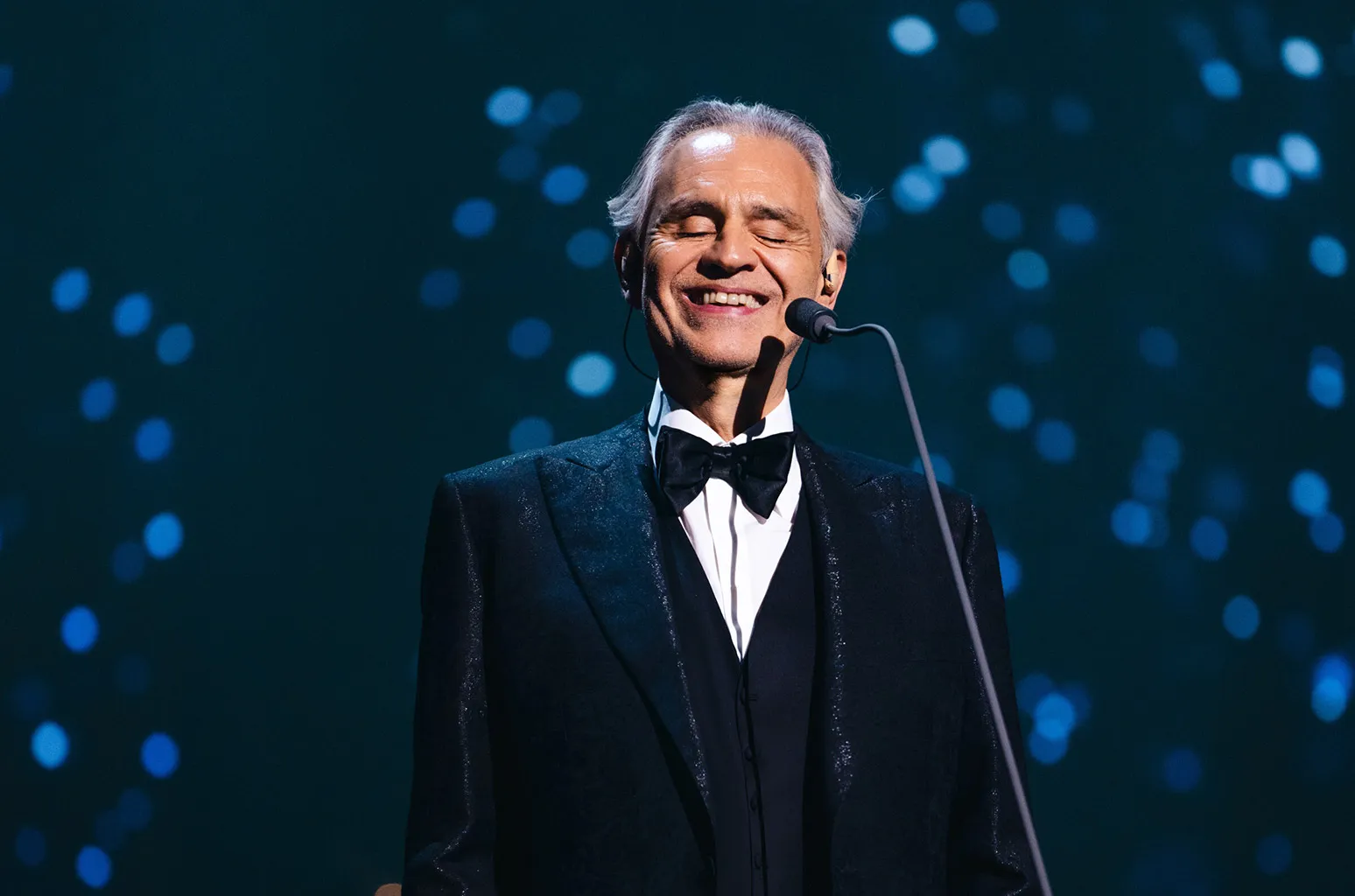
Andrea Bocelli’s voice, long celebrated for its power and clarity, takes on a softer quality here. It feels less like a performance for an audience and more like a moment of presence—something grounded and personal. Alongside him, Virginia’s voice enters gently, carrying a sense of innocence balanced with quiet confidence.
Together, they don’t compete or try to outshine one another.
They listen.
That sense of listening—to each other, to the emotion within the song—is what gives the duet its impact. It unfolds naturally, without the weight of expectation that often comes with high-profile collaborations. There is no need for grand gestures or dramatic crescendos. Instead, the focus remains on connection.
For listeners, that connection is immediate.
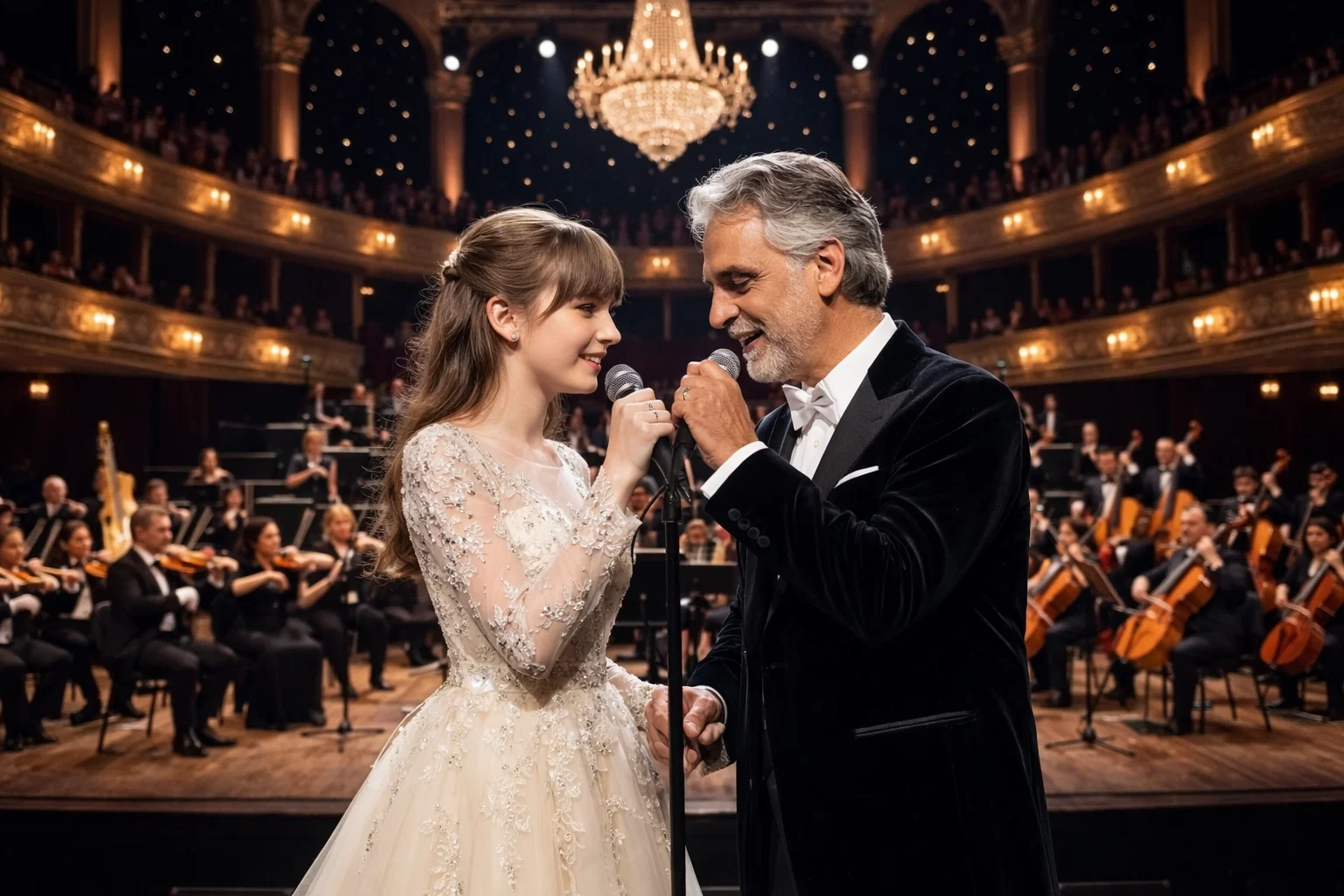
Fans who have discovered the duet are describing it as unforgettable, not because it aims to impress, but because it feels genuine. Each note carries a sense of closeness, as though the recording has preserved a moment that was never originally intended for public release.
That authenticity is difficult to create—and even harder to replicate.
Andrea Bocelli has spent decades performing on some of the world’s most prestigious stages, building a legacy that spans opera, classical crossover, and popular music. Yet moments like this reveal a different dimension of his artistry—one that exists beyond accolades and recognition.
Here, he is not just a global figure.
He is a father.
Virginia, in turn, brings something equally important to the duet. Her voice adds a new layer to the Bocelli legacy, not by echoing what has come before, but by contributing something fresh and personal. There is a sense of continuity, but also of growth—a reminder that musical traditions within families are not static, but evolving.
The decision to finally share this recording speaks to that evolution.
What was once a private memory has become a shared experience, allowing listeners to connect with something that was previously out of reach. And in doing so, it transforms from a family moment into something universal.
Because at its core, the duet is about more than music.
It’s about the bond between parent and child—the unspoken understanding, the shared language that doesn’t require explanation. These are things that can be felt, even by those who have never met the artists themselves.
As the song comes to a close, there’s a lingering sense that what you’ve heard is not just a performance, but a moment preserved. Something honest, unfiltered, and deeply human.
In a world where music is often designed for impact, this duet stands apart by offering something quieter.
Something real.
And perhaps that’s why it’s resonating so strongly—because sometimes, the most powerful songs are the ones that were never meant to leave home.