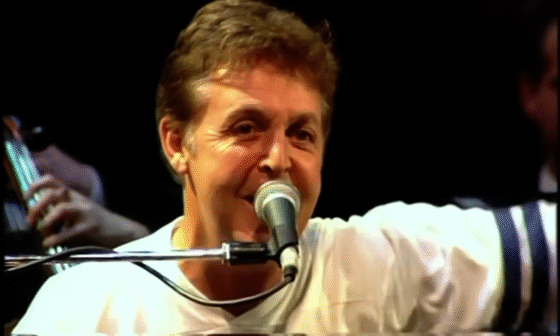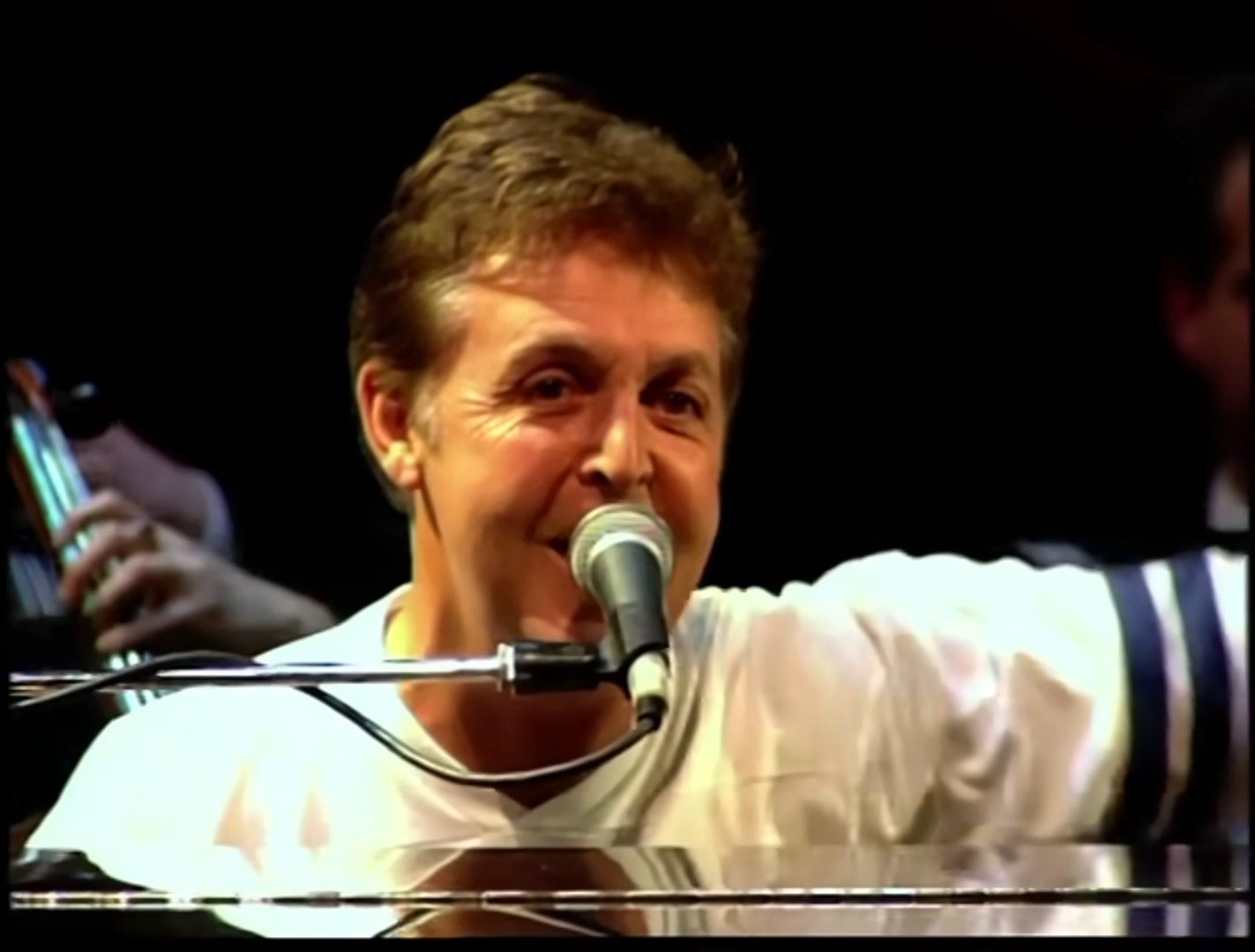
For a brief moment in Los Angeles, time seemed to pause. When Paul McCartney walked back onto the stage at the Fonda Theatre, there was no sense of spectacle or grand buildup—just quiet anticipation hanging in the air.
No one in the audience quite knew what the night would bring. That uncertainty, however, quickly gave way to something far more powerful. The instant the opening notes of Help! rang out, the atmosphere shifted. It wasn’t just the start of a song—it felt like the opening of a door, releasing decades of shared memories into a single room.
What followed wasn’t structured like a typical concert. There were no dramatic pauses or elaborate productions. Instead, McCartney moved naturally from one song to the next, letting the music speak for itself. Each track carried its own emotional weight, and the audience responded in kind—leaning in, singing along, and absorbing every note.
As the set unfolded, the performance began to feel less like a playlist and more like a narrative. By the time he reached Blackbird, the room had grown quieter, more reflective. The simplicity of the song, paired with the intimacy of the venue, created a moment that felt almost suspended in time.
Then came Hey Jude, and with it, a shift in energy. Voices filled the theater, rising together in a chorus that blurred the line between performer and audience. It was no longer just McCartney leading the moment—the crowd had become part of it, carrying the song forward as one.
Throughout the night, there was a noticeable absence of distraction. No glowing screens, no constant movement—just people fully present. In that space, the connection between artist and audience felt stronger, more immediate. It was a reminder of what live music can be when nothing stands in the way.

Observers in the crowd described a shared understanding, an unspoken agreement to simply be there and experience the music together. Some closed their eyes as they sang, others watched intently, as if trying to hold onto every second. It wasn’t about documenting the moment—it was about living inside it.
As the performance moved toward its conclusion, the energy didn’t fade—it deepened. The final medley felt less like an ending and more like a gentle landing after an emotional journey. When the last notes finally settled, the applause that followed carried a different kind of weight. It wasn’t explosive or overwhelming—it was steady, heartfelt, and lasting.
Long after the lights dimmed, that feeling remained. People didn’t rush out. They lingered, as if stepping back into reality required a moment of adjustment. Conversations were quieter, more reflective, as though everyone understood they had witnessed something difficult to put into words.

In the end, it wasn’t just about the songs or even the performance itself. It was about what those songs represented—years of music woven into personal histories, all brought together for one night.
And for those who were there, it wasn’t just a concert. It was a moment where the past and present met—and, for a little while, stood perfectly still.