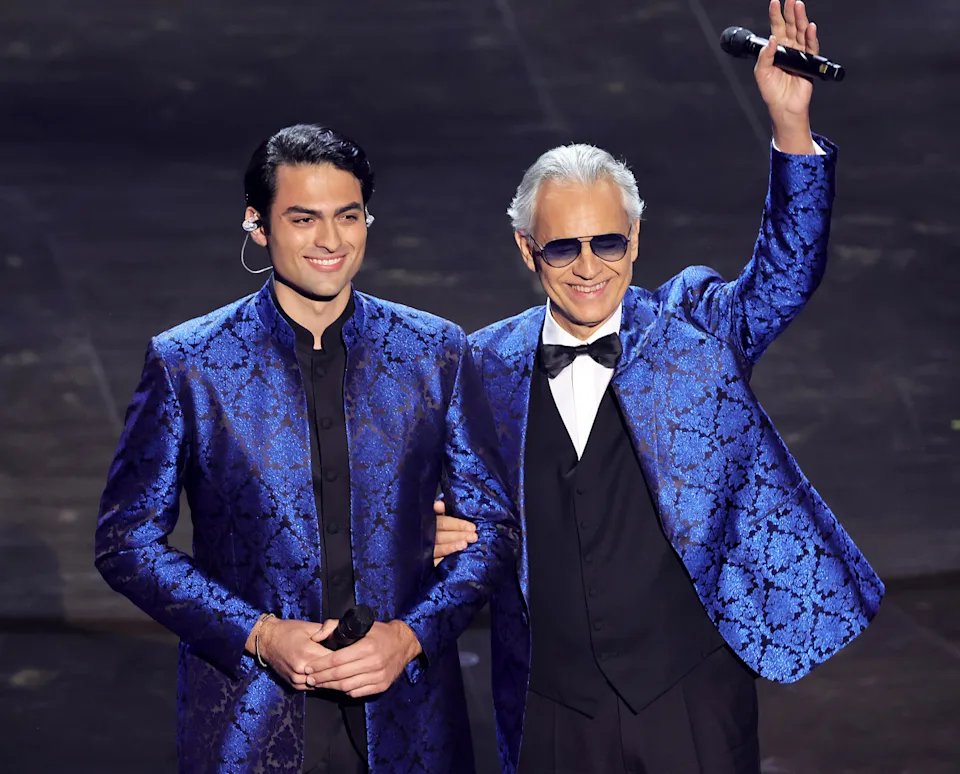
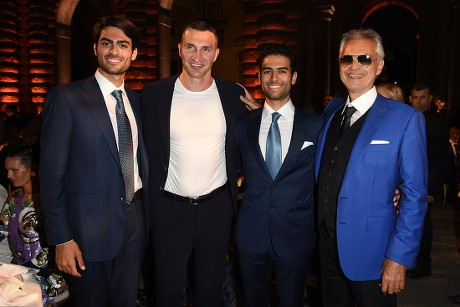
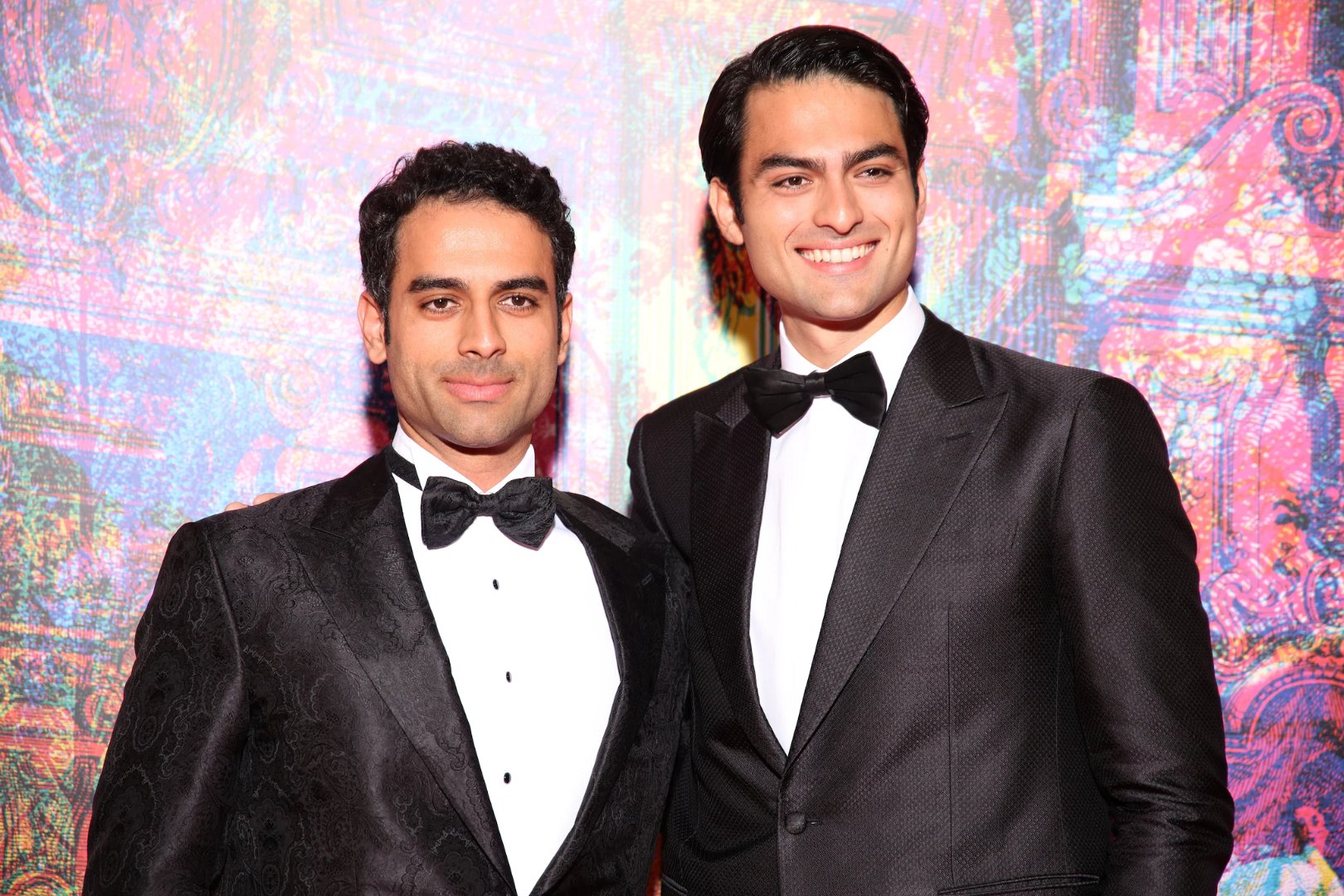
There are performances that impress, and then there are those that linger — not because of grandeur, but because of what they reveal. At the Teatro del Silenzio in Tuscany, a place already known for its breathtaking stillness, something deeply personal unfolded as Amos Bocelli and Matteo Bocelli stepped onto the stage.
They weren’t there simply as performers. They were there as sons.
The evening air carried a quiet anticipation, but not the usual kind that precedes a major performance. This felt different — softer, more intimate. The open-air amphitheater, often filled with sweeping sound, seemed to settle into a hush, as if it understood the weight of what was about to happen.
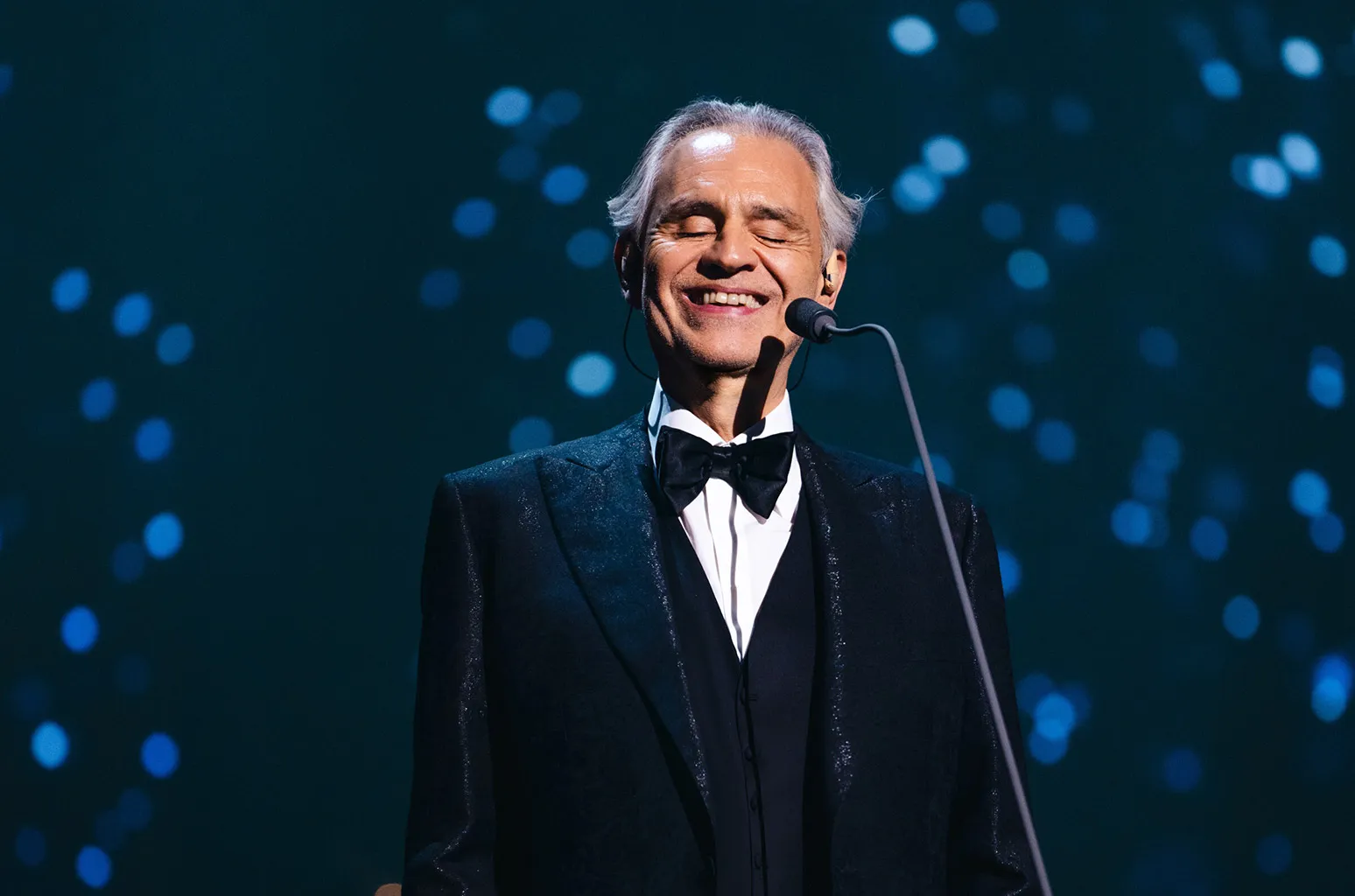
At the center of it all sat Andrea Bocelli — not as the globally celebrated tenor who has captivated audiences for decades, but as a father. Seated in the front row, still and attentive, he turned his focus entirely toward the stage where his sons stood.
Amos moved first, taking his place at the piano with quiet confidence. There was no flourish, no dramatic gesture — just a calm readiness. Matteo followed, stepping toward the microphone, his presence equally understated. Before a single note was played, there was already a sense that this moment didn’t belong to the audience alone.
Then the music began.
The opening chords were gentle, almost tentative, as if allowing space for the emotion to settle in. As Amos’s hands moved across the keys, Matteo’s voice entered — warm, expressive, and filled with something deeper than performance. It wasn’t about perfection. It was about meaning.
Each note seemed to carry layers of memory — childhood moments, shared experiences, and the quiet influence of a father who had given them not only life, but a lifelong connection to music. The performance unfolded slowly, without urgency, letting every phrase breathe.
What made the moment so powerful wasn’t just the music itself, but the silence surrounding it. The audience listened intently, not wanting to interrupt the fragile connection being shared on stage. Even the natural pauses — when Matteo’s voice caught slightly or the piano lingered on a chord — felt significant, as though they spoke a language beyond words.
And through it all, Andrea Bocelli remained still.
He didn’t join in. He didn’t take the spotlight. Instead, he listened — fully, deeply — as a father witnessing something profoundly personal. His presence alone carried emotion, a quiet acknowledgment of the bond that had shaped the moment.
In a world where performances often strive for spectacle, this one found its strength in restraint. There were no elaborate visuals, no dramatic crescendos designed to impress. What existed instead was something far more rare: authenticity.
It was a reminder that music, at its core, is not just about sound — it’s about connection.
As the final notes faded into the Tuscan night, there was a brief stillness before the applause began. Even then, it felt secondary. The true impact of the performance wasn’t in the reaction, but in the shared understanding of what had just taken place.
A father listening.
Two sons giving back.
And a moment where music became something more than art — it became gratitude.
Long after the audience left and the stage fell quiet again, that feeling remained. Because some performances don’t end when the music stops.
They stay — carried in memory, in emotion, and in the unspoken bond between those who share them.