On a warm evening in Tuscany, the stage at Teatro del Silenzio became the setting for a moment that felt both intimate and profound. Known for hosting performances that blend music with the natural beauty of the Italian countryside, the venue has seen countless memorable nights. But this one carried a different kind of weight.
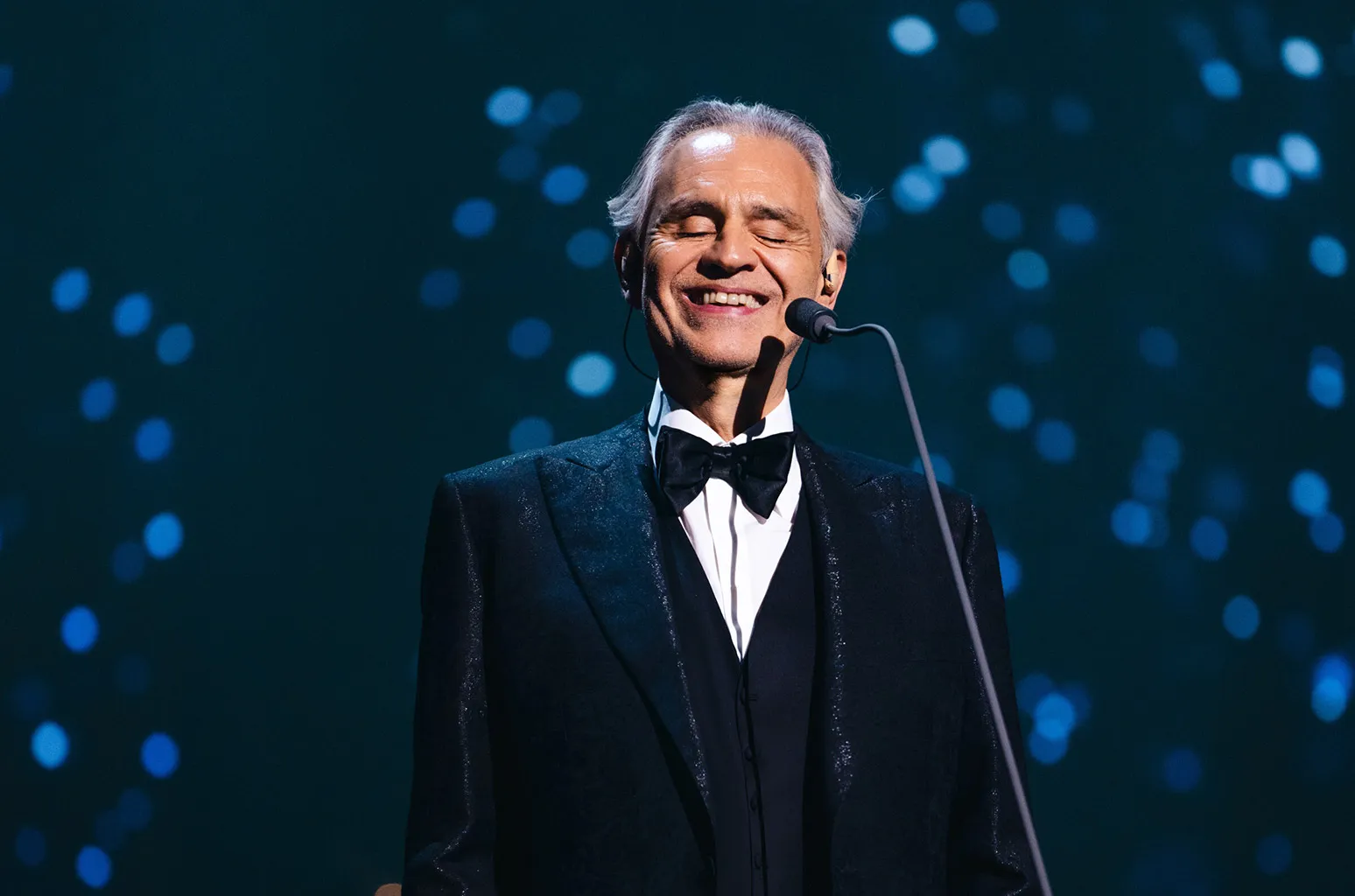
At the center of it all were Matteo Bocelli and Amos Bocelli, stepping into the spotlight not just as performers, but as sons. Their father, Andrea Bocelli, sat among the audience, watching quietly as the focus shifted away from him and onto the next generation.
Before the music began, Matteo addressed the crowd with a few simple words. There was no grand speech, no attempt to dramatize the moment—just a sincere acknowledgment of the role their father has played in shaping who they are. It set the tone for what followed: a performance rooted not in spectacle, but in gratitude.

As the first notes filled the open-air theater, the atmosphere seemed to change. The performance was measured and expressive, allowing each phrase to carry its own emotional weight. Amos, known for his musicianship, provided a steady foundation, while Matteo’s voice brought a sense of vulnerability that connected immediately with the audience.
What made the moment especially powerful was Andrea Bocelli’s presence—not on stage, but off it. For an artist whose voice has defined generations, choosing not to sing was, in itself, a meaningful gesture. It allowed the spotlight to rest fully on his sons, creating space for them to tell their own story while still honoring his influence.

From his seat, he watched as the performance unfolded, his role shifting from performer to listener. It was a quiet but significant transition, one that symbolized both continuity and change. The legacy he built was no longer just his—it was something being carried forward, interpreted in new ways.
The audience responded with a kind of reverence that matched the tone of the evening. There were no interruptions, no overwhelming reactions during the performance itself—just a shared sense of appreciation for what was taking place. It felt less like a concert and more like a moment of reflection, where music served as a bridge between generations.
Events like this highlight a different side of artistry. Beyond technique and recognition, they reveal the personal connections that often remain behind the scenes. In this case, the music became a way of expressing something that words alone could not fully capture.
:max_bytes(150000):strip_icc():focal(999x0:1001x2)/andrea-bocelli-matteo-bocelli-80ee0e26c46749279a5a5c417877d0e2.jpg)
As the final notes faded into the Tuscan night, the applause that followed carried more than admiration. It acknowledged the journey of a family, the influence of a father, and the emergence of new voices shaped by that legacy.
At Teatro del Silenzio, the evening was not defined by grandeur, but by sincerity. And in that simplicity, Matteo Bocelli and Amos Bocelli offered something lasting—a tribute that honored the past while quietly looking toward the future.