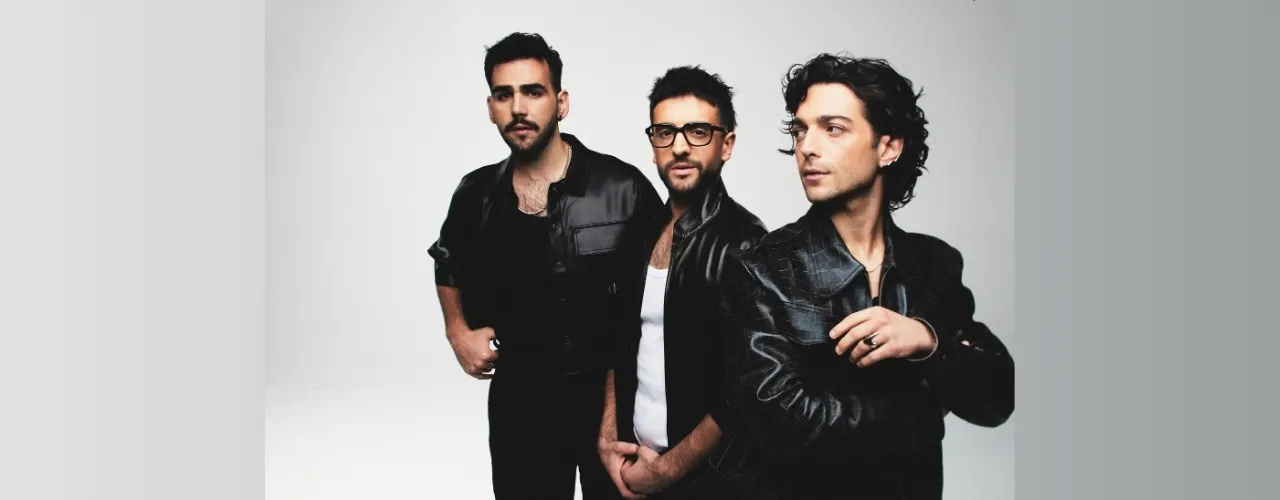
There are performances that begin with sound—and then there are those that begin with silence.
For Il Volo, that silence is not empty. It carries weight, intention, and something harder to define. When Piero Barone, Ignazio Boschetto, and Gianluca Ginoble step onto a stage to perform Grande Amore, the moment before the first note is as important as everything that follows.
They don’t rush it. They stand still. They wait.
And in that waiting, something begins to form—not just for them, but for everyone listening.

To understand why that moment matters, you have to look beyond the polished image of three voices perfectly in sync. Il Volo has built its reputation on precision, blending operatic technique with contemporary appeal. Their harmonies are refined, their delivery controlled. But beneath that structure lies something far less predictable: emotion that refuses to stay contained.
Years of training have taught them how to support a note, how to sustain it, how to deliver it with clarity. What training cannot fully control, however, is what happens when emotion pushes through that discipline.
That tension is what defines “Grande Amore.”
From the first note, the song demands more than vocal strength. It asks for vulnerability. And that’s where the shift begins—quietly, almost invisibly. A breath held just a second longer. A phrase that carries a little more weight than expected. A note that feels less performed and more revealed.
For the audience, it’s not always immediate. At first, it sounds like what they came for: powerful voices, familiar melody, technical brilliance. But gradually, something changes. The performance stops feeling like a presentation and starts feeling like an experience unfolding in real time.
Each line builds on the last, not just musically, but emotionally. The words aren’t simply delivered—they’re carried, shaped by something personal beneath the surface. It’s subtle, but undeniable.
And then comes the moment.

It doesn’t announce itself. There’s no dramatic cue, no visible signal. But suddenly, the room feels different. The connection between performer and audience tightens, as if everyone has stepped into the same emotional space without realizing exactly when it happened.
Some notice it instantly. Others only recognize it after the fact. But it’s there—that shift from control to release.
This is what sets Il Volo apart. Not just their ability to sing with power, but their willingness to let something fragile exist within that power. To allow imperfection—not in technique, but in emotion. To let the performance breathe, even when it risks becoming something unpredictable.
For music fans, it’s a reminder of what live performance can be at its best. Not flawless, not distant, but human.
Because in the end, “Grande Amore” isn’t just about love as a theme. It’s about expression—what it means to feel something fully, and to let that feeling be heard without holding it back.
And it all begins the same way.
Not with a note.
But with silence.