It wasn’t meant to be a spectacle. There were no flashing lights, no roaring stadium crowd, no grand announcements. Instead, the room was quiet—almost reverent—as five musicians stepped forward, each carrying a name that has shaped the history of modern music.
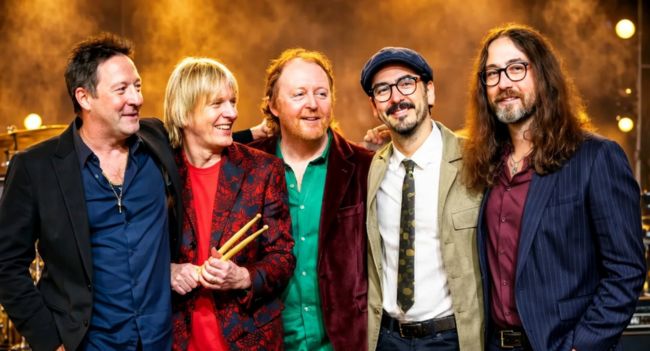
Julian Lennon, Sean Lennon, Dhani Harrison, Zak Starkey, and James McCartney stood side by side. Together, they represented the next generation of a musical legacy tied to one of the most influential bands of all time: The Beatles.
The choice of song was inevitable, yet deeply symbolic. “Hey Jude,” written by Paul McCartney decades earlier, has long been associated with comfort, resilience, and emotional connection. Originally penned for Julian Lennon during a difficult chapter in his childhood, the song has since grown into an anthem embraced across generations.
But on this night, it felt different.
There was a rawness to the performance—stripped back and unpolished in a way that made every lyric feel closer, more human. No one tried to recreate the past. Instead, each of them seemed to approach the song with quiet respect, allowing their individual voices to blend into something that felt both familiar and entirely new.
Observers in the room noted that Ringo Starr and Paul McCartney themselves were present, watching without interruption. There was no need for commentary. The weight of the moment spoke for itself.
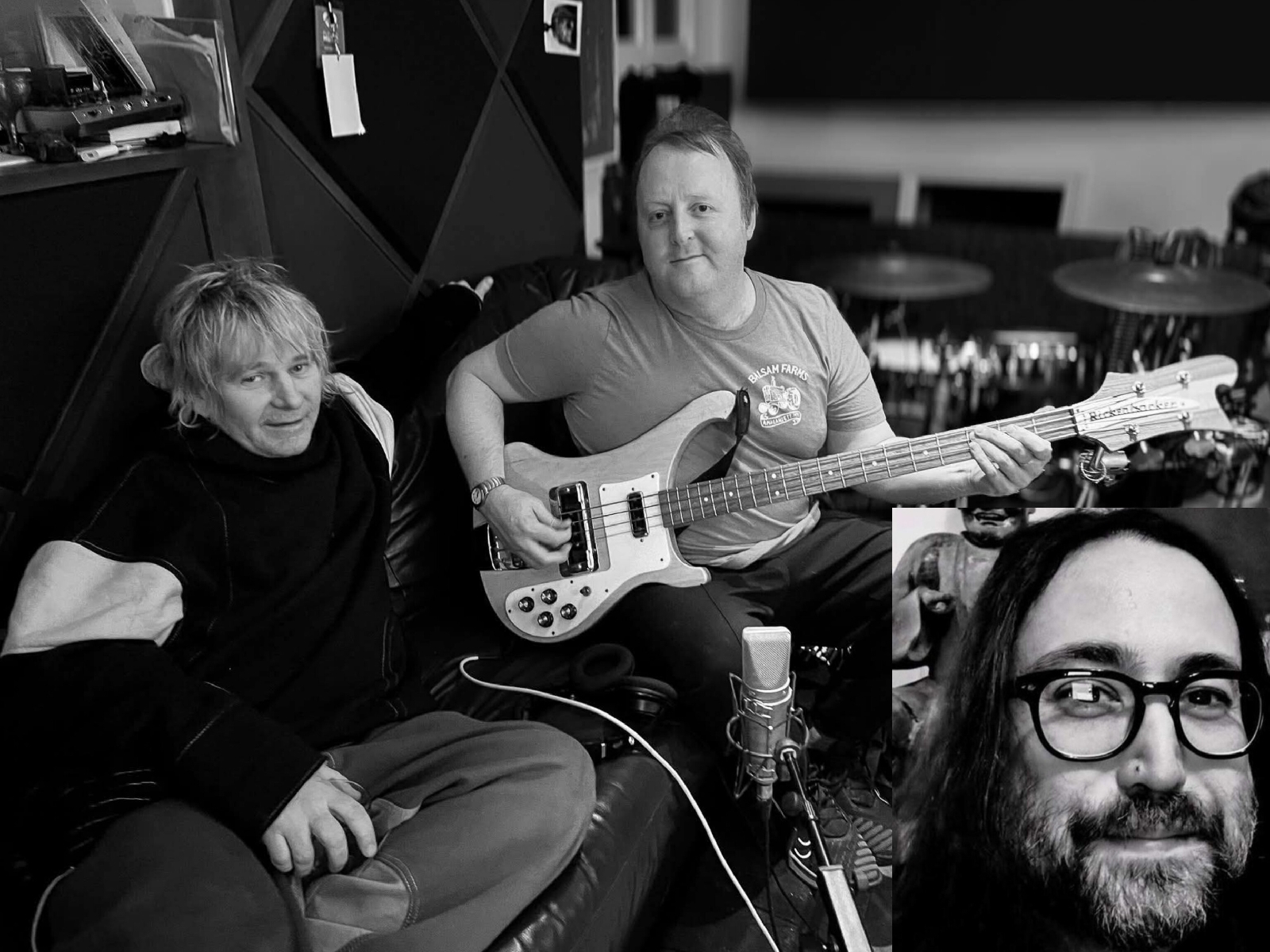
As the song unfolded, it carried a sense of shared history—not just of the music, but of family, loss, and continuity. Each performer brought their own interpretation, shaped by lives lived both in and outside the shadow of their fathers’ fame. Yet together, they created something unified, almost conversational, as if the song itself had evolved with them.
Then came the final section—the famous “na-na-na” refrain that has turned countless audiences into choirs.
At first, it followed the expected path. Voices rose, harmonies built, and the familiar rhythm settled in. But instead of swelling into a grand, crowd-driven climax, the energy shifted. The singing softened. The tempo eased. What is usually a communal crescendo became something quieter, almost meditative.
It wasn’t about volume. It was about presence.
In that subtle change, the performance revealed its true intention. This wasn’t a tribute designed to impress. It was a moment of reflection—five individuals connecting not only with a song, but with the stories and relationships behind it.
For those who witnessed it, that unexpected turn is what lingered most. It transformed a well-known ending into something intimate, as if the performers were reclaiming the song in their own voices rather than echoing the past.
:max_bytes(150000):strip_icc():focal(742x289:744x291)/beatles-kids-tout-050724-919b6e8fd42546f8b0eca990fe92a6c0.jpg)
Since then, the moment has spread far beyond that room, resonating with fans who recognize both the history and the humanity behind it. In a world where legacies are often preserved through replication, this performance stood out for doing the opposite.
It didn’t try to relive history.
It simply honored it—quietly, personally, and on its own terms.