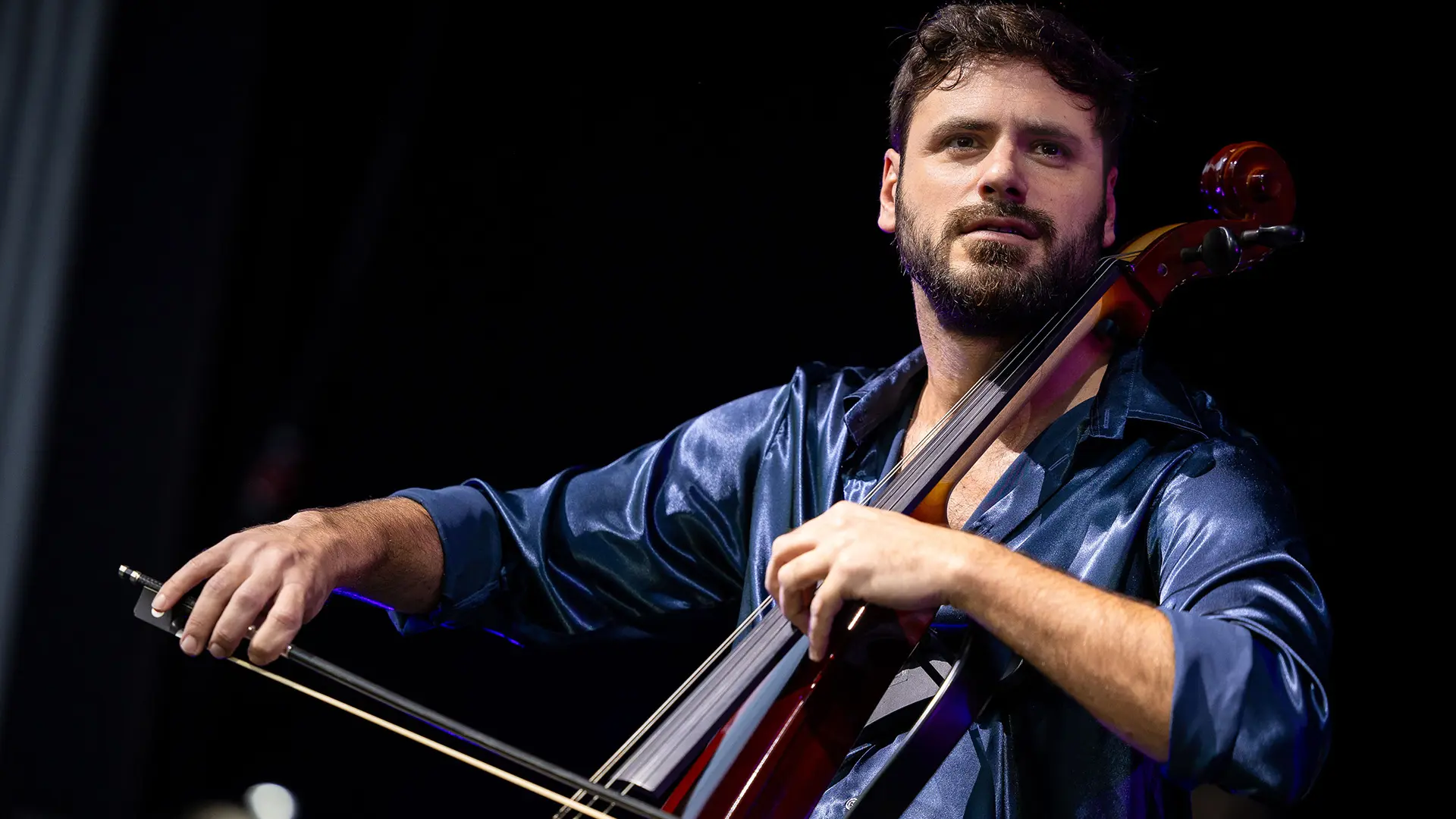
On stage, HAUSER is known for intensity. Whether performing solo or as part of 2Cellos, he has built a reputation for turning the cello into something cinematic—bold, expressive, and capable of filling arenas with sound and emotion.
But away from the lights and applause, another side of his story emerges.
In a recent reflective moment, HAUSER spoke not about fame or touring schedules, but about the foundation of his journey: his family, and especially his mother. The shift in tone was immediate. The performer who usually commands thousands with ease became quieter, more grounded, as he described the personal meaning behind his music.
He explained that long before international stages and sold-out venues, there was someone who recognized his talent first—not the industry, not the audience, but his mother. That early belief, he suggested, became something he never forgot.

What stood out most in his reflection was not ambition, but continuity. He shared that a promise made in his earlier years still influences the way he approaches every performance today. It isn’t about pressure or expectation in the commercial sense, but about gratitude—an internal reminder of where his journey began and who stood beside him before success arrived.
For many artists, global recognition can shift focus outward, toward audiences, achievements, and visibility. But in HAUSER’s case, this moment suggests something more rooted: a private anchor that remains steady even as everything else expands.
That connection also reframes how his performances are experienced. What might look like pure virtuosity on stage carries, underneath it, a quieter emotional thread. Each note becomes more than technique—it becomes a continuation of a relationship that predates the spotlight.
His work with 2Cellos helped redefine the cello for a modern audience, blending classical training with contemporary energy. Yet this reflection reveals that the driving force behind that evolution isn’t just innovation—it’s intention.
And that intention, as he describes it, is deeply personal.
It raises a universal question that extends beyond music: how much of who we become is shaped by the people who believed in us first? And how often do success and recognition still circle back to those original moments of encouragement?
For HAUSER, the answer seems to remain present in every performance. Not as obligation, but as memory. Not as pressure, but as connection.
In the end, the image of the global performer and the son are not separate stories. They are the same one, expressed in different rooms—one filled with applause, the other with quiet understanding.
And somewhere between those two spaces, the music continues.