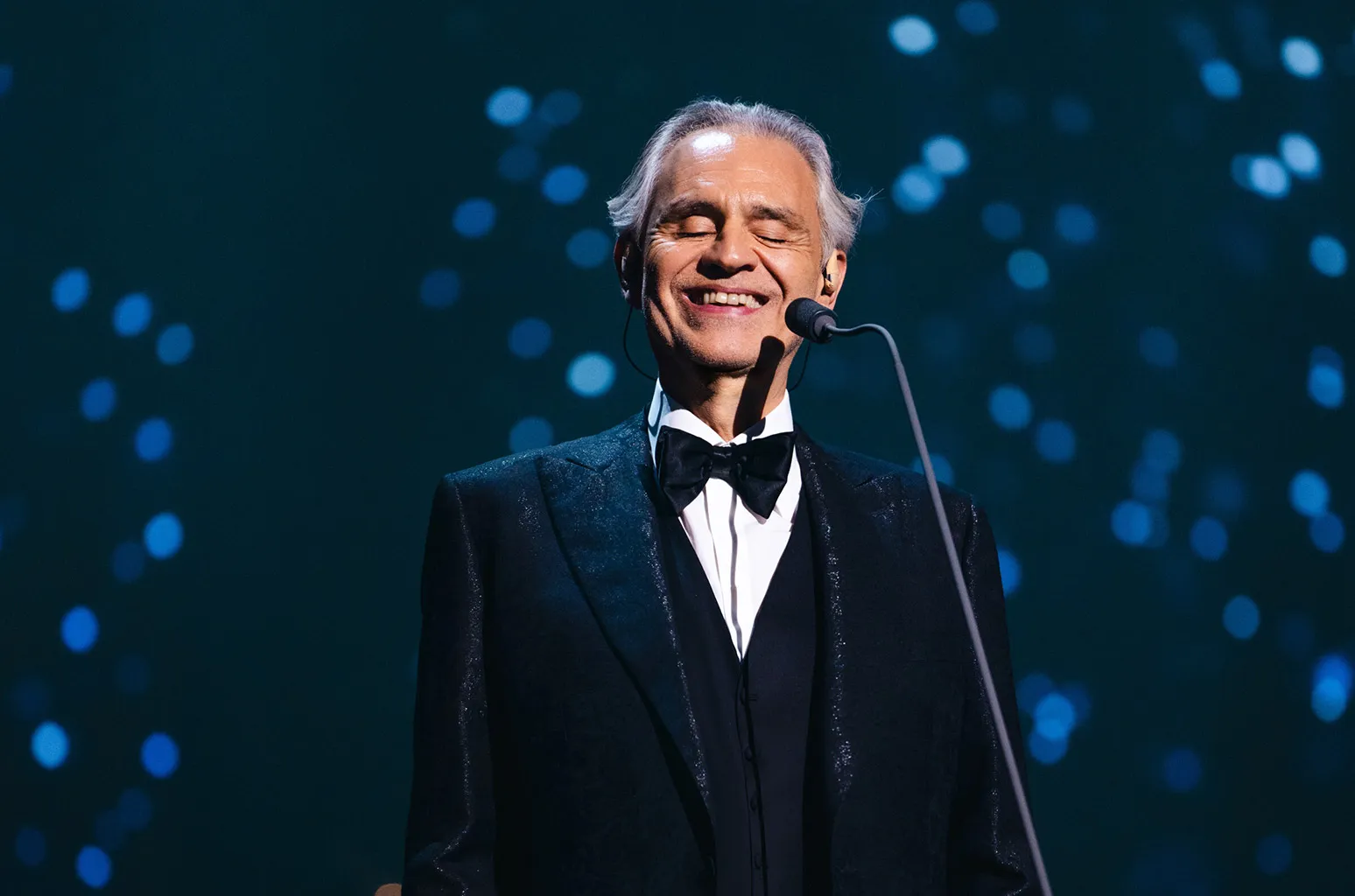
Few voices in modern music have carried the emotional weight and global reach of Andrea Bocelli. His career has long been associated with soaring melodies, classical elegance, and performances that seem to dissolve boundaries between opera, pop, and pure feeling. So when an emotional narrative began circulating online, describing a quiet farewell from the tenor himself, it naturally struck a nerve among fans—less as confirmed news, and more as a symbolic reflection of how deeply his music has shaped people’s lives.
In this widely shared portrayal, Bocelli is imagined seated in a calm, intimate setting, far removed from the grandeur of concert halls and stadiums. There are no orchestras, no spotlight beams cutting through theatrical smoke—only silence, reflection, and the presence of family. The scene is designed not as spectacle, but as contrast: the simplicity of the moment amplifying the magnitude of a lifetime spent on stages across the world.
The narrative suggests that he speaks not with dramatic finality, but with gratitude and quiet exhaustion. Years of travel, performances, and artistic devotion are framed as both a privilege and a burden that inevitably reshapes a person’s relationship with their craft. In this telling, music is not rejected—it is honored. Yet alongside that reverence emerges a human desire for stillness, for moments untouched by applause or expectation.
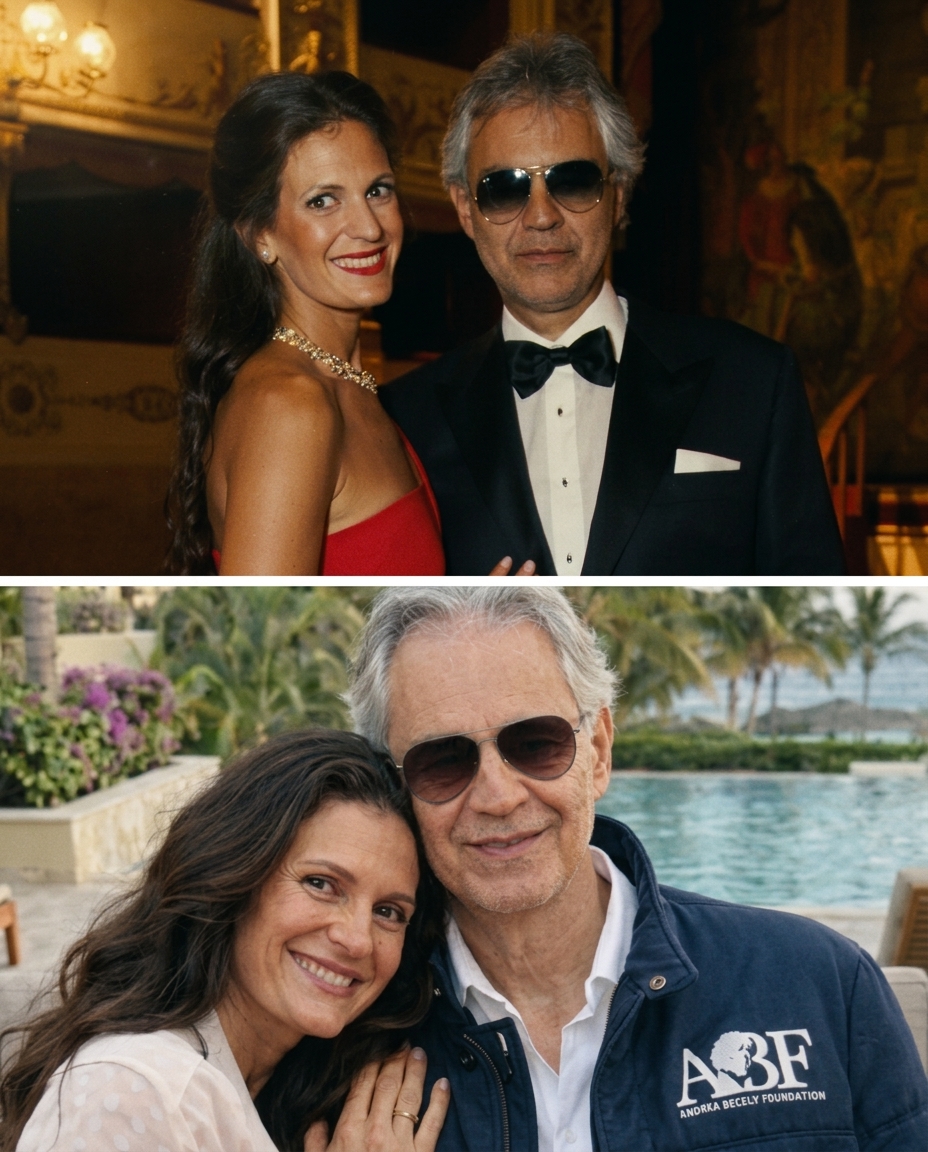
For fans, such a story resonates because it mirrors something universal about artists we admire: the tension between public legacy and private life. Bocelli’s music has always been about emotional clarity—love, loss, faith, and transcendence expressed through a voice that feels almost boundless. Imagining him stepping away from that world, even hypothetically, invites listeners to reconsider what it means to give so much of oneself to art.
But it is important to separate emotional storytelling from verified fact. As of now, there has been no confirmed announcement from Bocelli indicating retirement or a withdrawal from music. Instead, he remains an active figure in international performance and recording. This kind of viral narrative often emerges around beloved artists, not because of real developments, but because audiences are processing the emotional weight of their influence. The idea of an “ending” becomes a symbolic way to acknowledge how significant their presence has been.
What makes this particular story powerful is not its accuracy, but its emotional intent. It reflects how deeply Bocelli’s voice is intertwined with moments of personal meaning for listeners around the world. Weddings, farewells, private reflections—his music often becomes the background to life’s most intimate scenes. In that sense, the idea of a farewell, even imagined, feels like a collective meditation on time, memory, and appreciation.
Ultimately, whether framed as rumor, fiction, or emotional tribute, the narrative surrounding Bocelli’s supposed goodbye reveals more about the audience than the artist. It shows how music can blur the line between reality and imagination, and how the thought of silence after a powerful voice can feel almost unthinkable. And perhaps that is the real message embedded within it: not an ending, but a reminder of how profoundly one voice can echo long after the final note fades.