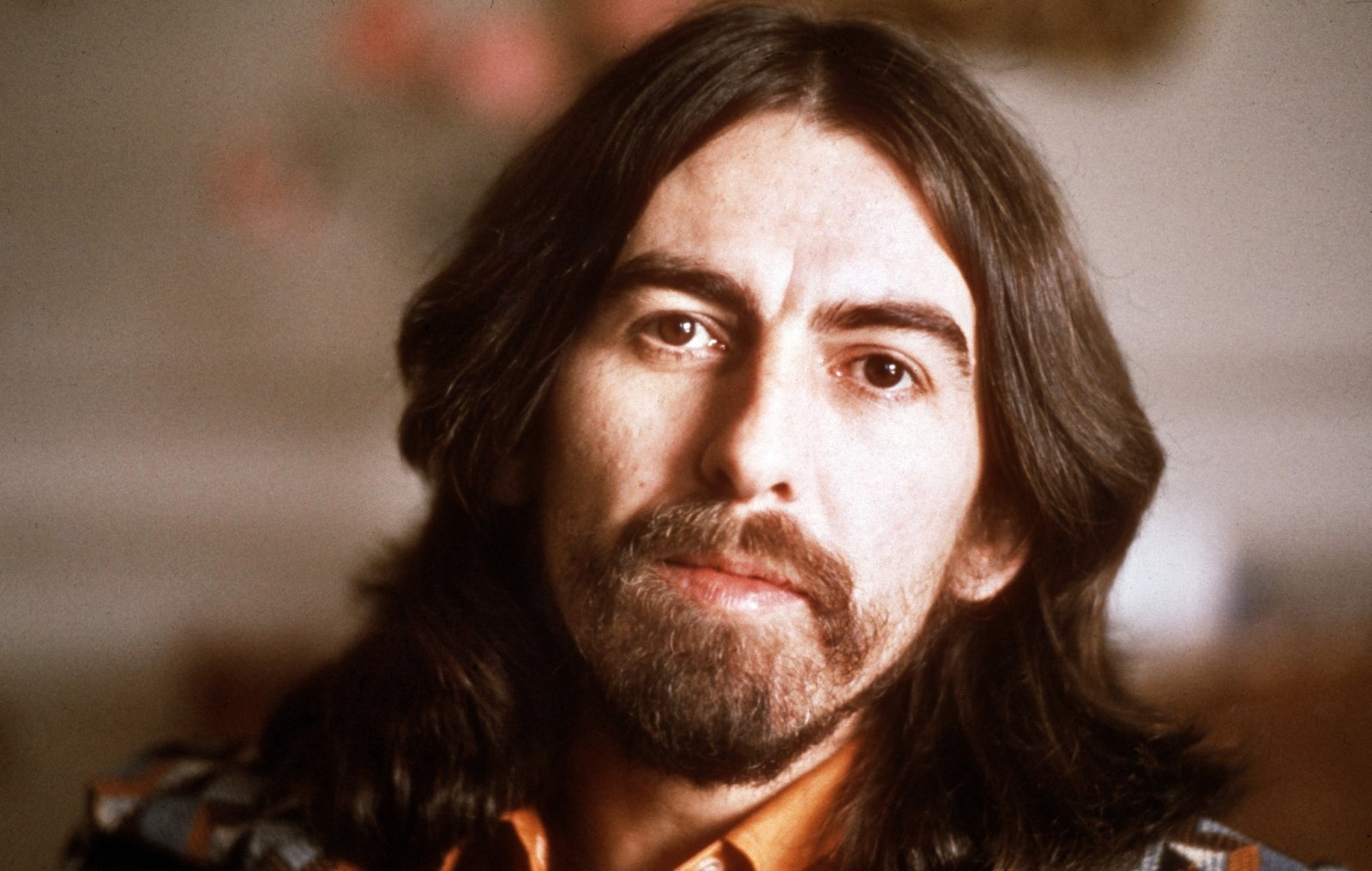
As The Beatles approached the end of their journey, their music began to take on a different tone—less unified, perhaps, but often more revealing. Among the final songs to emerge from that period was I Me Mine, a composition by George Harrison that stands apart for its introspective depth and quiet honesty.
Featured on the 1970 album Let It Be, “I Me Mine” arrived at a time when the band was unraveling. Creative differences, personal ambitions, and strained relationships had begun to pull the group in separate directions. Within that context, Harrison’s focus on ego and self-centeredness feels especially significant—not just as a philosophical observation, but as something deeply personal.
The song’s title itself is telling. “I, me, mine” are the words that dominate human thought, Harrison suggests, pointing to the way ego shapes perception and behavior. Influenced by his growing interest in spirituality and Eastern philosophy, he uses the song as a way to question that instinct. Rather than celebrating individuality, “I Me Mine” gently challenges it, asking what lies beyond the constant focus on the self.
Musically, the track mirrors this tension. It shifts between a waltz-like, almost dreamlike verse and a more forceful, grounded rock section. This contrast gives the song a sense of movement, as if it’s navigating between reflection and reality. The softer passages feel inward-looking, while the heavier sections bring a sense of confrontation—an audible push and pull that echoes the song’s central theme.
Notably, “I Me Mine” was recorded without John Lennon, who had effectively stepped away from the band by that point. That absence adds another layer to the track’s significance. What remains is a smaller, more focused collaboration between Harrison, Paul McCartney, and Ringo Starr—a snapshot of The Beatles in their final form.
Despite its relatively short length, the song leaves a lasting impression. Harrison’s vocal delivery is calm but firm, never overstated. He doesn’t lecture or dramatize; instead, he presents the idea with a kind of quiet clarity, allowing listeners to sit with it and draw their own conclusions.
In many ways, “I Me Mine” feels like a closing thought—not just for the album, but for an era. While other Beatles songs from this period are marked by grandeur or emotional release, this one turns inward. It doesn’t try to resolve the band’s tensions or offer a sense of closure. Instead, it acknowledges something more universal: the difficulty of stepping outside one’s own perspective.
Looking back, the song holds a unique place in The Beatles’ catalog. It captures a moment when the band was no longer functioning as it once had, yet still capable of producing music that resonated on a deeper level. Harrison, often the quiet observer within the group, steps forward here with a message that feels both timely and timeless.
“I Me Mine” may not be the most celebrated Beatles track, but it is one of their most thoughtful. In just a few minutes, it distills a complex idea into something simple, memorable, and enduring.
And in doing so, it leaves listeners with a subtle but lasting question: what happens when we learn to let go of “I, me, mine”?