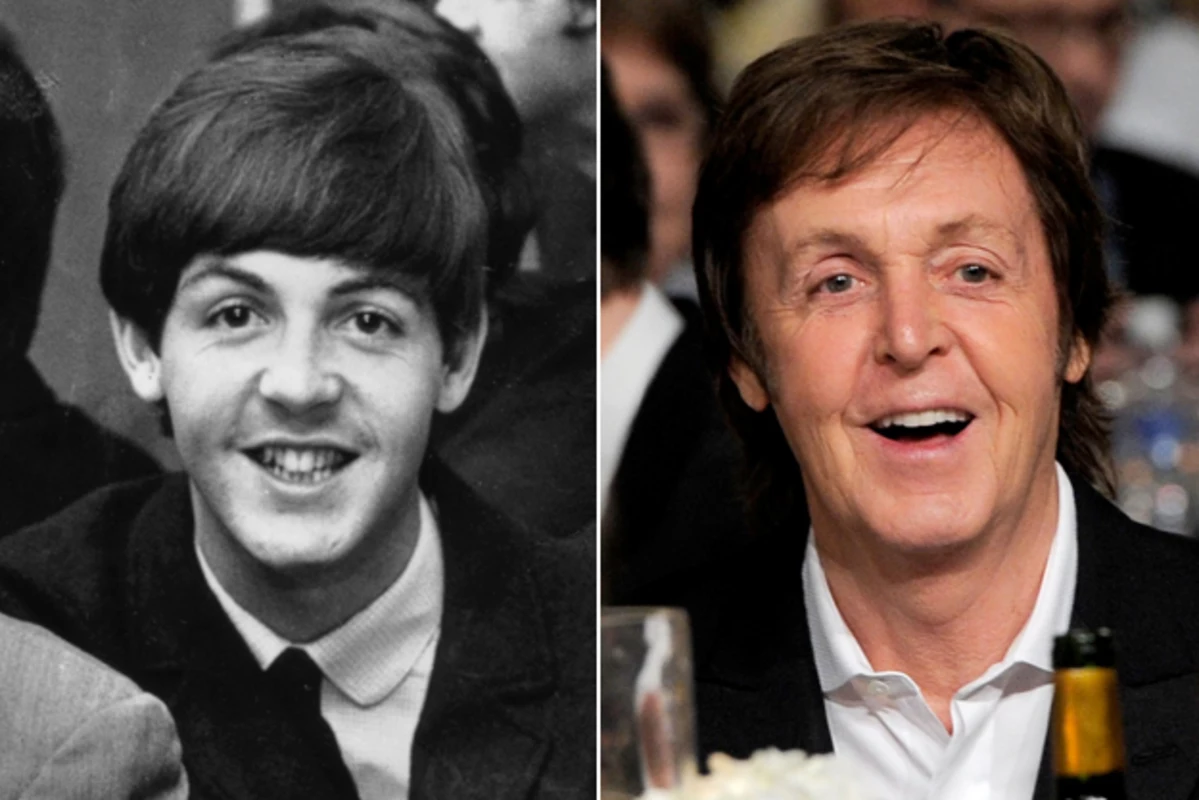
It was more than just a concert—it was a cultural moment decades in the making. When Paul McCartney stepped onto the stage in Red Square, the significance of the night extended far beyond music. For many in the crowd, this was the realization of something once thought impossible: hearing a former member of The Beatles perform live in the very heart of Russia.
The opening chords of “Back in the U.S.S.R.” carried a special weight. Written during a time of Cold War tension, the song had once been viewed with suspicion by Soviet authorities. Though Beatles records circulated informally among devoted listeners, public celebration of their music was limited for years. Yet their influence persisted quietly, passed from friend to friend, often on well-worn vinyl records.

By the time McCartney arrived in Moscow, that quiet admiration had transformed into something ready to be expressed openly. As he began to play, the reaction from the crowd was immediate and powerful. Thousands of voices joined in—not hesitantly, but with confidence and emotion. It was as if the years of restraint had dissolved all at once.
What made the moment striking wasn’t just the scale of the audience, but its diversity. People of different generations stood side by side, united by songs that had soundtracked their lives in very different ways. Older fans, who remembered the era when Western music was harder to access, watched with a sense of disbelief. Younger listeners, raised in a more open cultural landscape, experienced the music as both history and living performance.
The setting added another layer of meaning. Red Square, with its deep political and historical symbolism, had witnessed countless defining moments. Hosting a concert by a Western artist of McCartney’s stature marked a shift—one that reflected broader cultural openness and a willingness to embrace shared artistic experiences.
Throughout the evening, McCartney moved through a setlist that blended Beatles classics with his solo work. Each song seemed to reinforce the same idea: that music has a way of crossing boundaries that once seemed fixed. The performance wasn’t framed as a political statement, yet it carried undeniable cultural resonance.

For many in attendance, the highlight remained that early moment when “Back in the U.S.S.R.” filled the square. The song, once listened to in private spaces, had found its way into a public, collective voice. It was no longer just a track from a famous album—it had become a shared memory, shaped by the context in which it was finally heard.
Looking back, the concert stands as a reminder of how music can outlast the conditions that once restricted it. The Beatles’ songs had traveled across borders long before McCartney set foot on that stage, carried by listeners who connected with them regardless of political climate.

That night in Moscow didn’t rewrite history, but it did bring it full circle. In a place where those melodies had once been distant and subdued, they were now loud, clear, and embraced—marking a moment where past and present met through song.