
When people talk about Il Volo, the conversation usually begins in the same place: their extraordinary voices. It’s hard not to. With performances that effortlessly blend classical technique and modern emotion, the trio has captivated millions around the world, racking up over a billion views and filling concert halls across continents.
But there’s another story—one that unfolds more quietly, almost invisibly to the casual listener.
Long before the standing ovations and global tours, Gianluca Ginoble, Piero Barone, and Ignazio Boschetto were just teenagers navigating a moment that would change their lives forever. They didn’t grow up together. They weren’t lifelong friends. In fact, they barely knew each other when they were first brought together on stage during an Italian talent show.
Imagine that for a moment: three young voices, each carrying their own dreams, suddenly merged into something bigger than any one of them. The stage was enormous, the expectations even larger. And yet, what could have easily become just a professional collaboration slowly turned into something deeper.
That transformation didn’t happen overnight. It wasn’t announced in interviews or captured in headlines. Instead, it revealed itself in small, fleeting moments—the kind that only attentive fans notice. A quick glance before the first note of a song. A shared breath between harmonies. A smile that passes silently but says everything.
Over the years, Il Volo has matured not only as performers but as individuals connected by an unspoken understanding. Their chemistry doesn’t feel rehearsed; it feels lived-in. It’s the kind of connection that comes from years of shared experiences—long tours, late-night rehearsals, and the pressures that come with growing up in the public eye.
For fans, this subtle bond adds a new dimension to their music. It’s no longer just about vocal range or technical brilliance. It’s about trust. When one voice rises, the others follow—not just musically, but emotionally. That kind of synchronicity can’t be manufactured.
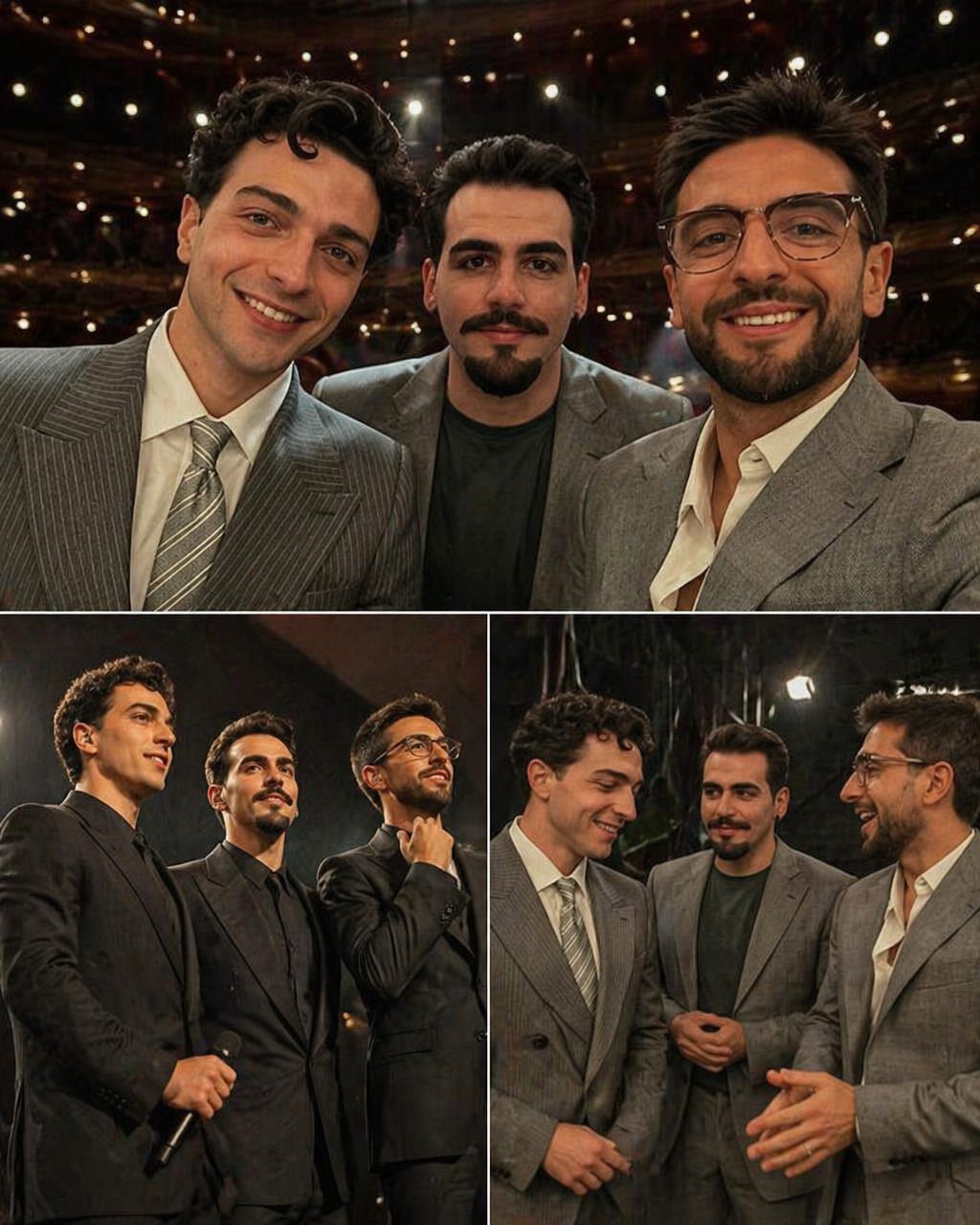
And perhaps that’s the real reason Il Volo has endured while many acts fade. Talent may open doors, but connection keeps them open. In an industry that often prioritizes spectacle, their quiet unity stands out.
There’s something almost poetic about it. While audiences are drawn in by the power of their performances, what keeps them coming back is harder to define. It lives in the spaces between the notes—in the pauses, the glances, the shared understanding that doesn’t need words.
In the end, Il Volo’s story isn’t just about three voices coming together. It’s about three lives intertwining over time, creating something that goes far beyond music. And for those who look closely, that may be the most beautiful part of all.