It wasn’t a dramatic pause or a missed cue that drew attention. There was no spotlight shift, no audible gasp from the audience. In fact, for years, almost no one seemed to notice it at all. But now, as fans revisit old concert recordings from a 2017 performance in Rome, a small, almost invisible moment has taken on new meaning.
The stage was bathed in soft light, the kind that gives everything a warm, intimate glow. The trio was deep into a song, their voices blending with practiced precision. Then, for just a fleeting instant, something changed. Ignazio’s voice cracked—barely perceptible, but enough for those who know live music to recognize the vulnerability of the moment.
What happened next was even quieter.
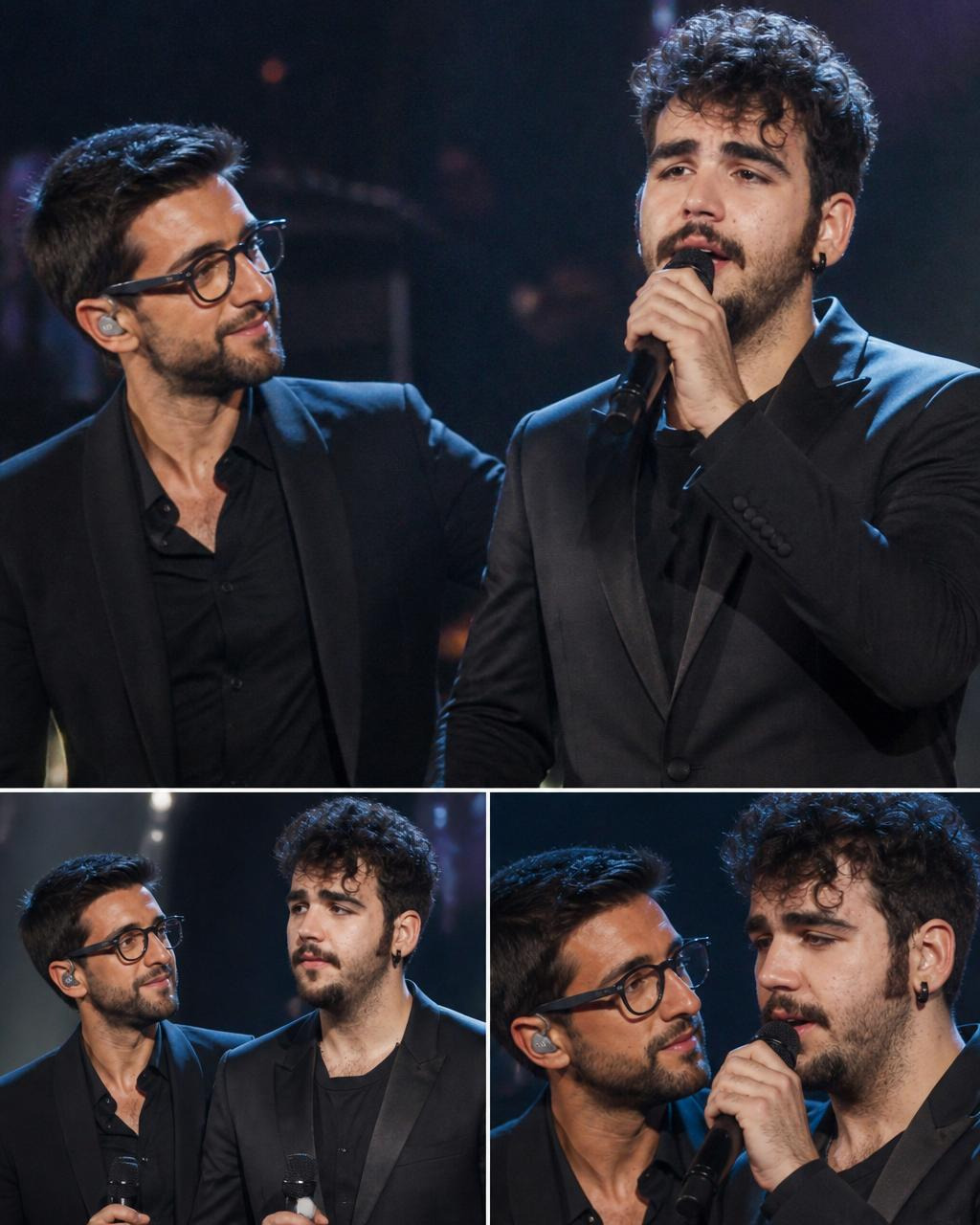
Piero didn’t turn to the audience or adjust his stance to maintain the performance’s outward polish. Instead, he took a single step closer to Ignazio. It wasn’t exaggerated or choreographed. It was instinctive. Subtle. Almost hidden in plain sight.
At the time, the audience remained immersed in the music, unaware that anything unusual had occurred. The song carried on seamlessly, as professionals often ensure it does. But years later, with fans combing through archived footage, the moment has resurfaced—and it’s striking a chord in a completely different way.
Viewers are beginning to notice a pattern. In emotionally charged sections of performances, Piero’s gaze frequently drifts—not toward the crowd, but toward Ignazio. It’s not constant, not obvious enough to disrupt the show, but consistent enough to raise questions.
Is it simply the mark of a seasoned performer, someone attuned to his fellow singer’s cues and ready to support at any moment? Or is it something more personal, a quiet form of connection that doesn’t need to be explained to be felt?
For many fans, the answer doesn’t have to be definitive. What matters is the authenticity of the interaction. Live music is, at its core, a shared experience—not just between artists and their audience, but among the performers themselves. The smallest gestures can carry the greatest weight, especially when they’re unplanned.
There’s something deeply human about the moment. A voice falters. A partner notices. No words are exchanged, no attention is drawn, but the support is there all the same. It’s the kind of interaction that often goes unseen, yet defines the strength of a collaboration.
As more fans rediscover this performance, the moment continues to resonate—not because it was grand or theatrical, but because it wasn’t. It’s a reminder that sometimes, the most meaningful parts of a performance aren’t the ones designed to be seen.
They’re the ones that almost weren’t.