For years, audiences have naturally connected Matteo Bocelli to the towering musical legacy of his father, Andrea Bocelli. Comparisons were inevitable. The voice, the stage presence, even the emotional style of performance all carried traces of the family tradition that made the Bocelli name famous around the world.
But during a recent concert in Australia, many fans left feeling they had witnessed something different.
They did not simply see Andrea Bocelli’s son performing.
They saw Matteo Bocelli becoming his own artist.
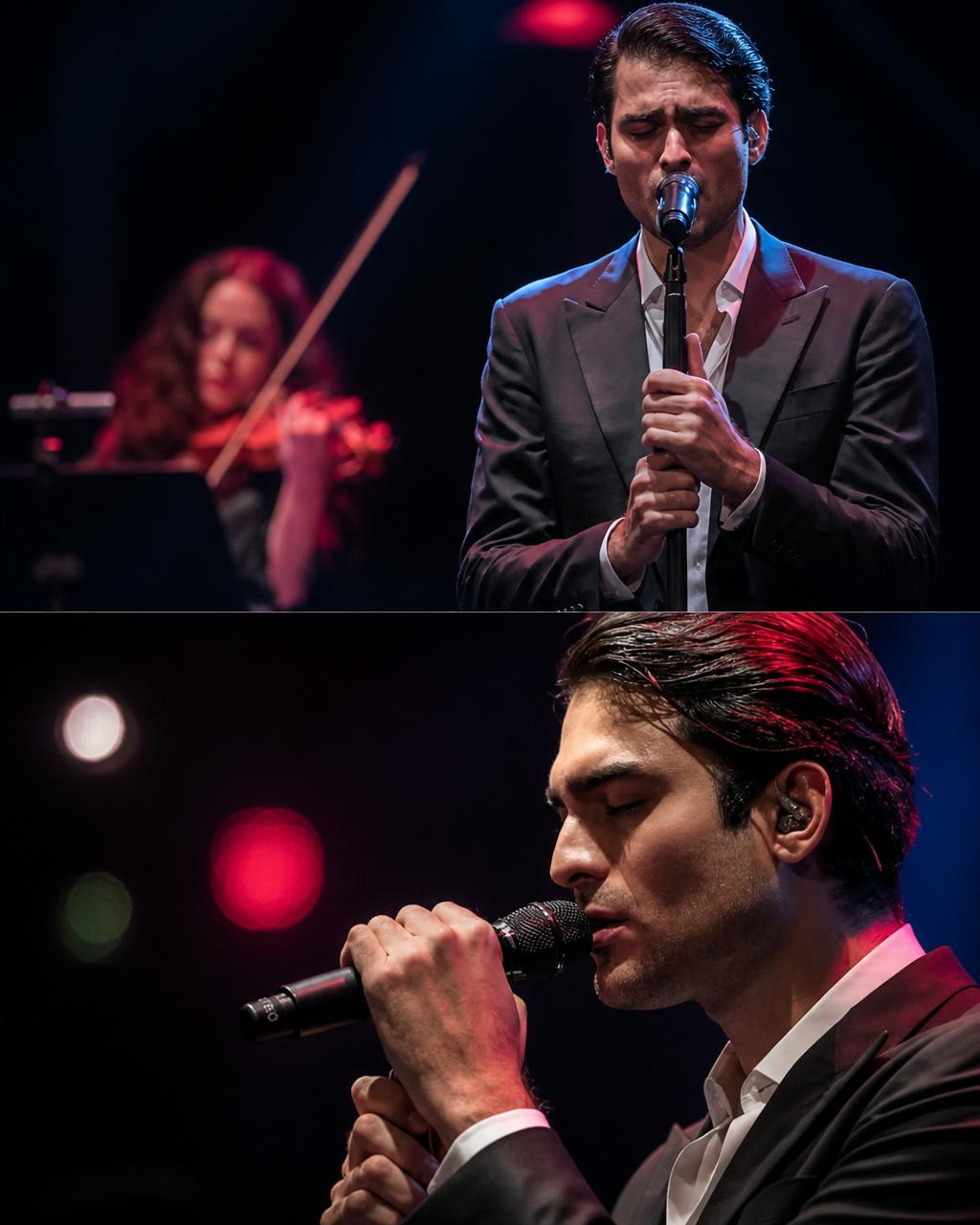
The atmosphere inside the venue shifted almost immediately after Matteo stepped onto the stage. There was excitement, certainly, but also curiosity. Some audience members arrived expecting a pleasant evening shaped largely by nostalgia and familiar songs connected to Andrea’s career. Instead, they found themselves drawn into a performance that felt unexpectedly personal.
As the music began, Matteo sang with calm control and emotional restraint. Then came the moment many fans later described online. During one sustained phrase, his voice carried a tone and emotional depth that instantly reminded listeners of Andrea Bocelli at his peak. A quiet ripple moved through the crowd as people exchanged glances, visibly surprised by what they were hearing.
For a brief instant, memory and reality seemed to overlap.
Yet what impressed audiences most was not the similarity itself. It was what happened afterward.
Rather than leaning completely into imitation, Matteo allowed his own style to emerge naturally. His phrasing became more contemporary, his emotional delivery more intimate and conversational. Instead of trying to recreate his father’s legendary performances, he appeared focused on honoring that influence while still building something distinctly his own.
That balance gave the concert its emotional power.
Fans later described the atmosphere inside the arena as unusually intense, with long stretches of complete silence between applause. People seemed genuinely absorbed in the performance, listening closely to every pause and lyric. In an era dominated by phones and constant distractions, the attention Matteo held over the room became remarkable in itself.
By the second half of the concert, the emotional connection between performer and audience had clearly deepened. The applause grew louder, but the quieter moments became even more meaningful. Matteo no longer looked like an artist cautiously carrying a famous surname. He looked increasingly comfortable standing entirely on his own.
Then came the moment people inside the venue continue discussing online.
After the final song ended and the applause filled the arena, Matteo paused before leaving the stage. Witnesses described a brief emotional exchange with audience members near the front rows — a moment that felt unscripted and deeply sincere. Some fans said the atmosphere changed from admiration to genuine affection, as though the audience collectively realized they had watched an important personal milestone unfold in real time.
Social media reactions exploded shortly afterward. Many fans admitted they had originally attended out of love for Andrea Bocelli’s music but left feeling unexpectedly connected to Matteo’s artistry instead.
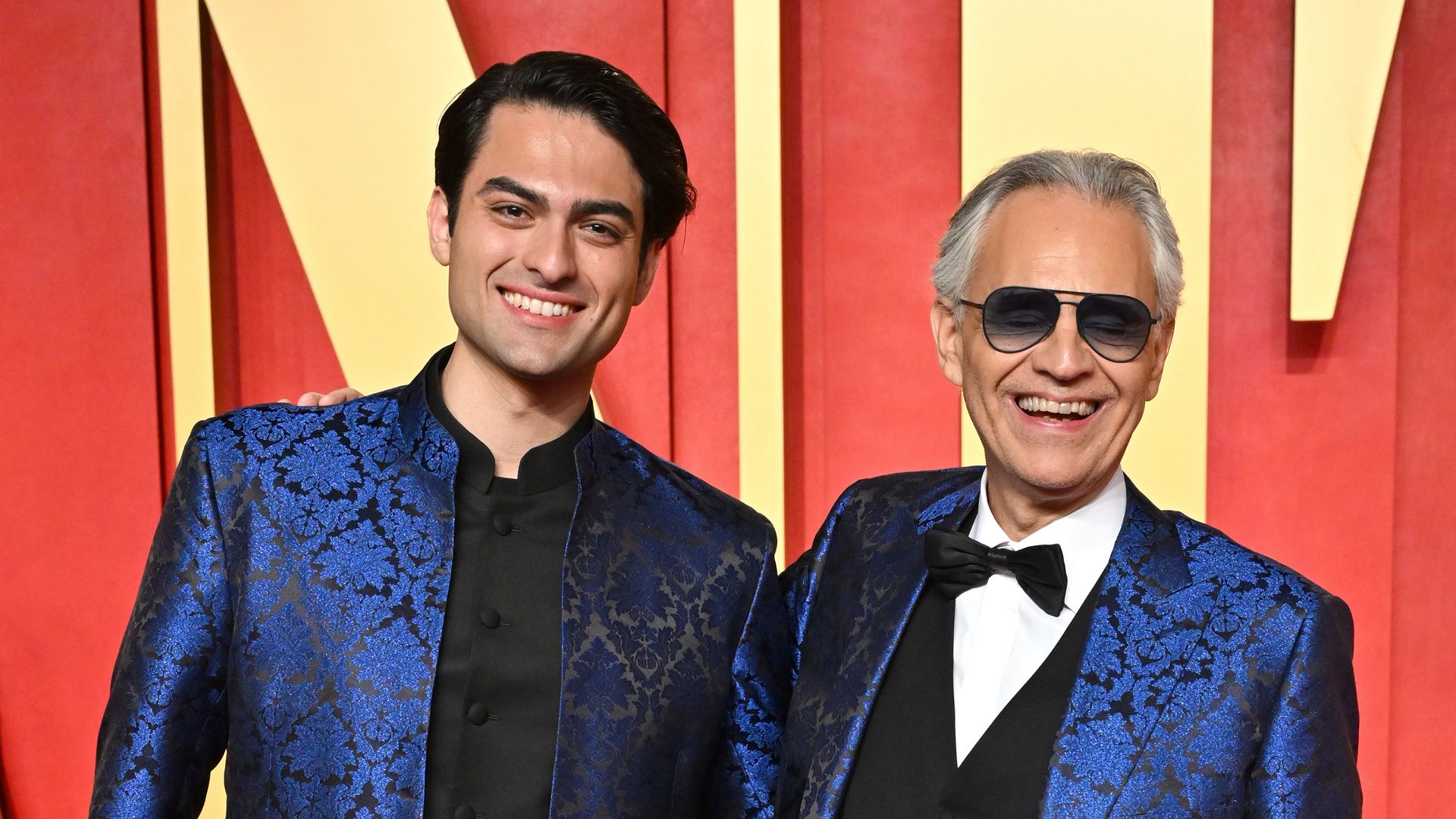
:max_bytes(150000):strip_icc():focal(999x0:1001x2)/matteo-bocelli-d172eff13b884505b1126fdbc6a43b23.jpg)
That may ultimately be what made the evening so memorable.
The concert was never truly about replacing a legendary voice or escaping a famous family legacy. It was about witnessing the point where influence transforms into individuality.
And for many fans in Australia, that transformation no longer feels like a possibility for Matteo Bocelli.
It feels like it has already begun.