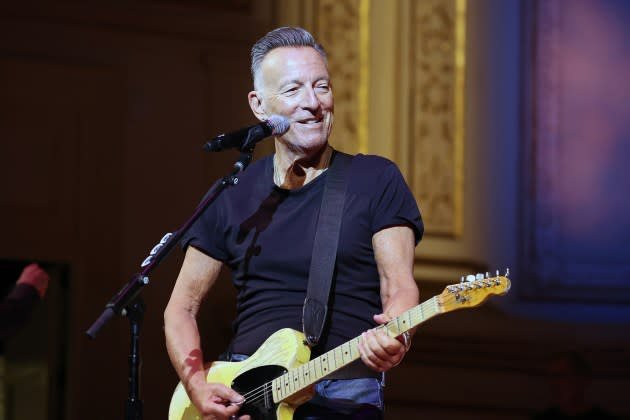
There are certain songs that carry more than melodies. They carry people, memories, entire eras of life. For Bruce Springsteen, “Jungleland” has always been one of those songs — and during a moving performance at Madison Square Garden, it became something even heavier: a reminder of the friend who helped define it.
The moment unfolded during a benefit concert packed with major names and emotional performances. The crowd inside the legendary arena expected memorable collaborations and heartfelt tributes. But few seemed prepared for the quiet emotional weight that arrived when Chris Martin sat alone at the piano and began playing the opening notes of “Jungleland.”
For longtime Springsteen fans, the song occupies sacred territory.
Originally released on Born to Run in 1975, “Jungleland” became one of the defining epics of Bruce Springsteen and the E Street Band’s career. At the center of the song lives Clarence Clemons’ unforgettable saxophone solo — a performance filled with longing, heartbreak, and soul that became inseparable from the song itself. For decades, audiences waited for that moment every time the band played it live.
But Clarence Clemons died in 2011.
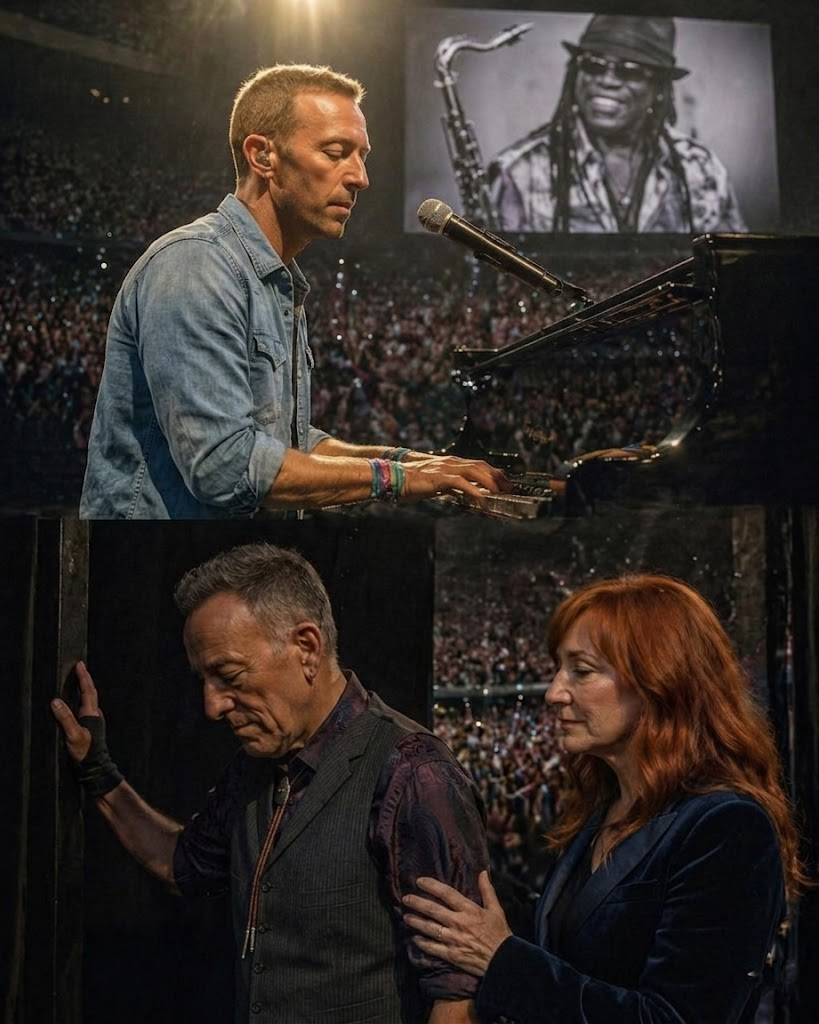
Known to fans simply as “The Big Man,” Clemons was more than the E Street Band’s saxophonist. He was Springsteen’s closest musical partner, a towering presence whose sound helped shape the emotional identity of the band. Even years after his passing, Springsteen has spoken openly about how impossible it feels to truly replace him.
That history gave Chris Martin’s performance its emotional force.
Rather than attempting to imitate Clemons’ famous saxophone section, the Coldplay frontman chose something quieter and more respectful. As the solo approached, Martin carefully translated each familiar note onto the piano keys, letting the melody breathe slowly through the arena. The choice transformed the song from a performance into something closer to a memorial.
At first, Bruce Springsteen appeared to be heading offstage.
Then he stopped.
Witnesses inside Madison Square Garden described the moment as almost surreal. Springsteen stood motionless near the side of the stage, his head lowered as the piano echoed through the silent arena. Patti Scialfa, standing nearby in the wings, reportedly reached toward him as though encouraging him forward, but he stayed rooted in place, visibly overwhelmed by the memory attached to the song.
The audience sensed it immediately.
Conversations disappeared. Phones lowered. Thousands of people sat quietly as one of rock music’s most legendary performers stood frozen in grief and remembrance. In a venue famous for noise and spectacle, silence became the loudest thing in the room.
Soon after, clips of the performance spread online, with fans sharing emotional reactions across social media. Many longtime listeners described the tribute as one of the most moving live moments they had seen involving Springsteen since Clemons’ death. Others praised Martin’s restraint, noting that avoiding imitation made the performance feel deeply personal and sincere.
What made the moment resonate so strongly was its honesty. There was no dramatic speech, no elaborate production, no attempt to manufacture emotion. It was simply music carrying memory — and a musician briefly unable to outrun it.
For Bruce Springsteen, “Jungleland” will probably never be just a song.
Not anymore.