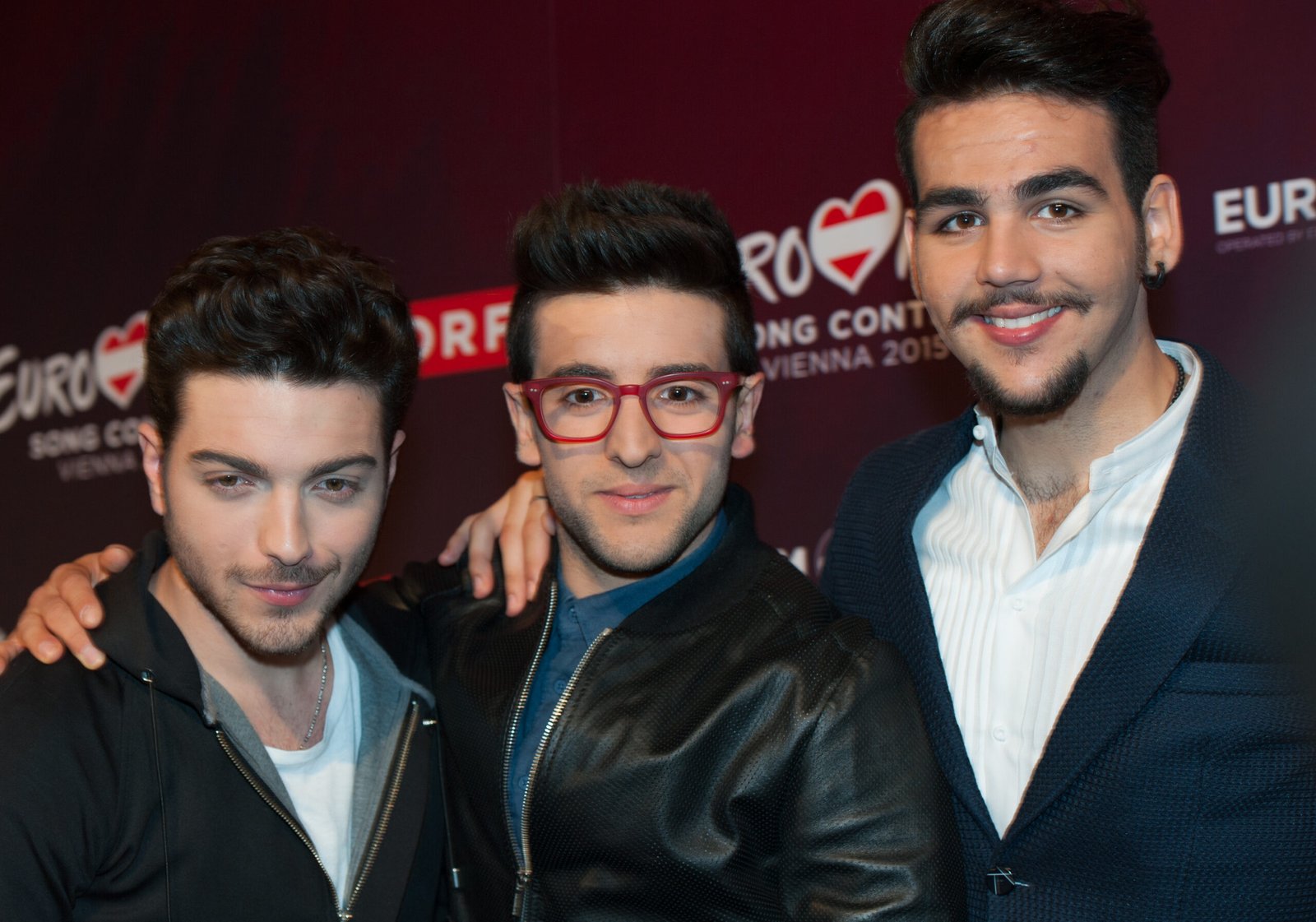
When Il Volo took the stage at the Eurovision Song Contest 2015 with “Grande Amore,” the atmosphere inside the arena shifted almost instantly. Long before the performance reached its dramatic final note, viewers already sensed they were watching something very different from the usual Eurovision formula.
At a contest famous for massive props, elaborate choreography, flashing lights, and unpredictable theatrics, Gianluca Ginoble, Piero Barone, and Ignazio Boschetto walked onto the stage with remarkable simplicity. They wore elegant suits, stood confidently under the lights, and relied almost entirely on the strength of their voices.
That decision alone made the performance unforgettable.
Rather than trying to follow modern pop trends, the trio leaned fully into the dramatic tradition of Italian music. Their vocals carried the emotion of classical opera while still feeling accessible to a mainstream audience. As the orchestra swelled and the chorus exploded across the arena, the performance transformed into something grand, emotional, and unmistakably Italian.

For many fans, “Grande Amore” represented far more than a song. It became a celebration of Italian artistry itself — a performance built on passion, romance, elegance, and vocal mastery instead of spectacle.
Social media reactions during and after the performance reflected that emotional impact. Viewers from around the world praised the trio for bringing a sense of sophistication and timelessness to the Eurovision stage. Some even described the moment as Italy reminding Europe of its centuries-long influence on music, art, theater, and culture.
Yet despite the admiration, the performance also sparked debate that still continues years later.
Some Eurovision fans believed “Grande Amore” was the obvious winner of the competition. To them, it delivered everything a memorable Eurovision act should have: powerful vocals, emotional connection, and a performance that stayed in people’s minds long after the show ended.
Others, however, argued that the song felt too traditional for the evolving Eurovision audience. In an era increasingly dominated by experimental staging and modern pop production, critics felt the operatic style belonged to another generation of music.
That contrast is exactly what has kept the conversation alive for so long.

While some performers chase viral moments through shock value or elaborate stage effects, Il Volo chose restraint, elegance, and musical discipline. Supporters saw that as artistic confidence. Critics viewed it as overly formal. But both sides agreed on one thing: the performance left a lasting impression.
More than a decade later, clips of “Grande Amore” still circulate online, continuing to attract millions of views and passionate discussions among Eurovision fans. New audiences continue discovering the performance, while longtime supporters still defend it as one of the contest’s defining musical moments.
And perhaps that is the clearest sign of its impact.

Many Eurovision performances are remembered for a season and then fade away. “Grande Amore” did the opposite. It became part of Eurovision history — not because everyone agreed about it, but because almost nobody forgot it.