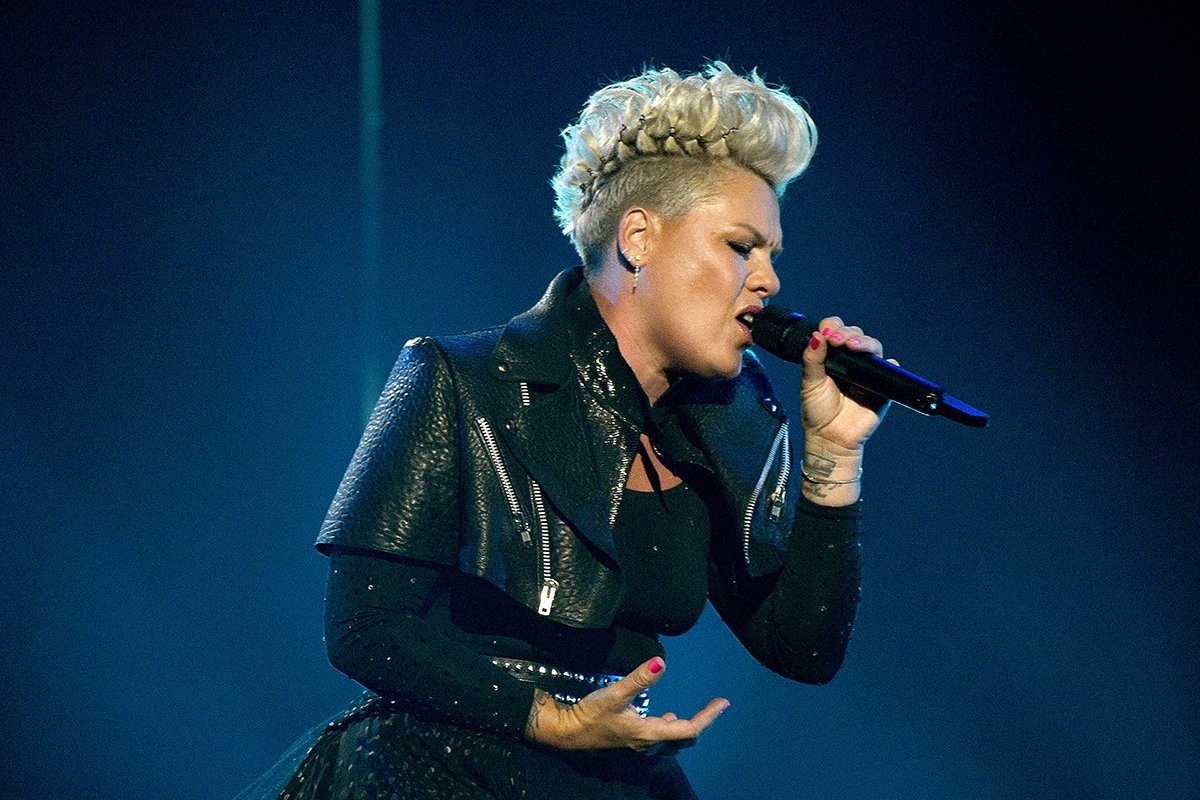
There are concert moments that feel carefully planned, and then there are the ones that unfold with an energy so raw and unexpected that they take on a life of their own. That was the case during a Los Angeles performance featuring P!nk, when the night took a sudden turn with the appearance of Gwen Stefani.
The venue, widely recognized as the Staples Center at the time, was already charged with anticipation as fans settled in for what was expected to be a standard headline set. But as the familiar opening notes of Just a Girl began to build, something shifted. The song—originally defined by Stefani’s sharp delivery and rebellious tone—suddenly carried the weight of surprise as another presence entered the stage.
When Stefani emerged fully into the spotlight, the crowd reaction was immediate. Yet what elevated the moment beyond nostalgia was the unexpected collaboration that followed. P!NK stepped into the performance not as a background guest, but as an equal force, reshaping the energy of the song in real time.
Just a Girl, long regarded as a defining anthem of female independence in pop-rock history, took on a new dimension in this shared performance. Rather than simply revisiting the original version, the duet transformed it into something more chaotic and layered—less about memory and more about reinvention. The stage became a space where two distinct artistic identities merged without losing their individuality.
What made the moment stand out was the chemistry between the two performers. Stefani brought her signature punk-pop edge, playful but precise, while P!NK added a raw vocal intensity that pushed the performance into unexpected emotional territory. The combination created a dynamic push-and-pull effect, where neither voice dominated for long, but instead amplified the other.
As the performance progressed, the audience response grew increasingly unrestrained. The chorus, already iconic in its own right, became a shared release rather than a structured refrain. Fans described the atmosphere as turning almost electric, with the line between performer and crowd blurring as energy bounced across the arena.

In many ways, the collaboration felt like a conversation between two eras of alternative pop. Stefani’s early 2000s identity, shaped by rebellion and stylistic experimentation, met P!NK’s long-standing reputation for emotional honesty and physical performance intensity. Together, they created a version of the song that felt both familiar and newly unstable in the best possible way.
By the final chorus, the performance had fully shifted from a surprise cameo into a full-scale celebration of shared stage power. What started as a moment of nostalgia ended as something more immediate—an example of how live music can reframe even the most well-known songs when two artists are willing to let go of control and lean into spontaneity.
For fans in attendance, it wasn’t just a performance of Just a Girl. It was a reminder that some songs don’t belong to one voice—they belong to the moment, especially when voices like P!nk and Gwen Stefani decide to share them.