Aretha Franklin Slays “Nessun Dorma” Opera While Filling In For Pavarotti

Aretha Franklin

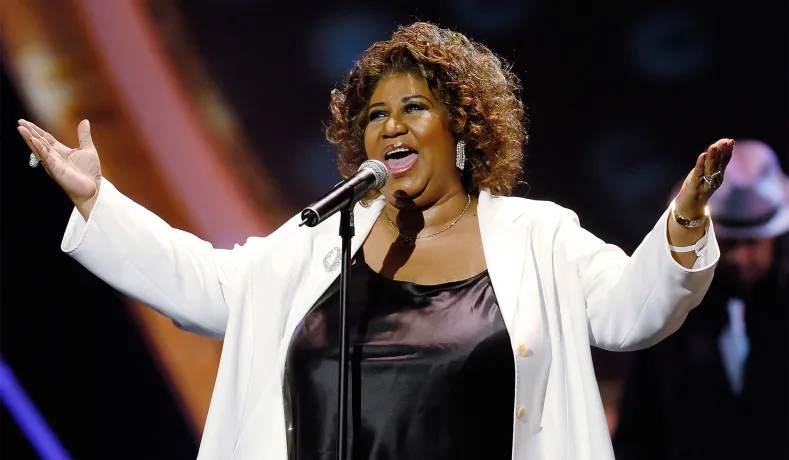
When you think of Aretha Franklin, opera might not be the first thing that comes to mind. Yet, the late soul legend proved her versatility and vocal prowess by delivering a stunning rendition of the opera classic “Nessun dorma” at the 1998 Grammy Awards. Franklin’s performance was not planned; she stepped in as a last-minute replacement for her friend Luciano Pavarotti, who had fallen ill.

Pavarotti, renowned for his powerful tenor voice, popularized Giacomo Puccini’s aria “Nessun dorma” when he performed it at the 1990 FIFA World Cup. However, fate intervened at the 1998 Grammys when Pavarotti had to cancel his appearance. With little time to spare, Grammy producers turned to Franklin, who had recently showcased her vocal prowess at a MusiCares dinner.

Witnessing a contemporary singer like Franklin, with no formal training in opera, effortlessly tackle such a challenging piece was truly remarkable. “Nessun dorma” demands vocal dexterity, including hitting a sky-high top B at the climax, a feat Franklin accomplished with aplomb. Despite the orchestra’s preparation for a male tenor vocalist, Franklin rose to the occasion, infusing her soulful and R&B touch into the performance.

Introduced by rock icon Sting, Franklin’s rendition captivated the audience and garnered a standing ovation. Together with Sting, she honored Pavarotti, who was awarded the Grammy Living Legend Award in absentia. Franklin’s rendition, viewed by one billion people worldwide, showcased her ability to transcend genres and captivate audiences with her unparalleled talent.

Although Franklin’s performance at the Grammys remains iconic, her legacy with “Nessun dorma” continued. She recorded the aria in the studio and included it in her live repertoire, with her final performance of the piece taking place in 2015 for Pope Francis at the World Meeting of Families in Philadelphia. Franklin’s rendition of “Nessun dorma” stands as a testament to her enduring musical legacy and ability to captivate audiences across genres and generations.

0 Shares:
Leave a Reply

Your email address will not be published. Required fields are marked *

You May Also Like
Read More

Just a month before his passing, George Jones stood on stage one last time and delivered a soul-stirring rendition of “Tennessee Whiskey.” His voice, though aged by time, still carried the depth and emotion that had made him a legend. Knowing that he was nearing the end of his journey, Jones poured every ounce of his heart into the performance, captivating the audience with his raw, unwavering passion. Fans who witnessed this moment understood they were watching history—a farewell from a man who had dedicated his entire life to music. Even in his final days, he remained true to his art, reminding the world why he was, and always will be, one of country music’s greatest voices…

George Jones’ Final Performance: The Last Pour of “Tennessee Whiskey” For those lucky enough to be in the…
Beatles-on-the-Rooftop
Read More

The wind still cuts through Savile Row the way it did in 1969. But yesterday, the street below stood in complete silence — no sirens, no crowds, no chaos. Just five men carrying some of the most legendary surnames in music history, quietly stepping onto the rooftop of Apple Corps. Julian Lennon. Sean Lennon. James McCartney. Dhani Harrison. Zak Starkey. They weren’t filming a documentary. They weren’t chasing headlines. They simply plugged into vintage amps that hadn’t echoed across that rooftop in decades. And when the opening chord of “Don’t Let Me Down” rang out — the song immortalized by The Beatles — something shifted in the London air. It wasn’t just a performance. It felt like a resurrection. But what happened after the final note faded — when silence returned to the rooftop — is the part no one is explaining. And it may change everything we thought we understood about their bond. ▶️ Listen to the song in the first comment 👇

The wind on Savile Row still howls the same way it did on January 30, 1969. But yesterday,…