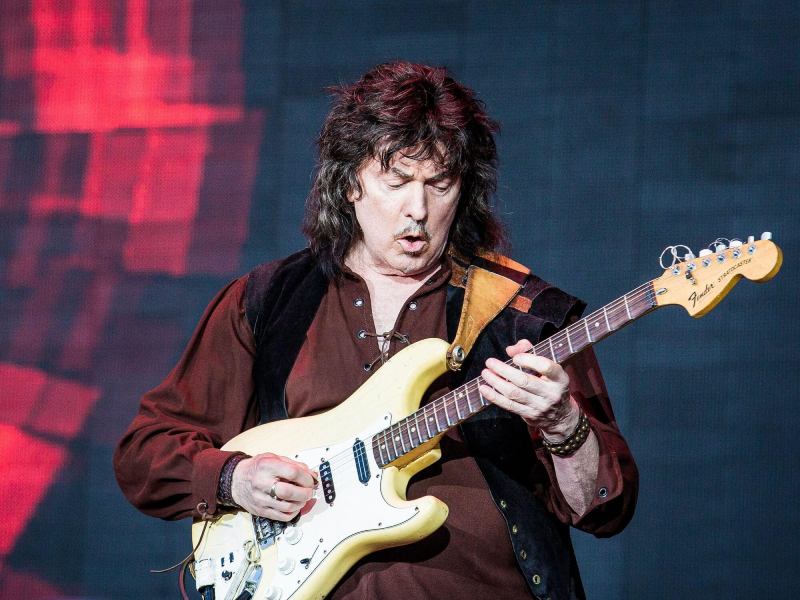
If there’s one thing Ritchie Blackmore excels at, it’s guitar playing. This widely influential fretboard master, who made his mark in an era rich with talent, has left his imprint through bands like Deep Purple, Rainbow, and as a solo artist.
In addition to showcasing his extraordinary skills, Blackmore has had the privilege of sharing stages and stories with some of the most notable guitarists of his time, including Jimmy Page, Jeff Beck, and Eric Clapton. The anecdotes he shares about the vibrant music scene of ‘Swinging Sixties’ London never fail to captivate.
However, like many from his outspoken generation, Blackmore isn’t shy about deviating from the conventional narrative regarding these iconic players. His critiques are especially insightful, coming from a seasoned artist who understands the craft. One notable analysis focuses on The Who’s frontman and guitar hero, Pete Townshend.
In a 1973 interview with Martin K. Webb, Blackmore expressed his belief that Townshend is “overrated” and not as skilled as many assume. He acknowledged Townshend’s pioneering use of feedback but suggested that his playing style relied heavily on crashing chords rather than technical prowess.
“Pete Townshend was definitely the first to use feedback,” Blackmore stated. “But not being that good a guitarist, he used to just sort of crash chords and let the guitar feedback. He didn’t get into twiddling with the dials on the amplifier until much later.”
Blackmore continued, noting, “He’s overrated in England. But at the same time, you find a lot of people like Jeff Beck and Hendrix getting credit for things he started. Townshend was the first to break his guitar. He was the first to do a lot of things. He’s very good at his chord scene too.”
It wasn’t only Townshend’s guitar skills that Blackmore critiqued. When asked why he doesn’t jump around on stage, Blackmore pointed to his peers: “I like leaping around on stage as long as it’s done with class. Like Free. They’re the best band in England. Paul Rodgers is a good singer and a brilliant mover. None of this jumping up in the air and doing the splits and all that. He just moves with the music.
Not like Pete Townshend, who’s gotten to the point that he waits until the photographers are well-aimed before he leaps. He’s not very spontaneous.”
Through his critiques, Blackmore sheds light on the complexities of musical artistry, reminding us that even legends are subject to scrutiny.