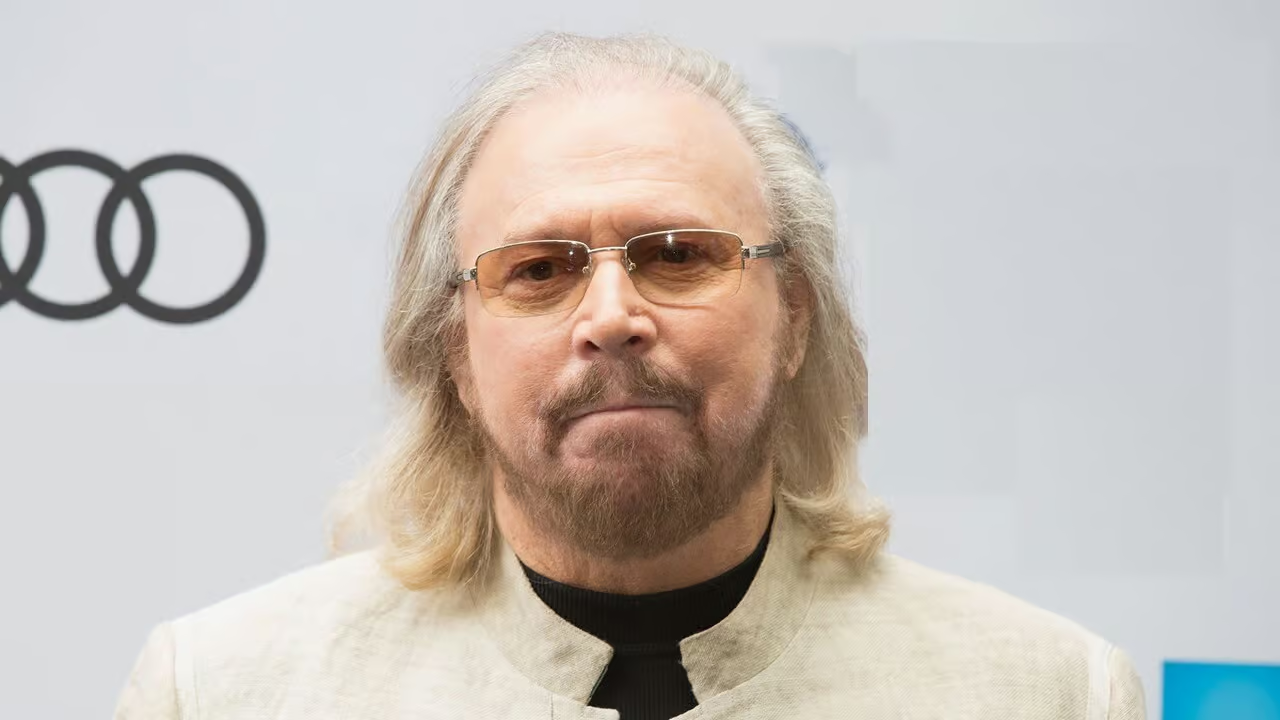
“The Last Bee Gee: Barry Gibb’s Journey Through Music, Loss, and Love”
There was a time when the Gibb brothers were unstoppable—three voices so in tune, so intuitive, they didn’t just sing harmonies… they were harmony. From dimly lit studios in Australia to sold-out stadiums across the globe, Barry, Robin, and Maurice Gibb were the Bee Gees: a trio bonded by blood, melody, and an unspoken understanding that only siblings could share.
But the harmony didn’t last forever. First came the tragic loss of their youngest brother, Andy, in 1988—a pop sensation in his own right—gone at just 30. Then, in 2003, Maurice died suddenly from complications during surgery. And in 2012, cancer claimed Robin too.
By then, Barry Gibb had lost not only his bandmates, but his best friends. He became what no one ever expected: the last man standing.

In 2006, just three years after Maurice’s death, something extraordinary happened.
For the first time since tragedy tore through their family, Barry and Robin reunited on stage. It wasn’t part of a glitzy comeback tour or record promotion—it was something far more intimate. The occasion was the 30th anniversary of The Prince’s Trust, and the location was majestic: outside the Tower of London, with the River Thames glinting under the lights of a quiet night.
The song they chose was “To Love Somebody.” Written by Barry in the 1960s, the track had long become a classic. But that night, it became a eulogy in disguise.
Robin took the first verse, his voice stripped bare, raw with emotion—the sound of a man singing not just to the audience, but to his twin brother Maurice, who should have been standing beside him. Barry took the second verse, his tone steady but steeped in sadness. When their voices met in the chorus, something sacred happened.
For a moment, the ghosts were there with them. For a moment, the Bee Gees were three again.

“They Were Beautiful… And Now They’re Together”
Six years later, Robin passed away after a long and painful battle with cancer. And Barry, the eldest, became the last living link to the musical dynasty that changed the face of pop forever.
At Robin’s funeral, Barry’s eulogy didn’t come dressed in grandeur. It came with a cracked voice, a trembling hand, and a deep, visible ache.
“They were both beautiful,” Barry said of Robin and Maurice. “And now they’re together. When you’re twins, you’re twins all your life. You go through every emotion. And they’re finally together.”
He admitted something few expected to hear from the oldest Gibb—known for his calm, cool control: that there had been friction between them in the final years.
“Even right up to the end, we found conflict with each other… which now means nothing. It just means nothing.”
In a deeply emotional interview with Sunday Night in 2012, Barry pulled back the curtain on what it meant to be the “last Bee Gee.” And the truth was devastating.
“My greatest regret is that every brother I’ve lost was in a moment when we weren’t getting on,” he confessed, eyes wet with tears. “So I have to live with that… and I’ll spend the rest of my life reflecting on that.”
It was a rare admission from a man who had spent decades as the band’s anchor, its leader, its voice. Suddenly, he was vulnerable. Just a brother, haunted by goodbyes that came too late.
“I’m the last man standing,” he said, softly. “I’ll never be able to understand that… as I’m the eldest.”
Despite the pain—or perhaps because of it—Barry eventually found his way back to the stage. In 2014, he embarked on the Mythology Tour, a tribute not just to the music of the Bee Gees, but to the men behind the songs.
But this time, he wasn’t alone.

Joining him on tour were his son, Stephen Gibb, and Maurice’s daughter, Samantha. Together, they carried the torch forward—singing the parts once voiced by those no longer there. When Samantha took the mic to sing “Stayin’ Alive,” or “You Win Again,” the audience didn’t just hear a tribute. They saw a legacy being reborn.
And when Barry and Stephen sang “Grease,” or “How Can You Mend a Broken Heart,” the crowd didn’t cheer—they cried.
Sir Barry Gibb—knighted in 2017 for his contributions to music—now stands as the last bearer of the Bee Gees’ flame. But even with stadiums at his feet and a discography that spans generations, his heart still lives in the memories of four Manchester-born brothers who dreamed together, sang together, and lost one another—too soon, too often.
“Nobody really knows what the three of us felt about each other,” he once said. “Only the three of us knew. It was such a unifying thing… the three of us became one person. We all had the same dream. That’s what I miss more than anything else.”

For anyone watching the Bee Gees’ performances today—on old concert footage, YouTube clips, or family duets—it’s more than nostalgia. It’s a testament. A reminder that love, though often complicated and imperfect, can endure even after the curtain falls.
“If there’s conflict in your lives,” Barry told the world once, “get rid of it.”
Because sometimes the greatest legacy isn’t the music you leave behind.
It’s the people you sang it with.