George Harrison’s last time on stage wasn’t a grand concert or a roaring farewell—it was something far more quiet, almost hidden. On July 24, 1997, he walked into a small VH1 studio in New York, not as the legendary Beatle the world adored, but simply as George—a friend, a producer, and a man who still lived for the music. There were no screaming fans, no spotlights chasing him across the stage. Instead, the room carried a calm stillness as he joined his lifelong friend Ravi Shankar to share their project, Chants of India. Perched on a stool with just an acoustic guitar, Harrison began to play “All Things Must Pass.” The song, stripped bare of studio polish, carried a weight that silenced the room. His voice, softened by years but filled with soul, wrapped itself around every lyric. Each word felt like a whisper about life’s fleeting nature—gentle, haunting, yet strangely comforting. It wasn’t just a performance; it was a quiet farewell, a moment where music spoke louder than applause ever could.

George Harrison

On July 24, 1997, George Harrison stepped into a small studio in New York City—not as a rock legend, but as a friend, a producer, and a humble musician. There were no flashing lights, no thunderous applause, no massive crowds. Instead, there was a serene atmosphere inside VH1’s studio, where Harrison accompanied his lifelong friend and Indian music pioneer Ravi Shankar to promote their collaborative project, Chants of India.
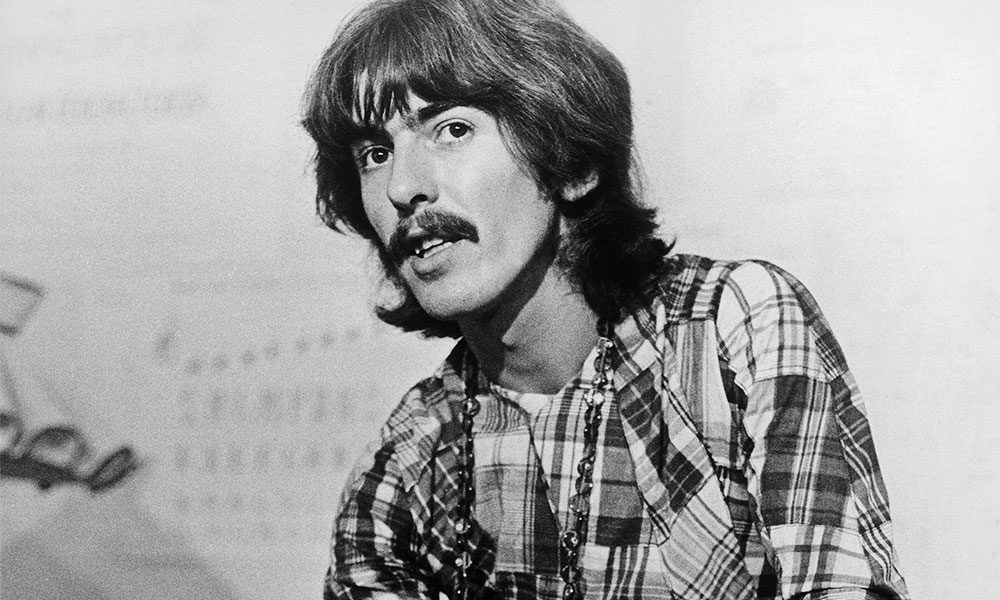
Harrison hadn’t come to perform his own work. He was there in support of Shankar, having produced the album and played on it. But when asked if he’d sing a song or two, George quietly agreed. What followed was a moment of quiet magic—one that would go down as his final public performance.

Sitting on a stool with just his acoustic guitar, Harrison played “All Things Must Pass,” the hauntingly beautiful title track from his 1970 solo debut. Stripped of production, the song felt even more intimate—its message of impermanence echoing louder than ever. His voice, tinged with age and soul, seemed to float between realms, offering both comfort and a subtle sense of closure.

Then came a surprise: “Any Road,” a playful, philosophical tune he’d started writing back in 1988. He had never performed it live before—and never would again. It became a hidden gem in his repertoire until it surfaced posthumously in 2003 on Brainwashed, the final album he left behind.

George Harrison Estate Releases New Mix of 'All Things Must Pass'

The performance was raw and disarmingly honest. Just George, his guitar, and a room filled with quiet admiration. When he finished, he smiled wryly and said, “I could go home and practice a bit and do it properly.” It was classic Harrison—unassuming, self-effacing, and utterly sincere.

The event, later aired as The George & Ravi Show and hosted by John Fugelsang, marked the last time Harrison would sing in public. Four years later, in November 2001, the world would say goodbye to the quiet Beatle after his long battle with cancer.

In just two songs, George Harrison distilled everything that defined him: spiritual wisdom, gentle humor, and a heartfelt authenticity that couldn’t be faked. No grand finale. No encores. Just a soft-spoken farewell that, like much of his work, lingers long after the music fades.

 

0 Shares:
Leave a Reply

Your email address will not be published. Required fields are marked *

You May Also Like
Céline Dion
Read More

THE CHRISTMAS PERFORMANCE THAT BROKE COUNTRY MUSIC — Céline Dion & Chris Stapleton UNITE In a Heaven-Shaking Duet That Leaves GEORGE STRAIT In Tears On the Front Row 🎄🔥😭 “I’ve Never Seen Anything Like This,” Fans Scream As History Is Made Onstage and Leaves Millions Asking: “Did We Just Witness History?”!No one in the arena knew they were about to witness a moment powerful enough to shake the foundations of country music and pop history. The lights dimmed, the orchestra held its breath — and then Céline Dion stepped into the spotlight with a glow that felt almost unreal. But when Chris Stapleton walked out beside her, the audience detonated into screams. This was the Christmas duet the world never dared imagine: Céline’s angelic fire colliding with Stapleton’s smoky soul in a once-in-a-century performance of “O Holy Night.” The first harmonies hovered in the air like falling snow, delicate and holy. Céline soared. Stapleton growled. Their voices met in the middle like lightning striking water — explosive, impossible, breathtaking. The arena froze. People clutched their hearts. Grown men wiped their eyes. And then… the camera cut to the front row — where GEORGE STRAIT, the King of Country himself, was wiping tears off his face. His lips trembled. His eyes glistened. He wasn’t just watching. He was feeling every note like it was stitching something back together inside him. Fans later said they had “never seen George Strait cry like that,” calling the moment “a sacred collision of legends” and “the most emotional Christmas performance in modern music.” When Céline and Stapleton hit the final, sky-splitting harmony, the room erupted — a tidal wave of applause, gasps, and disbelief as George Strait stood up, hands shaking, giving them a standing ovation through his tears. 👇 WATCH THE DUET THAT BROUGHT GEORGE STRAIT TO TEARS

GEORGE STRAIT BREAKS DOWN ON LIVE TV — AND THE COUNTRY WORLD CAN’T STOP TALKING ABOUT ITThe King…