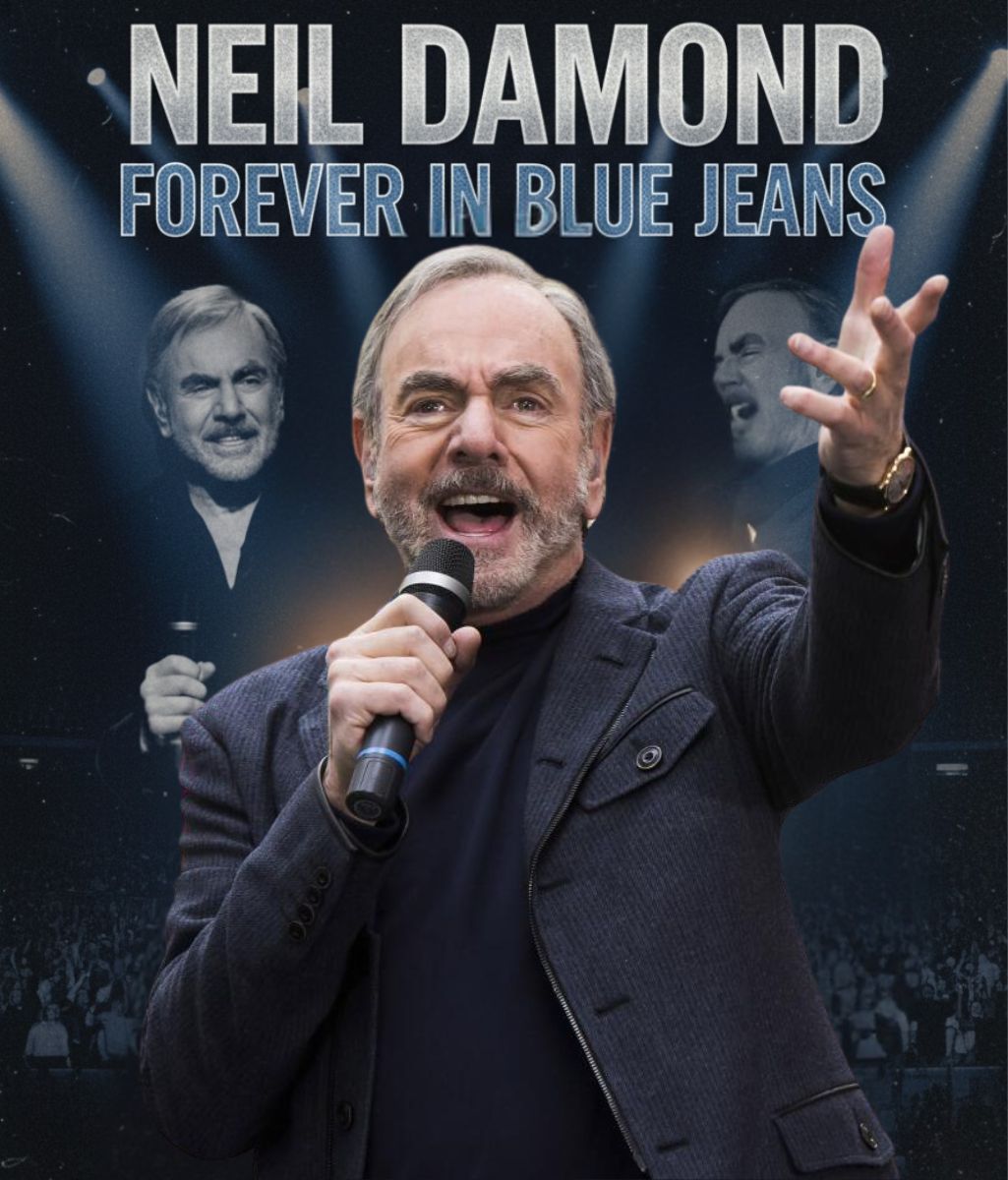
LISTEN TO NEIL DIAMOND’S “FOREVER IN BLUE JEANS”: Released in 1979 on the album You Don’t Bring Me Flowers, this timeless classic captures everything that made Neil Diamond beloved — sincerity, warmth, and the joy of simple living. With its upbeat rhythm and unpretentious charm, the song celebrates love that doesn’t need luxury to feel rich. “Money talks,” Neil sings, “but it don’t sing and dance and it don’t walk.” Decades later, those words still ring true. “Forever in Blue Jeans” remains a reminder that happiness often lives in the small things — a smile, a laugh, and a love that lasts.

neil diamond

LISTEN TO NEIL DIAMOND’S “FOREVER IN BLUE JEANS” — A SONG THAT STILL SMILES AFTER ALL THESE YEARS

When Neil Diamond released “Forever in Blue Jeans” in 1979, the world was shifting. Disco ruled the airwaves, pop was getting glossier, and yet here came Neil — with a song as humble and genuine as a Sunday morning. Featured on his celebrated album You Don’t Bring Me Flowers, the track became an anthem for those who believed that joy didn’t have to come wrapped in gold. It was a melody of sincerity, warmth, and down-to-earth grace, qualities that have always defined Neil Diamond’s music.

From its first bright strum, “Forever in Blue Jeans” feels like sunlight through an open window. It moves with an easy rhythm — part country, part pop, all heart — carrying Neil’s signature baritone, a voice that sounds like wisdom softened by kindness. His lyrics tell a story that is both timeless and deeply human: that the richest moments in life often cost nothing at all. “Money talks,” he sings with that knowing smile in his voice, “but it don’t sing and dance, and it don’t walk.

Those words struck a nerve then, and they still do today. In a world constantly chasing more — more fame, more fortune, more shine — Neil reminded us that contentment often lives in the ordinary: a shared laugh, a walk hand in hand, a simple pair of jeans that feel like home.

The song’s creation came during a period when Neil Diamond was reflecting on what truly mattered. After years of sold-out tours and stadium lights, he wanted to write something that stripped life down to its essentials — a love song for the everyday person. Co-written with longtime collaborator Richard Bennett, the tune carries a sense of freedom and ease, as if it were written on the back porch on a summer night.

When it was released, “Forever in Blue Jeans” climbed the charts, but its real success wasn’t in the numbers — it was in the hearts it touched. It became a kind of national hymn for the working class, for dreamers, for anyone who ever found beauty in simplicity. Couples danced to it at weddings, families sang along in their cars, and for many, it became more than a song — it became a philosophy.

Even decades later, Neil’s message feels more relevant than ever. In interviews, he’s often said that “the truest wealth is emotional, not material.” That belief runs through the fabric of “Forever in Blue Jeans.” It’s not just about denim — it’s about dignity, about finding richness in connection rather than possessions.

Today, when Neil’s health has slowed his touring but not his spirit, the song stands as a testament to his enduring artistry. It captures everything that made him beloved: the storytelling of a poet, the humility of a friend, and the sparkle of a man who never lost touch with where he came from.

And so, when that familiar opening riff plays, something beautiful happens. Listeners smile. Shoulders relax. The world feels a little lighter. Because in Neil Diamond’s universe, happiness doesn’t arrive in a limousine — it walks in wearing blue jeans, humming a tune we all know by heart.

More than forty years later, “Forever in Blue Jeans” is still singing — still dancing — still walking beside us. A reminder that love, laughter, and simple living never go out of style.

Video

0 Shares:
Leave a Reply

Your email address will not be published. Required fields are marked *

You May Also Like
Beatles-on-the-Rooftop
Read More

For more than 60 years, the legacy of The Beatles has never stood still. Fans and historians alike have endlessly debated their true place in music history—their influence, their artistic value, and even the most controversial question of all: who was the greatest Beatle? And with every passing decade, those answers keep changing. Now, the conversation may be about to explode all over again. With the renewed spotlight on The Beatles Anthology and a bold new wave of biographical films on the horizon—helmed by Oscar-winning director Sam Mendes—the band’s story is being told from fresh, deeply personal angles. Individual identities, creative tensions, and long-standing myths are being reexamined for a new generation. Will these projects finally settle old arguments—or ignite even bigger ones? 👉 The full story dives into why this moment could redefine how we see The Beatles forever. Click the link below and join the debate before it reignites worldwide.

For more than 60 years, fans and historians have endlessly debated The Beatles—their status, influence, artistic value, and even…
bruce springsteen
Read More

“I wrote it yesterday, recorded it today, and released it right away” — Bruce Springsteen caused a sensation when he released his anti-ICE song amidst the Minneapolis storm. Without evasiveness or metaphors, The Boss directly called the Trump administration an “occupation army,” turning music into a direct accusation. For many, this was a timely voice of conscience; for others, it was a line artists shouldn’t cross. Within hours, the song ignited fierce debate across America. And the big question still hangs in the air: is this necessary art of resistance — or an irreversible political explosion?

Bruce Springsteen shares anti-ICE protest song “Streets Of Minneapolis” Bruce Springsteen is the latest famous voice to denounce the Trump…
Read More

“Born October 1, 1929… she wasn’t just Buck Owens’s ex-wife — she was the woman who steadied Merle Haggard when his life was coming apart at the seams.” Before the fame found him, Merle Haggard was still a man trying to claw his way out of the shadows he carried. Bonnie Owens saw all of it — the temper, the fear, the brilliance that flickered like a match in the wind — and instead of turning away, she stepped closer. While Merle wrestled with old wounds he rarely spoke about, Bonnie quietly shaped the songs that would outlive them both — “Today I Started Loving You Again,” “Just Between the Two of Us,” and the lines only someone who loved him could help him reach. People remember the voice. People remember the legend. But behind the gravel and the glory was a woman fixing rough edges into melodies, turning the parts he hid into something the world could finally hear.

Scroll down to the end of the article to listen to music.” Introduction There are love songs, and…