Ronny Robbins Revives a Western Legend: His Father’s ‘El Paso
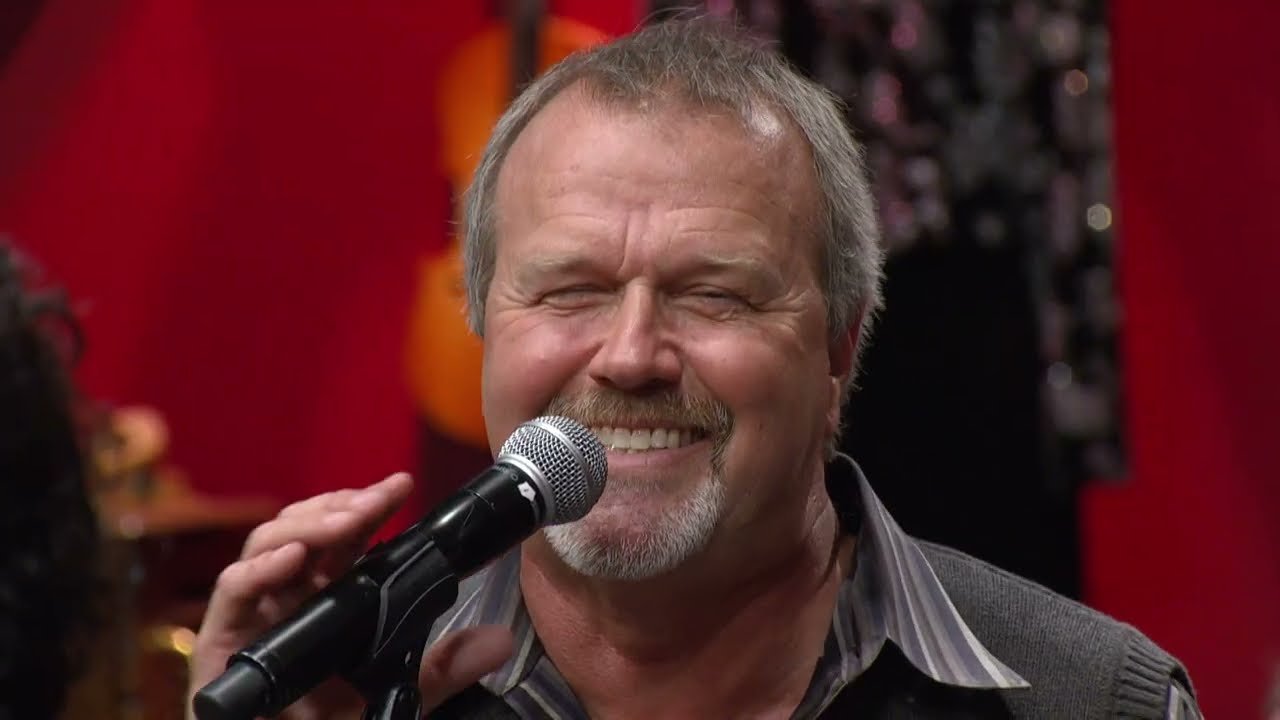
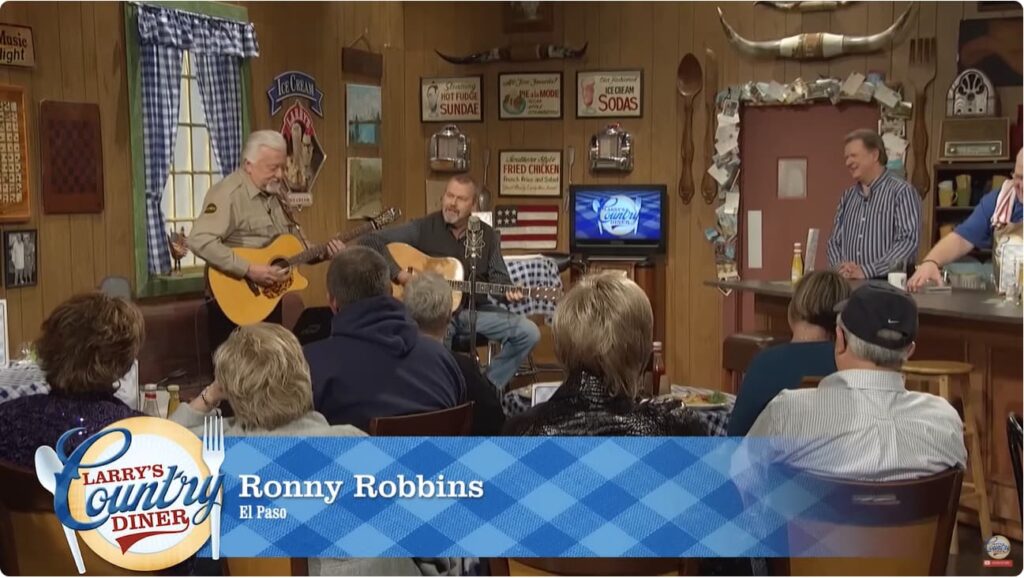
When Ronny Robbins steps to the microphone to sing “El Paso” on Larry’s Country Diner (Season 2, Episode 10), the air seems to change. There’s a quiet hush, a mix of reverence and anticipation—as if everyone in the room knows they’re about to hear something more than just a song. This isn’t merely a performance; it’s a moment of musical inheritance, where a son brings back to life one of the greatest ballads ever written by his father, Marty Robbins.
First released in October 1959, “El Paso” became Marty Robbins’ signature masterpiece. Featured on the album Gunfighter Ballads and Trail Songs, the song climbed to the very top of the Billboard Hot 100, reaching No. 1 in January 1960, and earned Robbins the Grammy Award for Best Country & Western Recording that same year. Its sweeping narrative—set in the dusty border town of El Paso, Texas—captured the imagination of listeners far beyond the world of country music. With its vivid storytelling, Mexican guitar flourishes, and unforgettable melody, “El Paso” became not only a country classic but a timeless American epic.
The song tells the tragic tale of a cowboy who falls in love with a beautiful cantina girl named Feleena, only to meet his fate at the end of his own gun. It’s a story of passion, jealousy, and redemption—painted in the cinematic style that only Marty Robbins could master. Every word feels like a frame from a Western film, and every note carries the weight of a man’s heart torn between love and honor.
Decades later, when Ronny Robbins performed “El Paso” on Larry’s Country Diner, the emotion of the moment was palpable. His voice doesn’t try to replicate his father’s—there’s a gentleness in it, a deep respect, as if he’s walking softly through sacred ground. Yet, the resemblance is undeniable. The phrasing, the quiet confidence, the storytelling tone—it all feels hauntingly familiar, like hearing an echo of Marty himself.
For longtime fans of Marty Robbins, this performance is a journey back to a golden age of country music—an age when songs told stories that could make you see, feel, and remember. Watching Ronny sing is like opening an old photograph: the faces are the same, the voices still carry, but time has added a deeper tenderness to the frame.
On Larry’s Country Diner, surrounded by friends, laughter, and the warmth of a live audience, Ronny Robbins’ “El Paso” is more than a tribute—it’s a resurrection. It reminds us that music, when born from truth and heart, never really dies. It simply waits for the next generation to pick up the melody and let it ride again across the open plains of memory.
And as Ronny’s final note fades, it’s as if the spirit of Marty Robbins himself is there in the room, smiling, knowing that his greatest story—like the cowboy in “El Paso”—will ride forever.
Video