Linda Ronstadt – Just One Look

lINDA

Linda Ronstadt still her own worst critics despite Kennedy Center Honors 2019 - CBS News

Introduction

When Linda Ronstadt released “Just One Look” in 1978, she was already at the height of her fame—a rare artist who could move effortlessly between rock, pop, and country without losing her authenticity. The song, originally recorded by Doris Troy in 1963, was a rhythm-and-blues gem of the early ’60s. But in Ronstadt’s hands, it became something entirely new: a sleek, soulful, and irresistibly modern pop-rock statement that showcased her extraordinary vocal control and emotional depth.

Appearing on her album Living in the USA, Ronstadt’s “Just One Look” is both a tribute and a reinvention. From the opening guitar riff and crisp percussion, the track bursts with energy. Yet beneath the upbeat tempo lies a tender vulnerability—a sense of wonder at how a single glance can ignite love, longing, and uncertainty all at once. It’s a theme Ronstadt understood intuitively, and her voice carries that emotion with effortless grace.

Her vocal performance is a masterclass in balance. Where Doris Troy’s version is raw and soulful, Ronstadt’s is polished yet no less passionate. She doesn’t overpower the song; she lets it breathe. Each phrase—“Just one look, and I fell so hard”—feels honest, almost conversational, as if she’s reliving the moment in real time. Her tone is both bright and wistful, blending pop clarity with a hint of country warmth.

Producer Peter Asher, who guided many of Ronstadt’s biggest hits, crafted an arrangement that complements her strengths perfectly. The song’s clean, layered instrumentation—tight rhythm section, gliding guitar, and subtle backing harmonies—creates a sound that feels both nostalgic and contemporary. It’s California pop at its finest: smooth, radiant, and emotionally resonant.

Beyond its musical excellence, “Just One Look” captures a pivotal moment in Ronstadt’s artistic evolution. By 1978, she was redefining what a female rock star could be—commanding the stage with confidence while staying true to the emotional honesty that had always set her apart. The song reflects that duality: it’s playful yet sincere, stylish yet deeply human.

In live performances, Ronstadt often delivered “Just One Look” with a radiant joy that electrified audiences. Dressed in her trademark denim or leather, she sang with a freedom that seemed to dissolve the line between performer and listener. It wasn’t just about the look or the sound—it was about connection. When she sang, people believed her.

Though not her biggest chart success, “Just One Look” endures as one of Linda Ronstadt’s most beloved interpretations—a perfect blend of her vocal brilliance, her taste in timeless material, and her ability to reimagine a classic without erasing its soul.

More than four decades later, the song still feels fresh, a reminder of what made Ronstadt so extraordinary: her power to take a simple phrase and turn it into something unforgettable. “Just one look,” she sang—and with that look, that voice, that truth—she captured the world’s heart.

Video

0 Shares:
Leave a Reply

Your email address will not be published. Required fields are marked *

You May Also Like
paul-mccartney
Read More

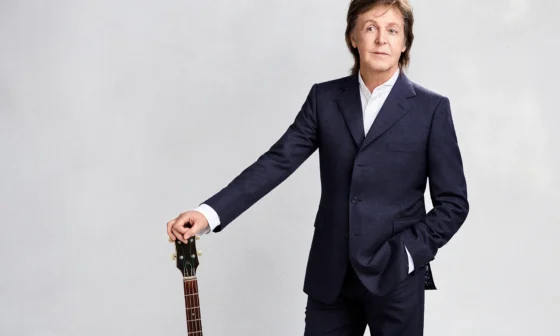
“‘Well, what about me?’” Paul McCartney admits he still holds a grudge over how his Rock & Roll Hall of Fame solo induction played out — and says it wasn’t about trophies, but fairness. After agreeing to induct John Lennon in 1994, McCartney claims he felt the Lennon–McCartney “equals” story started being rewritten, with public narratives increasingly painting him as “less than” in the partnership. He even hints a promise of recognition “next year” never came — and that frustration stuck for years. And when his solo induction finally arrived in 1999, one heartbreaking detail made the moment feel far less celebratory than people think…

Paul McCartney Admits He Still Holds a Grudge Over His Late Rock & Roll Hall of Fame Induction…
Read More

A Tour That Feels Like Time Travel: Why Paul McCartney’s 2026 Return Means More Than EverWhen the announcement broke that Paul McCartney would be touring in 2026, it didn’t arrive with the usual buzz of concert news. There was no sense of routine excitement or predictable anticipation. Instead, it landed quietly but deeply, like a familiar melody drifting back into your life after years away. For many fans, McCartney’s music has never belonged to just one moment. It has stretched across decades, threading itself through personal histories in ways that are hard to put into words. These are not just songs people remember — they are songs people lived through. They played during long drives with no destination, in bedrooms filled with late-night thoughts, and in fleeting moments when life seemed to pause just long enough to be understood. That’s why this tour feels different. It’s not simply about seeing a legendary artist perform again. It’s about reconnecting with something that has quietly shaped who we are. The chords, the lyrics, the unmistakable voice — they carry echoes of younger selves, of people we used to be and moments we thought were long behind us. There’s something uniquely powerful about hearing music live that has already lived inside you for years. It’s almost like reopening a chapter of your life, except this time, you’re reading it with the perspective of everything that came after. The songs haven’t changed, but you have — and that changes everything. And then there’s the weight of time itself. McCartney isn’t just another artist on tour; he’s one of the last living bridges to a musical era that reshaped culture forever. Seeing him perform now feels less like attending a concert and more like witnessing history still in motion. It’s a reminder that the past isn’t as distant as it sometimes feels — that it can still step onto a stage, pick up a guitar, and sing. But perhaps what makes the 2026 tour feel so significant is the quiet awareness that moments like this don’t come around endlessly. There’s a sense, unspoken but understood, that this is something to be cherished. Not out of nostalgia alone, but out of appreciation for what it represents — longevity, artistry, and the rare ability of music to remain meaningful across generations. Fans aren’t just preparing to attend a show. They’re preparing to revisit parts of their own lives. To stand in a crowd of strangers who somehow share the same memories, the same emotional connections to songs that have traveled through time alongside them. In the end, this tour isn’t just about Paul McCartney returning to the stage. It’s about the way music endures — how it holds onto moments, carries them forward, and gives them back when we least expect it. And in 2026, for a few hours under stage lights, those moments will feel alive again.

When the announcement broke that Paul McCartney would be touring in 2026, it didn’t arrive with the usual…